




Podcasts
Watch videos featuring supply chain experts




End-to-end compliance automation across classification, screening, and duties.








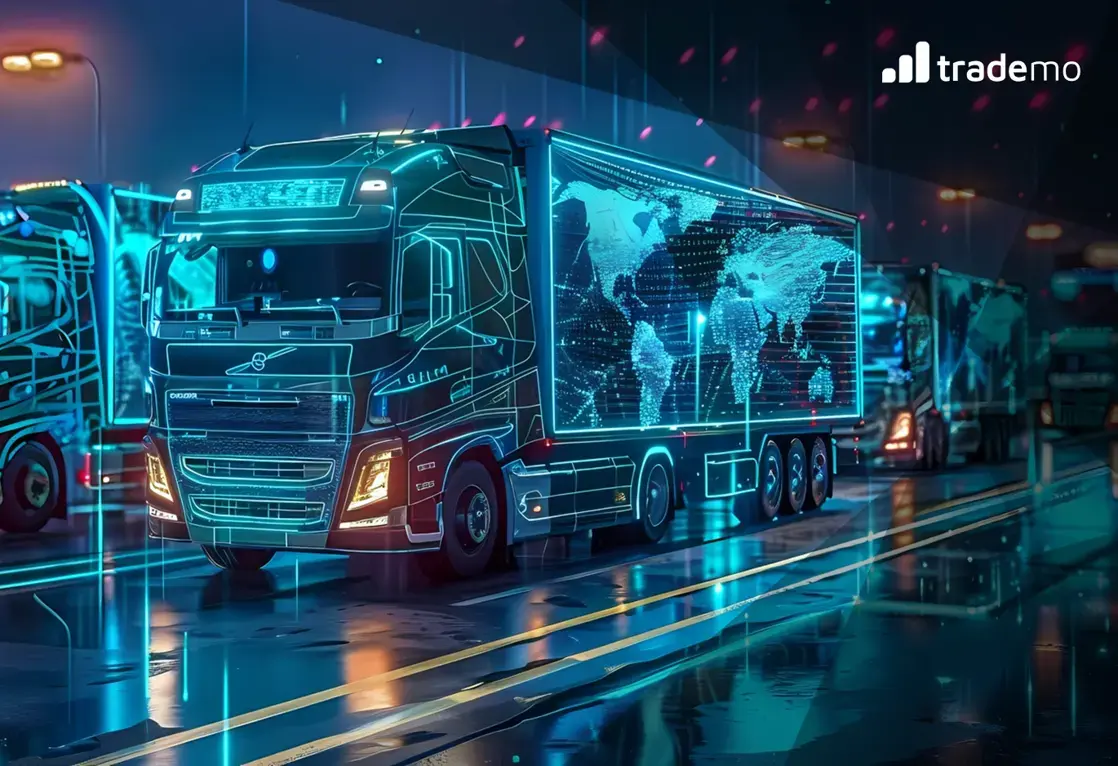


Modern supply chains face disruptions all the time. Over time, the importance of supply chain visibility has remained clear to businesses. Tracking of products, right from raw materials to finished goods, brings in a host of advantages ranging from efficiency and customer satisfaction to better management of the risks involved.
However, very few companies can achieve full supply chain visibility. For most companies, problems persist in fragmented data systems, no real-time information, and the complexity involved in integrating a lot of technologies across regions and partners. Moreover, there are different types of supply chain visibility that companies need to consider.
Other challenging factors that make the seamless visibility difficult to achieve are the changing technology and regulatory requirements. Overcoming them requires not just huge investment but also a strategic planning in line with the goals of an organization.
In the quest to gain more supply chain visibility, businesses have to strike a balance between short-term costs and efforts vis-à-vis long-term gains that could accrue from a more open and resilient supply chain. Factors that may make the implementation of supply chain visibility challenging include:
One of the most challenging parts of supply chain visibility implementation is data integration. This may be complex and varied in terms of data sources, since supply chains involve different entities: suppliers, manufacturers, logistic providers, and retailers, each of whom may be running their operation on a different system or technology.
Moreover, the huge amounts of data generated at all touchpoints—from sourcing of raw material to the final delivery—raise their own difficulty for data accuracy. Integrating real-time data from IoT sensors, ERP systems, and logistics platforms in a heterogeneous environment calls for highly sophisticated technology backed by strong data governance frameworks.
The data coming from these different sources must, therefore, be put into standard data formats and must be platform-independent. This process is time and resource intensive and may call for special software, known as middleware, to effect data exchange seamlessly.
In its absence, the data can be outdated, duplicated, or corrupted. This definitely affects the derivation of critical decisions. Besides, human errors at data entry and manual processes exacerbate the situation even more.
Thus, data quality issues further complicate integration efforts. Inconsistency or inaccuracy of data may result in misinformed decisions. It undermines the reliability of the whole supply chain visibility system. As such, ensuring consistency and accuracy of data across all touchpoints within the supply chain is a challenging task that requires robust data governance practices to be implemented and monitored continuously.
Another challenge to supply chain visibility is that it needs to be in real time. To implement tracking and monitoring in real-time, data integration must occur almost at the instance of generation and processing. This requires very high performance computing capabilities and sophisticated data analytics tools.
Setting up supply chain visibility can be quite challenging because of the costs of technologies. The upfront costs of investing in advanced technologies such as IoT devices, blockchain, and artificial intelligence may be too high for most companies to begin with. All these technologies require huge financial investments in hardware, software, and integration of these systems into the existing infrastructure of supply chains.
Added to this are continuous expenses, such as maintenance and updates with corresponding cybersecurity measures. For smaller companies specifically, these may be hard to justify, especially if the return on investment is not immediate.
Moreover, training staff to work with new technologies is additional to the resources in terms of money and time. The relative complexity of these systems often entails very specialized training programs, which can be rather expensive and time-consuming. All these factors combined make technology cost a formidable barrier to the achievement of comprehensive supply chain visibility.
One of the biggest challenges to the implementation of supply chain visibility can be change management, considering the comprehensive and highly interconnected nature of supply chain activities. A supply chain visibility solution requires the integration of many systems, processes, and technologies both at the departmental and organizational levels. Quite often, this demands huge changes in the current workflows, data management practices, and channels of communication.
With that, some employees and stakeholders accustomed to doing things in traditional ways may show some level of resistance due to the fear of the unknown, lack of knowledge of new technologies, or even loss of jobs. Such kinds of resistance can result in delays, errors, and inefficiencies during the implementation process.
As mentioned before, implementing supply chain visibility tools mostly requires huge investment in technologies and trainings. In particular, organizations have to spend their resources on new software, enhancing systems, and properly training employees. Furthermore, the training of all members of the team on new tools and processes is time-consuming and requires continuous support, thus building pressure on the resources of an organization.
The next level of complexity comes from the need to align goals and expectations among various stakeholders, all the way from the supplier to the end customer. Unless properly communicated and embedded within a well-defined change management strategy, such challenges may act as an impediment to the successful adoption of supply chain visibility solutions. What is required, therefore, is a thoughtful, inclusive, and well-structured approach toward change management for these challenges to be overcome and enhanced supply chain transparency achieved.
One of the biggest challenge to implementing supply chain visibility is the cybersecurity risk that comes as a result of the high level of interconnectivity and interdependence in modern supply chains. In their efforts to reach an increased level of transparency and sharing of data in real-time, companies are opening their systems to a growing array of cyber threats.
Increasing the number of entry points for cyber-attacks because of the integration of numerous platforms, such as those of suppliers, manufacturers, and logistics providers, means that it is only the weak link in the network that could create an opportunity for hackers to invade, thus causing unauthorized access, data breaches, intellectual property theft, and supply chain operation disruption.
The adoption of IoT devices and digital tracking systems, although most useful for enhancing visibility, further increases the touchpoints for a cyber attack. Connected devices can thus become a potential target, and therefore, protection of such devices from sophisticated cyber threats becomes extremely challenging. Indeed, the protection of a huge, interconnected supply chain is complex in nature, meaning that just one weak link can bring down the entire system. This calls for efficient measures of cybersecurity that are very expensive and technically difficult to apply properly.
Companies operating in different industries are required not only to work to specified security standards but also to comply with a diversity of regulations—regional and otherwise. Bringing all nodes of a global supply chain into security compliance is quite a challenge, and maintaining such compliance involves continuous resource-intensive monitoring and updating of security practices. This may draw resources and attention away from core business activities and therefore constitutes a formidable challenge for any organization to maintain high supply chain visibility and cybersecurity simultaneously.
Given the complexity of a today's supply chains with varied parts and stakeholders, supply chain visibility is, therefore, very tricky to attain. Modern supply chains often cross many countries and even intercontinental boundaries, involving suppliers, manufacturers, distributors, and retailers.
Each of these players can have different regulatory environments, cultural norms, and technological capabilities. This heterogeneity makes standardization in data collection and sharing quite challenging across the entire supply chain. In addition, at each stage of a supply chain, volumes of data can be huge and sophisticated systems may be needed to aggregate, analyze, and interpret this information properly.
Furthermore, geopolitical issues such as trade disputes and tariffs present sudden shocks that are very difficult to foresee and control. Natural disasters, political instability, and economic ups and downs around the world add other layers of unpredictability and risk. Companies must accommodate the differing levels of technological maturity among their partners. While advanced tracking and data management systems could be suitable for some entities, others may still be practicing manual methods that naturally have gaps in data continuity and real-time visibility.
These complexities call for robust, flexible, and integrated technological solutions that can provide end-to-end visibility. Huge investments in technology and training, together with a culture of collaboration and transparency among the participants in the supply chain, therefore become mandatory. In the absence of these, comprehensive supply chain visibility remains a pipedream, and hence, optimization of operations and cost reduction, quick response to disruptions is inhibited.
Probably the most difficult challenge of supply chain visibility implementations is regulatory compliance, which is highly complicated and changing across different regions and industries over time. There can be country-specific requirements that companies would need to adapt the implemented visibility systems to, in order to comply with each of those countries' requirements.
This complexity is further compounded by the fact that these regulations also constantly change, which may turn out to be resource-intensive and time-consuming to stay updated with. On top of this, there are certain sector-specific regulatory requirements, such as pharmaceuticals, food, and electronics, that further blur things in the creation of a one-size-fits-all kind of solution in visibility.
Secondly, regulatory compliance can often impede the sharing of real-time information across the supply chain. When this happens, businesses tend to become very reluctant to share sensitive data due to the fear of non-compliance and the relevant legal implications. Such reluctance often means fragmented visibility, hence reduced efficiency, since the stakeholders may not possess real-time information to facilitate decision-making. Thus, in the quest for supply chain visibility, businesses must learn to navigate through the complex maze of regulatory requirements and balance transparency.
One of the major challenges in implementing supply chain visibility is issues of scalability; most modern supply chains are complex and expansive. As a business grows, so does its supply chain, adding many levels of suppliers, distributors, and logistics providers geographically spread out. This requires a system that can process vast amounts of data from disparate sources in real time.
Most of the existing systems are prone to a lot of scaling issues, thereby developing bottlenecks and inefficiencies. For instance, the integration of different data formats or the preciseness of data becomes cumbersome to handle when the supply chain network increases. Moreover, the need for real-time monitoring and quick decision-making requires robust infrastructure and innovative technologies, which are resource-intensive to develop and maintain.
Moreover, scalability has problems related to security and privacy of data. Increasing the number of nodes within the supply chain comes with risks like data breaches or unauthorized access, demanding rigorous security measures which raise further complications in scalability efforts.
Added to this is also the lack of standardized protocols between different regions and industries that also extremely affects seamless integration and scalability. This will, therefore, compel any company to keep spending expensively in scalable information technology solutions while innovating constantly to ensure that their supply chains remain across the board. Neglecting the scalability concerns may cause disruptions in visibility, reduction of efficiency, and increase in costs—events that will eventually affect overall business.
To explore our solution for Upstream and Downstream Supply Chain Mapping
In conclusion, achieving supply chain visibility remains a complex but crucial objective for businesses in the modern market. The integration of advanced technologies offers promising solutions but also introduces new challenges in terms of cost, scalability, and data management. Companies must navigate these obstacles by investing in robust infrastructure, fostering cross-functional collaboration, and prioritizing data security and privacy.
Additionally, addressing the human factor through training and change management is essential to fully leverage technological advancements. As global supply chains become increasingly intricate, the need for transparent, real-time information will only grow. Organizations that successfully enhance their supply chain visibility will be better positioned to adapt to market fluctuations, meet customer expectations, and maintain a competitive edge. Supply chain mapping tools can go a long way in achieving this. Ultimately, overcoming these challenges requires a strategic, holistic approach that balances innovation with practical implementation.