















HS Code Lookup for Chapter 03
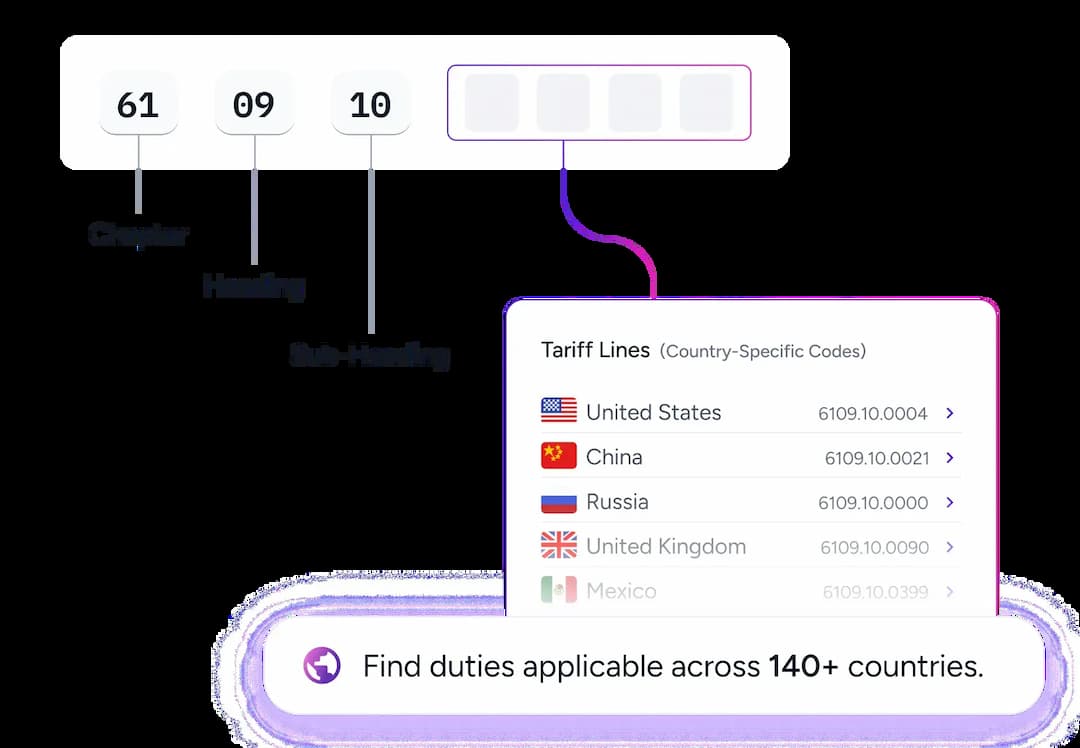
HS Code Lookup helps classify products under appropriate HS code and find duties applicable across 140+ countries. Find and discover HS classification, tariffs, taxes, controls, rulings, ECCNs, and default and preferential duties for HS code 03.

WCO Notes for Chapter 03
Chapter 3
Fish and crustaceans, molluscs and other
aquatic invertebrates
Notes.
1.- This Chapter does not cover :
(a) Mammals of heading 01.06;
(b) Meat of mammals of heading 01.06 (heading 02.08 or 02.10);
(c) Fish (including livers, roes and milt thereof) or crustaceans, molluscs or other aquatic invertebrates, dead and unfit or unsuitable for human consumption by reason of either their species or their condition (Chapter 5); flours, meals or pellets of fish or of crustaceans, molluscs or other aquatic invertebrates, unfit for human consumption (heading 23.01); or
(d) Caviar or caviar substitutes prepared from fish eggs (heading 16.04).
2.- In this Chapter the term “pellets” means products which have been agglomerated either directly by compression or by the addition of a small quantity of binder.
3.- Headings 03.05 to 03.08 do not cover flours, meals and pellets, fit for human consumption (heading 03.09).
GENERAL
This Chapter covers all fish and crustaceans, molluscs and other aquatic invertebrates, whether live or dead, presented for direct consumption, or for industrial purposes (canning, etc.), for spawning, for aquaria, etc., with the exception of dead fish (including livers and roes thereof), crustaceans, molluscs and other aquatic invertebrates which are unfit or unsuitable for human consumption by reason of either their species or their condition (Chapter 5).
The term “chilled” means that the temperature of a product has been reduced, generally to around 0 °C, without the product being frozen. The expression “frozen” means that the product has been cooled to below the product’s freezing point until it is frozen throughout.
This Chapter also covers edible fish roes and milt, not prepared or preserved, or prepared or preserved only by processes provided for in this Chapter. Otherwise prepared or preserved edible roes and milt, or those suitable for immediate consumption as caviar or caviar substitutes are classified in heading 16.04.
Distinction between goods of this Chapter and those of Chapter 16.
This Chapter is limited to fish (including livers and roes thereof) and crustaceans, molluscs and other aquatic invertebrates in the states described in the headings. Subject to this proviso, they remain classified in the Chapter whether or not they have been cut, chopped, minced, ground, etc. In addition, mixtures or combinations of products of different headings of the Chapter (e.g., fish of headings 03.02 to 03.04 combined with crustaceans of heading 03.06) remain classified in this Chapter.
On the other hand, fish and crustaceans, molluscs and other aquatic invertebrates are classified in Chapter 16 if they have been cooked or otherwise prepared or preserved by processes not provided for in this Chapter (e.g., fish fillets merely covered with batter or bread crumbs, cooked fish). It should, however, be noted that smoked fish and smoked crustaceans, molluscs and other aquatic invertebrates, which may have undergone cooking during or before the smoking process, and crustaceans in their shells simply steamed or boiled in water, remain classified in headings 03.05, 03.06, 03.07 and 03.08, respectively. Molluscs that have been subjected only to scalding or other types of heat shock (which do not entail cooking as such), necessary to open the shell or stabilize the mollusc prior to transportation or freezing, also remain in this Chapter. Flours, meals and pellets obtained from cooked fish and cooked crustaceans, molluscs or other aquatic invertebrates remain classified in heading 03.09.
It should also be noted that fish and crustaceans, molluscs and other aquatic invertebrates of this Chapter remain classified here even if put up in airtight containers (e.g., smoked salmon in cans). In most cases, however, products put up in these packings have been prepared or preserved otherwise than as provided for in the headings of this Chapter, and accordingly fall to be classified in Chapter 16.
Similarly, fish and crustaceans, molluscs and other aquatic invertebrates of this Chapter remain classified here (e.g., fresh or chilled fish) when subjected to packaging by means of a Modified Atmospheric Packaging (MAP) process. In a MAP process the atmosphere surrounding the product is altered or controlled (e.g., by removing or reducing the oxygen content and replacing it with or increasing the nitrogen or carbon dioxide content).
In addition to the exclusions referred to above, the Chapter also excludes :
(a) Mammals of heading 01.06.
(b) Meat of mammals of heading 01.06 (heading 02.08 or 02.10).
(c) Fish waste and inedible roes (e.g., salted cod roes used as fishing bait) (heading 05.11).
(d) Flours, meals and pellets of fish or of crustaceans, molluscs or other aquatic invertebrates, unfit for human consumption (heading 23.01).
°
° °

What is HS code 03?

How many headings are there in HS code 03?
International Trade Compliance Simplified