Small Ticket, Full Workload: Closing The MSME LC Gap
Download Report

HS Code Lookup for Heading 0406

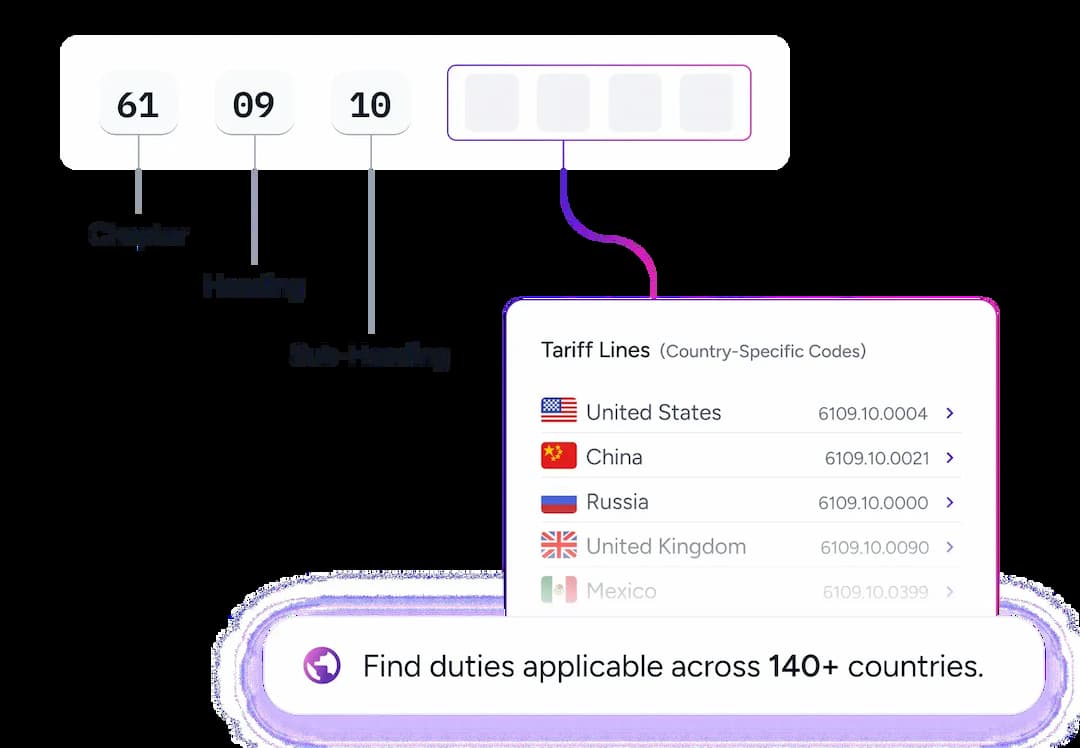
HS Code Lookup helps classify products under appropriate HS code and find duties applicable across 140+ countries. Find and discover HS classification, tariffs, taxes, controls, rulings, ECCNs, and default and preferential duties for HS code 0406.

search-icon
HS Code Image

WCO Notes for Heading 0406

04.06 ‑ Cheese and curd (+).

0406.10 ‑ Fresh (unripened or uncured) cheese, including whey cheese, and curd

0406.20 ‑ Grated or powdered cheese, of all kinds

0406.30 ‑ Processed cheese, not grated or powdered

0406.40 ‑ Blue‑veined cheese and other cheese containing veins produced by Penicillium roqueforti

0406.90 ‑ Other cheese

This heading covers all kinds of cheese, viz. :

(1) Fresh cheese (including cheese made from whey or buttermilk) and curd. Fresh cheese is an unripened or uncured cheese which is ready for consumption shortly after manufacture (e.g., Ricotta, Broccio, cottage cheese, cream cheese, Mozzarella).

(2) Grated or powdered cheese.

(3) Processed cheese, also known as process cheese. It is manufactured by comminuting, mixing, melting and emulsifying, with the aid of heat and emulsifying or acidifying agents (including melting salts), one or more varieties of cheese and one or more of the following : cream or other dairy products, salt, spices, flavouring, colouring and water.

(4) Blue‑veined cheese and other cheese containing veins produced by Penicillium roqueforti.

(5) Soft cheese (e.g., Camembert, Brie).

(6) Medium‑hard cheese and hard cheese (e.g., Cheddar, Gouda, Gruyère, Parmesan).

Whey cheeses are obtained by concentrating whey and adding milk or milk fat. They are classified in this heading only if they have the three following characteristics :

(a) a milkfat content, by weight of the dry matter, of 5 % or more;

(b) a dry matter content, by weight, of at least 70 % but not exceeding 85 %;

(c) they are moulded or capable of being moulded.

The presence of meat, fish, crustaceans, herbs, spices, vegetables, fruit, nuts, vitamins, skimmed milk powder, etc., does not affect classification provided that the goods retain the character of cheese.

Cheeses which have been coated with batter or bread crumbs remain classified in this heading whether or not they have been pre-cooked, provided that the goods retain the character of cheese.

°

° °

Subheading Explanatory Note.

Subheading 0406.40

This subheading covers cheese containing visible veins in the body of the cheese that may be blue, green, greenish-blue or whitish-grey in colour, such as Bleu d’Auvergne, Bleu de Causses, Bleu de Quercy, Blue Cheshire, Blue Dorset, Blue Wensleydale, Cabrales, Danish Blue (Danablu), Gorgonzola, Mycella, Roquefort, Saingorlon and Stilton, as well as cheeses with proprietary or trade names, provided they meet the above criterion.

04.06 ‑ Cheese and curd (+).

0406.10 ‑ Fresh (unripened or uncured) cheese, including whey cheese, and curd

0406.20 ‑ Grated or powdered cheese, of all kinds

0406.30 ‑ Processed cheese, not grated or powdered

0406.40 ‑ Blue‑veined cheese and other cheese containing veins produced by Penicillium roqueforti

0406.90 ‑ Other cheese

This heading covers all kinds of cheese, viz. :

(1) Fresh cheese (including cheese made from whey or buttermilk) and curd. Fresh cheese is an unripened or uncured cheese which is ready for consumption shortly after manufacture (e.g., Ricotta, Broccio, cottage cheese, cream cheese, Mozzarella).

(2) Grated or powdered cheese.

(3) Processed cheese, also known as process cheese. It is manufactured by comminuting, mixing, melting and emulsifying, with the aid of heat and emulsifying or acidifying agents (including melting salts), one or more varieties of cheese and one or more of the following : cream or other dairy products, salt, spices, flavouring, colouring and water.

(4) Blue‑veined cheese and other cheese containing veins produced by Penicillium roqueforti.

(5) Soft cheese (e.g., Camembert, Brie).

(6) Medium‑hard cheese and hard cheese (e.g., Cheddar, Gouda, Gruyère, Parmesan).

Whey cheeses are obtained by concentrating whey and adding milk or milk fat. They are classified in this heading only if they have the three following characteristics :

(a) a milkfat content, by weight of the dry matter, of 5 % or more;

(b) a dry matter content, by weight, of at least 70 % but not exceeding 85 %;

(c) they are moulded or capable of being moulded.

The presence of meat, fish, crustaceans, herbs, spices, vegetables, fruit, nuts, vitamins, skimmed milk powder, etc., does not affect classification provided that the goods retain the character of cheese.

Cheeses which have been coated with batter, dough or bread crumbs remain classified in this heading whether or not they have been pre-cooked, provided that the goods retain the character of cheese.

°

° °

Subheading Explanatory Note.

Subheading 0406.40

This subheading covers cheese containing visible veins in the body of the cheese that may be blue, green, greenish-blue or whitish-grey in colour, such as Bleu d’Auvergne, Bleu de Causses, Bleu de Quercy, Blue Cheshire, Blue Dorset, Blue Wensleydale, Cabrales, Danish Blue (Danablu), Gorgonzola, Mycella, Roquefort, Saingorlon and Stilton, as well as cheeses with proprietary or trade names, provided they meet the above criterion.

tips_icon
FAQs
What is HS code 0406?
Arrow button for expand and collapse
HS code 0406 includes Dairy produce; birds' eggs; natural honey; edible products of animal origin, not elsewhere specified or included - Cheese and curd..
How many sub-headings are there in HS code 0406?
Arrow button for expand and collapse
There are 5 sub-heading(s) in HS code 0406.
What is an HS Code and Why Does it Hold For Cross-Border Trade?
HS code is a standardized six-digit numerical classification system developed by the World Customs Organization (WCO) and acts as a universal language for simplifying the process of identifying and classifying traded products. They ensure consistent customs clearance, enable accurate duty calculation, and help identify relevant trade regulations. This simplifies the process for businesses, saving time, reducing risk, and promoting informed decision-making.
What are Controls and Why should Businesses Focus on Them?
In global trade, controls refer to a set of regulations and policies implemented by governments to manage the import and export of goods and services. These controls can take various forms, including tariffs, quotas, embargoes, export controls, and licensing requirements. Companies should prioritize understanding and adhering to them for compliance, reduced risk of legal issues, mitigating reputational damage, staying competitive, and building trust with governments.
What are Tariffs in Global Trade and Why should Businesses Focus on Them?
In global trade, tariffs are a type of tax levied by a government on imported goods. They act as a financial barrier to entry, increasing the overall cost of the imported product for domestic consumers and businesses. By understanding how tariffs work and their potential impact, companies can make informed decisions about pricing, sourcing, and market expansion, ultimately ensuring their competitiveness in the global marketplace.
What are FTAs in Global Trade and Why should Businesses Focus on Them?
In global trade, Free Trade Agreements (FTAs) are legally binding agreements between two or more countries aimed at reducing or eliminating barriers to trade between them. By understanding the terms of relevant FTAs and strategically incorporating them into their business plans, companies can enjoy reduced costs, expanded market access, and a more competitive edge in international trade.

International Trade Compliance Simplified

140+
Countries Covered
440+
Government Authorities
300+
FTAs Monitored
500K+
Customs Rulings
880K+
Import & Export Compliance Data Entities
GDPR logoSOC2ISO logoISO logoISO 27001 logoISO 27701 logo
All rights reserved | Terms of use Copyright ©2025 Trademo Technologies Inc.