















HS Code Lookup for Heading 0709
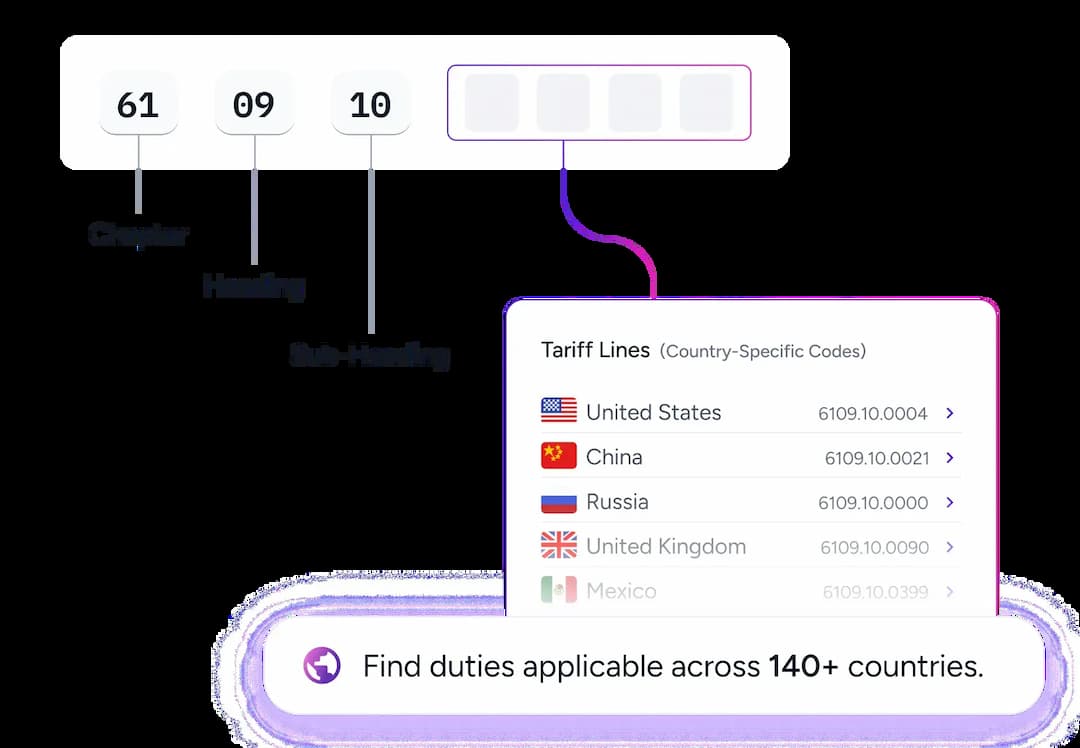
HS Code Lookup helps classify products under appropriate HS code and find duties applicable across 140+ countries. Find and discover HS classification, tariffs, taxes, controls, rulings, ECCNs, and default and preferential duties for HS code 0709.

WCO Notes for Heading 0709
07.09 ‑ Other vegetables, fresh or chilled.
0709.20 ‑ Asparagus
0709.30 ‑ Aubergines (egg‑plants)
0709.40 ‑ Celery other than celeriac
‑ Mushrooms and truffles :
0709.51 ‑ ‑ Mushrooms of the genus Agaricus
0709.52 ‑ ‑ Mushrooms of the genus Boletus
0709.53 ‑ ‑ Mushrooms of the genus Cantharellus
0709.54 ‑ ‑ Shiitake (Lentinus edodes)
0709.55 ‑ ‑ Matsutake (Tricholoma matsutake, Tricholoma magnivelare, Tricholoma anatolicum, Tricholoma dulciolens, Tricholoma caligatum)
0709.56 ‑ ‑ Truffles (Tuber spp.)
0709.59 ‑ ‑ Other
0709.60 ‑ Fruits of the genus Capsicum or of the genus Pimenta
0709.70 ‑ Spinach, New Zealand spinach and orache spinach (garden spinach)
‑ Other
0709.91 - - Globe artichokes
0709.92 - - Olives
0709.93 - - Pumpkins, squash and gourds (Cucurbita spp.)
0709.99 - - Other
The vegetables of this heading include :
(1) Asparagus.
(2) Aubergines (egg‑plants).
(3) Celery (other than celeriac of heading 07.06).
(4) Mushrooms (including mushrooms of the genus Agaricus (such as the common white mushroom, A. bisporus), mushrooms of the genus Boletus, mushrooms of the genus Cantharellus, Shiitake (Lentinus edodes) and Matsutake (Tricholoma matsutake, Tricholoma magnivelare, Tricholoma anatolicum, Tricholoma dulciolens, Tricholoma caligatum)) and truffles (Tuber spp.).
(5) Fruits of the genus Capsicum or of the genus Pimenta, commonly referred to as “peppers”. Fruits of the genus Capsicum range from the sweet or bell peppers (Capsicum annuum var. annuum), which are the mildest and largest of the genus Capsicum and which, either in their green or their ripened state, are most commonly eaten as a vegetable in salads, to the more pungent varieties of Capsicum frutescens and Capsicum annuum, which include chillies, Cayenne pepper, paprikas, etc., used most often to flavour foods. Fruits of the genus Pimenta include Jamaica pepper (also known as clove pepper, English pepper and allspice). The heading does not cover these products when dried, crushed or ground (heading 09.04).
(6) Spinach, including New Zealand and orache (garden) spinach.
(7) Globe artichokes.
(8) Sweet corn (Zea mays var. saccharata), whether or not on the cob.
(9) Pumpkins, marrows, squash and gourds (Cucurbita spp.).
(10) Olives.
(11) Rhubarb, edible cardoons, fennel, capers and sorrel.
(12) Chard (white beet) and okra (gumbo).
(13) Parsley, chervil, tarragon, cress (e.g., watercress), savory (Satureia hortensis), coriander, dill, sweet marjoram (Majorana hortensis or Origanum majorana). Wild marjoram (Origanum vulgare) is excluded (heading 12.11).
(14) Bamboo shoots and soya bean sprouts.
The heading also excludes the edible tuber of the species Eleocharis dulcis or Eleocharis tuberosa, commonly known as the Chinese water chestnut (heading 07.14).

What is HS code 0709?

How many sub-headings are there in HS code 0709?
International Trade Compliance Simplified