














HS Code Lookup for Heading 1006
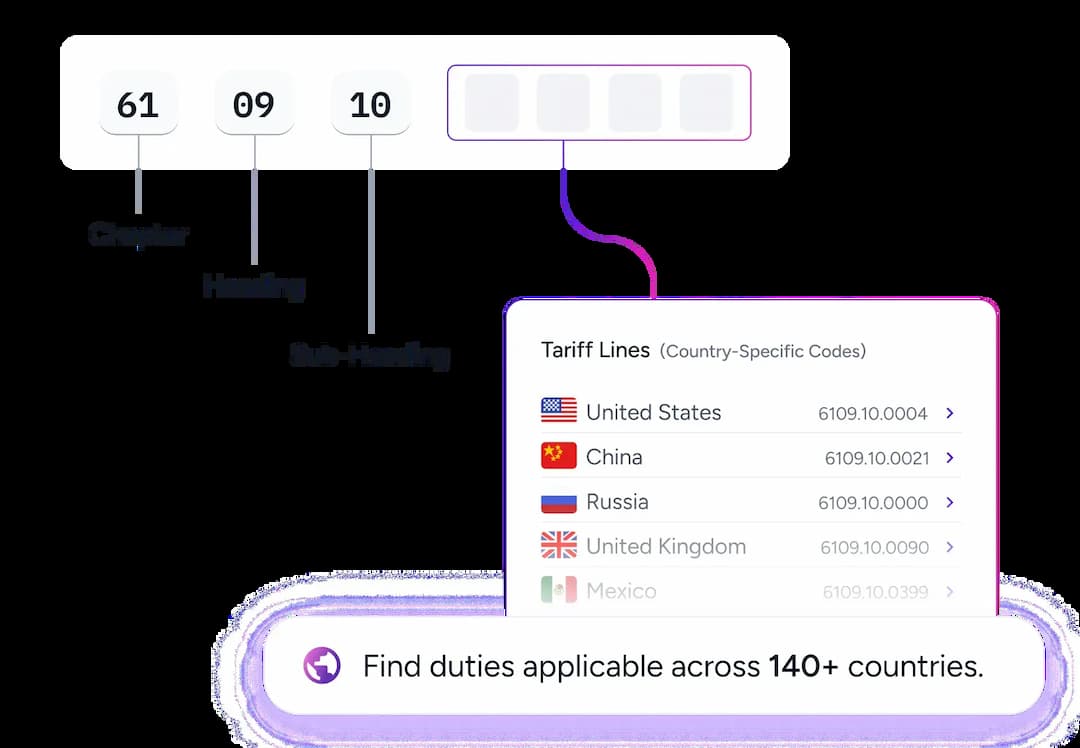
HS Code Lookup helps classify products under appropriate HS code and find duties applicable across 140+ countries. Find and discover HS classification, tariffs, taxes, controls, rulings, ECCNs, and default and preferential duties for HS code 1006.

WCO Notes for Heading 1006
10.06 ‑ Rice.
1006.10 ‑ Rice in the husk (paddy or rough)
1006.20 ‑ Husked (brown) rice
1006.30 ‑ Semi‑milled or wholly milled rice, whether or not polished or glazed
1006.40 ‑ Broken rice
This heading covers :
(1) Rice in the husk (paddy orrough rice), that is to say, rice grain still tightly enveloped by the husk.
(2) Husked (brown) rice(cargo rice) which, although the husk has been removed by mechanical hullers, is still enclosed in the pericarp. Husked rice almost always still contains a small quantity of paddy.
(3) Semi‑milled rice, that is to say, whole rice grains from which the pericarp has been partly removed.
(4) Wholly milled rice (bleached rice), whole rice grains from which the pericarp has been removed by passage through special tapering cylinders.
Wholly milled rice may be polished and subsequently glazed to improve its appearance. The polishing process (which is designed to embellish the mat surface of the plain milled rice) is carried out in brush machines or “polishing cones”. “Glazing” consists of coating the grains with a mixture of glucose and talcum in special glazing drums.
The heading also includes “Camolino” rice, which consists of milled rice coated with a thin film of oil.
(5) Broken rice, i.e., rice broken during processing.
The heading also includes the following :
(a) Enriched rice, consisting of a mixture of ordinary milled rice grains and a very small proportion (in the order of 1 %) of rice grains coated or impregnated with vitamin substances.
(b) Parboiled rice, which, while still in the husk and before being subjected to other processes (e.g., husking, milling, polishing), has been soaked in hot water or steamed and then dried. At certain stages of the parboiling process, the rice may have been treated under pressure or exposed to a complete or partial vacuum.
The grain structure of parboiled rice is only modified to a minor extent by the process it has undergone. Such rice, after milling, polishing, etc., takes from 20 to 35 minutes to cook fully.
The varieties of rice which have been submitted to treatments considerably modifying the grain structure are excluded from this heading. Pre‑cooked rice consisting of worked rice grains cooked either fully or partially and then dehydrated falls in heading 19.04. Partially pre‑cooked rice takes 5 to 12 minutes to prepare for consumption, whereas fully pre‑cooked rice needs only to be soaked in water and brought to the boil before consumption. “Puffed” rice obtained by a swelling process and ready for consumption is also classified in heading 19.04.

What is HS code 1006?

How many sub-headings are there in HS code 1006?
International Trade Compliance Simplified