














HS Code Lookup for Heading 1108
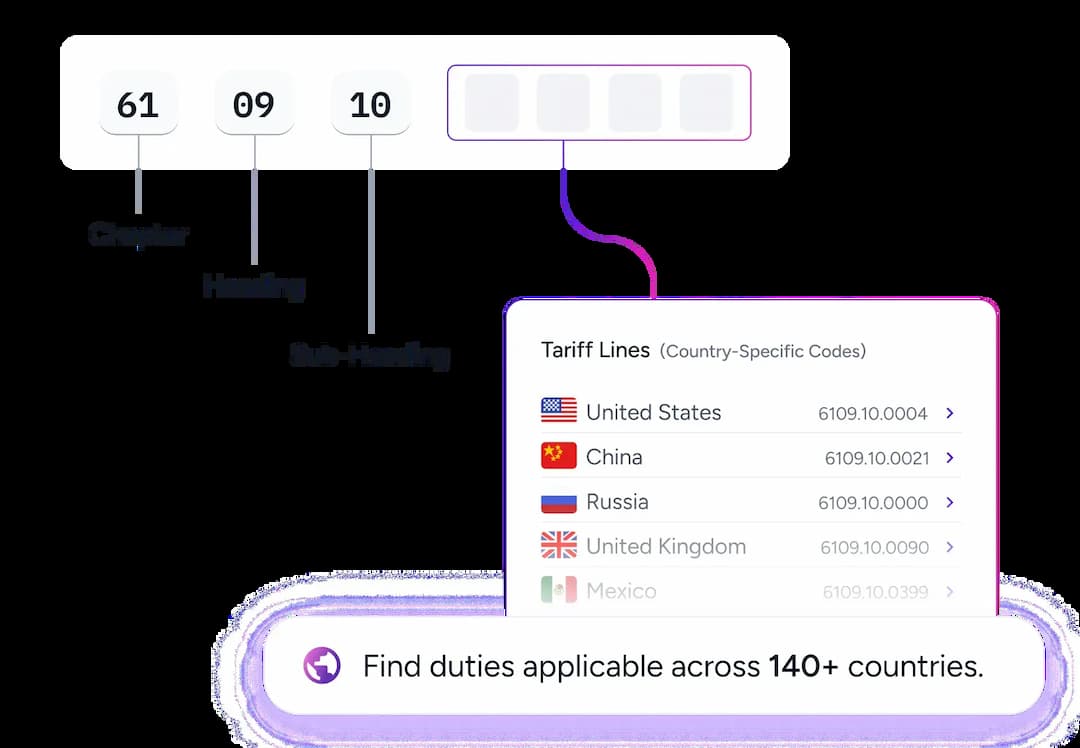
HS Code Lookup helps classify products under appropriate HS code and find duties applicable across 140+ countries. Find and discover HS classification, tariffs, taxes, controls, rulings, ECCNs, and default and preferential duties for HS code 1108.

WCO Notes for Heading 1108
11.08 ‑ Starches; inulin.
‑ Starches :
1108.11 ‑ ‑ Wheat starch
1108.12 ‑ ‑ Maize (corn) starch
1108.13 ‑ ‑ Potato starch
1108.14 ‑ ‑ Manioc (cassava) starch
1108.19 ‑ ‑ Other starches
1108.20 ‑ Inulin
Starches, which chemically are carbohydrates, are contained in the cells of many vegetable products. The most important sources of starch are the cereal grains (e.g., maize (corn), wheat and rice), certain lichens, certain tubers and roots (potato, manioc, arrowroot, etc.) and the pith of the sago palm.
Starches are white odourless powders composed of fine grains which crackle when rubbed between the fingers. They generally give an intense dark blue colour with iodine (except amylopectin starches, where the colour is reddish brown). Viewed under the microscope in polarised light the grains display characteristic dark polarisation crosses. They are insoluble in cold water, but, if heated in water to above their gelatinisation temperature (about 60 °C for most starches), the grains break up and a starch paste is formed. Starches are commercially processed to give a wide range of products classified under other headings, e.g., modified starch, roasted soluble starch, dextrin, malto‑dextrin, dextrose, glucose. They are also used as such in a wide variety of industries, especially the food, paper, paper converting and textile industries.
The heading also includes inulin; this is chemically similar to starch but gives a light yellowish‑brown coloration with iodine instead of blue. It is extracted from Jerusalem artichokes, dahlia roots and chicory roots. When hydrolised by long boiling in water it forms fructose (laevulose).
This heading excludes, inter alia :
(a) Starch preparations of heading 19.01.
(b) Tapioca and substitutes therefore prepared from starches (see the Explanatory Note to heading 19.03).
(c) Starches put up as perfumery or toilet preparations (Chapter 33).
(d) Dextrins and other modified starches ofheading 35.05.
(e) Glues based on starch (heading 35.05or 35.06).
(f) Prepared glazings or dressings made from starch (heading 38.09).
(g) Isolated amylopectin and isolated amylose obtained by the fractionation of starch (heading 39.13).

What is HS code 1108?

How many sub-headings are there in HS code 1108?
International Trade Compliance Simplified