















HS Code Lookup for Heading 2508
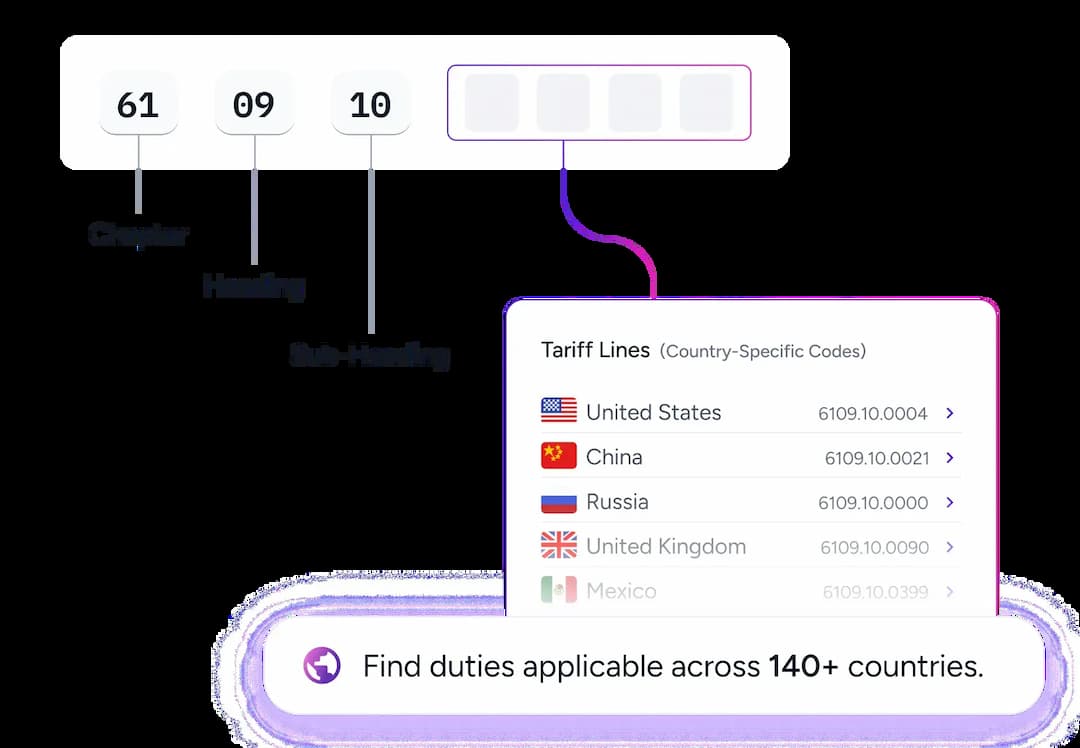
HS Code Lookup helps classify products under appropriate HS code and find duties applicable across 140+ countries. Find and discover HS classification, tariffs, taxes, controls, rulings, ECCNs, and default and preferential duties for HS code 2508.

WCO Notes for Heading 2508
25.08 ‑ Other clays (not including expanded clays of heading 68.06), andalusite, kyanite and sillimanite, whether or not calcined; mullite; chamotte or dinas earths (+).
2508.10 ‑ Bentonite
2508.30 ‑ Fire‑clay
2508.40 ‑ Other clays
2508.50 ‑ Andalusite, kyanite and sillimanite
2508.60 ‑ Mullite
2508.70 ‑ Chamotte or dinas earths
This heading covers all natural clayey substances (other than kaolin and other kaolinic clays of heading 25.07) consisting of earths or rocks of sedimentary origin with a basis of aluminium silicates. The characteristic properties of these products are plasticity, the faculty of hardening when fired and resistance to heat. Because of these properties clays are used as raw materials in the ceramic industry (bricks, building tiles, porcelain, china, earthenware, refractory bricks and other refractory goods, etc.); common clay is also used for soil improvement.
These products remain in this heading even if they have been heated to remove some or most of the associated water (to produce absorbent clay) or when fully calcined.
In addition to common clays, the following special products also fall in the heading :
(1) Bentonite, a clay derived from volcanic ash; largely used as an ingredient of moulding sand, as a filtering and decolouring agent in oil refining and for degreasing of textiles.
(2) Fuller’s earth, a natural earthy material with high absorptive power, composed chiefly of attapulgite. It is used for decolourising oils, for degreasing textiles, etc.
(3) Andalusite, kyanite (or disthene) and sillimanite, natural anhydrous aluminium silicates used as refractories.
(4) Mullite, obtained by heat treatment of sillimanite, kyanite or andalusite or by fusing a mixture of silica or clay and aluminium oxide in an electric furnace; used in the preparation of refractory products with great resistance to heat.
(5) Chamotte earth, also called “fire‑clay grog”, obtained either by crushing fire‑clay bricks or by crushing a calcined mixture of clay with other refractory materials.
(6) Dinas earth, a refractory material which consists of quartzose earth containing clay or may be obtained by mixing clay with ground quartz or quartz sand.
This heading does not include :
(a) Clays which are earth colours within the meaning of heading 25.30.
(b) Activated clay (heading 38.02).
(c) Special preparations for the manufacture of certain ceramic goods (heading 38.24).
(d) Expanded clays (used in lightweight concrete aggregates or for heat insulation) even if obtained solely by calcining natural clays (heading 68.06).
°
° °
Subheading Explanatory Notes.
Subheading 2508.10
Subheading 2508.10 includes sodium bentonites (swelling bentonites) and calcium bentonites (non‑swelling bentonites).
Subheading 2508.30
Subheading 2508.30 does not cover clays composed mainly of kaolin, some of which are “fire‑clays”. Such clays are to be classified in heading 25.07.

What is HS code 2508?

How many sub-headings are there in HS code 2508?
International Trade Compliance Simplified