















HS Code Lookup for Heading 2834
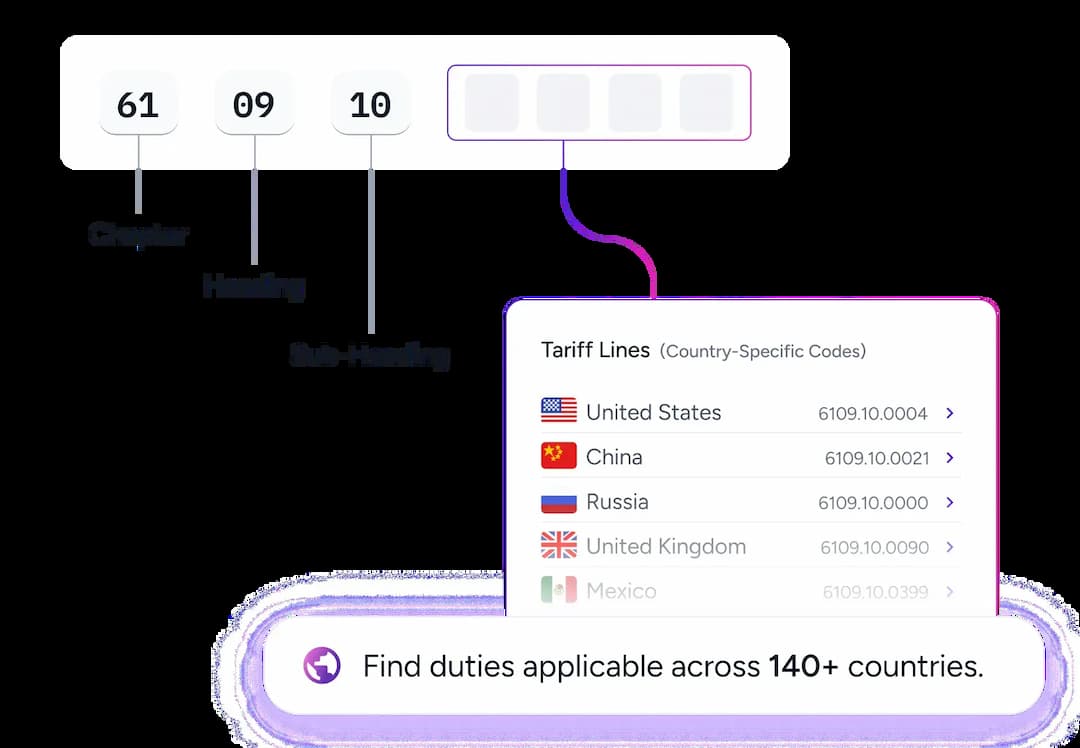
HS Code Lookup helps classify products under appropriate HS code and find duties applicable across 140+ countries. Find and discover HS classification, tariffs, taxes, controls, rulings, ECCNs, and default and preferential duties for HS code 2834.

WCO Notes for Heading 2834
28.34 ‑ Nitrites; nitrates.
2834.10 ‑ Nitrites
‑ Nitrates :
2834.21 ‑ ‑ Of potassium
2834.29 ‑ ‑ Other
(A) NITRITES
Subject to the exclusions mentioned in the introduction to this sub‑Chapter, this heading includes nitrites, metal salts of nitrous acid (HNO2) (heading 28.11).
(1) Sodium nitrite (NaNO2). Obtained by reducing sodium nitrate with lead; also during the manufacture of litharge. Colourless crystals, hygroscopic and very soluble in water. Used as an oxidising agent in vat dyes; in organic synthesis; for pickling meat; in photography; as a rat‑poison, etc.
(2) Potassium nitrite (KNO2). Prepared by the same method as sodium nitrite, or by the action of sulphur dioxide on a mixture of calcium oxide and potassium nitrate. A white crystalline powder or in yellowish sticks; often containing other salts as impurities. Soluble in water, very deliquescent and deteriorating in the air. Used for similar purposes to sodium nitrite.
(3) Barium nitrite (Ba(NO2)2). Crystals used in pyrotechnics.
(4) Other nitrites. These include ammonium nitrite, unstable and explosive; used in solution for the production of nitrogen in laboratories.
The heading excludes cobaltinitrites (heading 28.42).
(B) NITRATES
Subject to the exclusions mentioned in the introduction to this sub‑Chapter, this heading covers nitrates, metal salts of nitric acid (heading 28.08), other than ammonium nitrate and sodium nitrate, whether or not pure (heading 31.02 or 31.05). (See other exclusions below.)
Basic nitrates are also classified here.
(1) Potassium nitrate (KNO3) (also called saltpetre or nitre). Obtained from sodium nitrate and potassium chloride. Occurs in colourless crystals, in vitreous masses or as a white crystalline powder, soluble in water and hygroscopic when impure. Similar uses to sodium nitrate; also for preparing gunpowder, chemical primers, fireworks, matches and metallurgical fluxes.
(2) Bismuth nitrates.
(a) Neutral bismuth nitrate (Bi(NO3)3.5H2O). Results from the action of nitric acid on bismuth; large crystals, colourless, deliquescent. Used for preparing bismuth oxides or salts and certain varnishes.
(b) Basic bismuth nitrate (BiNO3(OH)2). Obtained from the neutral bismuth nitrate; pearly white powder, insoluble in water. Used in medicine (for treating gastro‑intestinal ailments); in ceramics (iridescent colours); in cosmetics; in the preparation of fulminate primers, etc.
(3) Magnesium nitrate (Mg(NO3)2.6H2O). Colourless crystals, soluble in water. Used in pyrotechnics, in the preparation of refractory products (with magnesium oxide), of incandescent gas mantles, etc.
(4) Calcium nitrate (Ca(NO3)2). Obtained by treating crushed limestone with nitric acid. White deliquescent mass, soluble in water, alcohol and acetone : used in pyrotechnics, in the manufacture of explosives, matches, fertilisers, etc.
(5) Ferric nitrate (Fe(NO3)3.6 or 9 H2O). Blue crystals. Used as a mordant in dyeing and in printing (alone or combined with the acetate). The pure aqueous solution is used in medicine.
(6) Cobalt nitrate (Co(NO3)2.6H2O). Purple, reddish or brownish crystals, soluble in water, deliquescent. Used in the preparation of cobalt blues or yellow and of sympathetic inks; in ceramic decoration; for electrolytic cobalt‑plating, etc.
(7) Nickel nitrate (Ni(NO3)2.6H2O). Water‑soluble, deliquescent green crystals. Used in the ceramic industry (brown pigments); in dyeing (as a mordant); in electrolytic nickel‑plating; for obtaining nickel oxide or for the preparation of the pure nickel catalyst.
(8) Cupric nitrate (Cu(NO3)2). Copper dissolved in nitric acid gives, by crystallisation, copper nitrate (with 3 or 6 H2O) according to temperature). Blue or green crystals, soluble in water, hygroscopic, poisonous. Used in pyrotechnics; in the dyestuff industry; in textile dyeing or printing (mordant); in the preparation of cupric oxide and photographic papers; in electroplating, to give metals a patina, etc.
(9) Strontium nitrate (Sr(NO3)2). The action of strontium oxide or sulphide on nitric acid gives the anhydrous salt in the warm, and the hydrated salt (with 4 H2O) in the cold. Colourless crystalline powder, deliquescent, soluble in water, decomposed by heat. Used in pyrotechnics for red lights; also in the preparation of matches.
(10) Cadmium nitrate (Cd(NO3)2.4H2O). Prepared from the oxide. Colourless needles, soluble in water and deliquescent. Used as a colouring matter in ceramics or glass‑making.
(11) Barium nitrate (Ba(NO3)2). Prepared from natural carbonate (witherite) (heading 25.11). Colourless or white crystals or crystalline powder, soluble in water, poisonous. Used in pyrotechnics for green lights; in the manufacture of explosives, of optical glass, of ceramic glazes, of barium salts or of nitrates, etc.
(12) Lead nitrate (Pb(NO3)2). Lead nitrate is obtained as a by‑product of the preparation of lead dioxide by the action of nitric acid on red lead. Colourless crystals, soluble in water, poisonous. Used in pyrotechnics (yellow lights); in the manufacture of matches, of explosives and of certain colouring matters; in tanning; in photography and lithography; for preparing lead salts and as an oxidising agent in organic synthesis.
Apart from the exclusions mentioned previously, the following products are also excluded :
(a) Mercury nitrates (heading 28.52).
(b) Acetonitrates (Chapter 29) (e.g., iron acetonitrate, used as a mordant).
(c) Double salts, whether or not pure, of ammonium sulphate and ammonium nitrate (heading 31.02 or 31.05).
(d) Explosives consisting of mixtures of metal nitrates (heading 36.02).

What is HS code 2834?

How many sub-headings are there in HS code 2834?
International Trade Compliance Simplified