















HS Code Lookup for Heading 2839
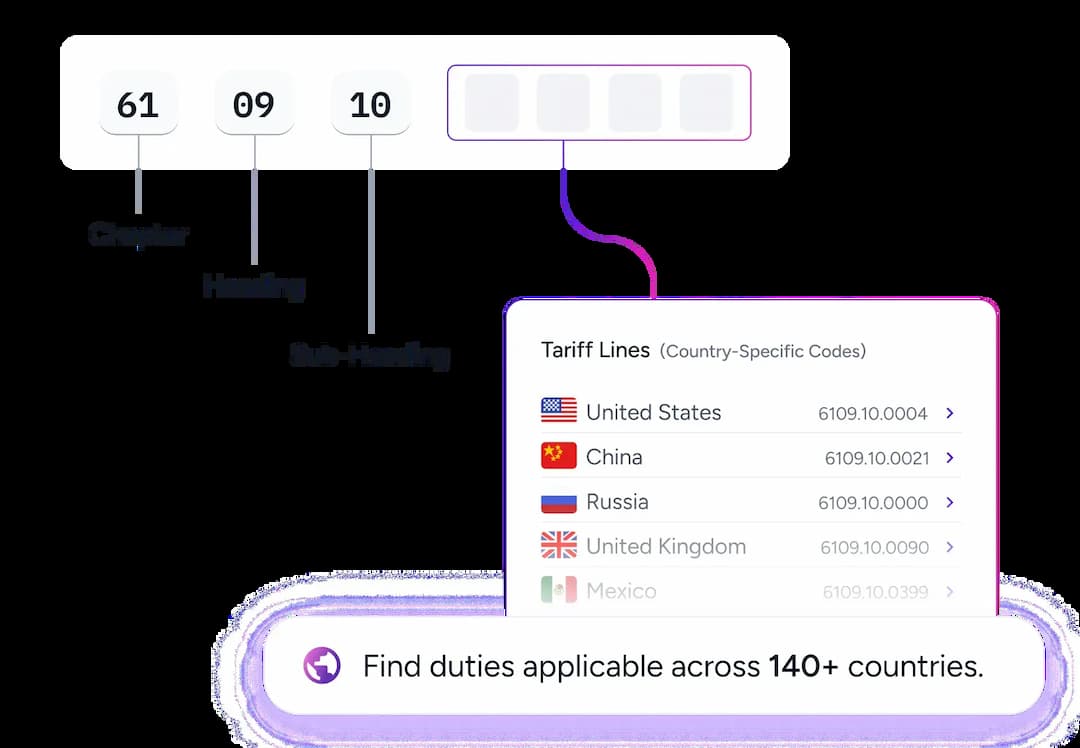
HS Code Lookup helps classify products under appropriate HS code and find duties applicable across 140+ countries. Find and discover HS classification, tariffs, taxes, controls, rulings, ECCNs, and default and preferential duties for HS code 2839.

WCO Notes for Heading 2839
28.39 ‑ Silicates; commercial alkali metal silicates.
‑ Of sodium :
2839.11 ‑ ‑ Sodium metasilicates
2839.19 ‑ ‑ Other
2839.90 ‑ Other
Subject to the exclusions mentioned in the introduction to this sub‑Chapter, this heading covers silicates, metal salts of the various silicic acids, non‑isolated in the free state and derived from silicon dioxide (heading 28.11).
(1) Sodium silicates. Obtained by melting sand and sodium carbonate or sulphate. Their composition is very diverse (monosilicate, metasilicate, polysilicate, etc.), and their degree of hydration and their solubility vary with the method of manufacture and the degree of purity. Occur in colourless crystals or in powder, in vitreous masses (water‑glass) or in more or less viscous aqueous solutions. They deflocculate the gangues of ores and are used as flotation regulators. Also employed as fillers for manufacturing silicate soaps; as binders or adhesives in the manufacture of paperboard or agglomerated coal; as fire‑proofing materials; for preserving eggs; in the manufacture of non‑putrefying adhesives; as hardening agents in the preparation of corrosion‑resistant cements, of lutings or of artificial stones; for the manufacture of washing preparations; for pickling metals; as anti‑scaling products (see Explanatory Note to heading 38.24).
(2) Potassium silicates. Used for similar purposes to sodium silicates.
(3) Manganese silicate(MnSiO3). Orange‑coloured powder, insoluble in water. Used as a ceramic colour and as a drier for paints or varnishes.
(4) Precipitated calcium silicates. White powders obtained from sodium or potassium silicates. Used for manufacturing fire‑proof pisés, and dental cements.
(5) Barium silicates. White powders used for manufacturing barium oxide and optical glass.
(6) Lead silicates. Occur as powder or in vitreous white masses; used as a glaze in ceramics.
(7) Other silicates, including commercial alkali metal silicates other than those mentioned above. These include caesium silicate (yellow powder, used in ceramics), zinc silicate (coating of fluorescent tubes), aluminium silicate (manufacture of porcelain and refractory products).
Natural silicates are excluded from the heading, e.g. :
(a) Wollastonite (calcium silicate), rhodonite (manganese silicate), phenacite (or phenakite) (beryllium silicate), and titanite (titanium silicate) (heading 25.30).
(b) Ores such as copper silicates (chrysocolla, dioptase), zinc hydrosilicate (hemimorphite), and zirconium silicate (zircon) (headings 26.03, 26.08 and26.15).
(c) The precious stones of Chapter 71.

What is HS code 2839?

How many sub-headings are there in HS code 2839?
International Trade Compliance Simplified