














HS Code Lookup for Heading 2849
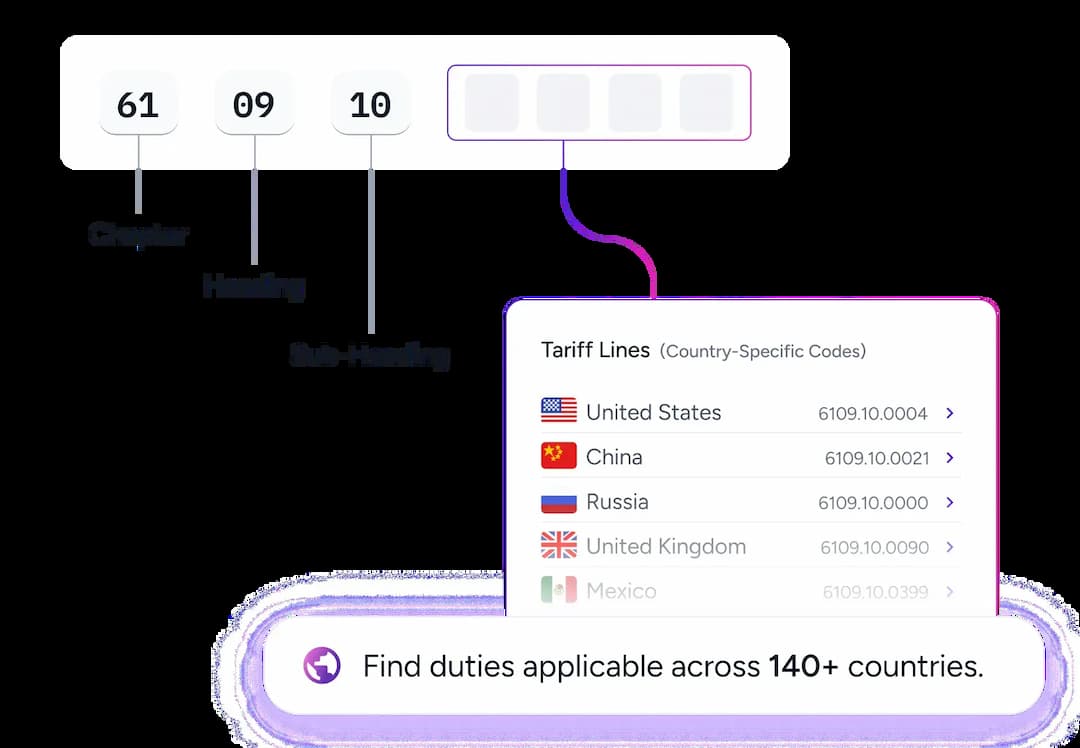
HS Code Lookup helps classify products under appropriate HS code and find duties applicable across 140+ countries. Find and discover HS classification, tariffs, taxes, controls, rulings, ECCNs, and default and preferential duties for HS code 2849.

WCO Notes for Heading 2849
28.49 ‑ Carbides, whether or not chemically defined.
2849.10 ‑ Of calcium
2849.20 ‑ Of silicon
2849.90 ‑ Other
This heading covers :
(A) Binary carbides, which are compounds of carbon with another element more electropositive than carbon. Those known as acetylides are also classified in this heading.
The best known binary carbides are :
(1) Calcium carbide (CaC2). A transparent, colourless solid in the pure state, opaque and grey when impure. Decomposed by water to produce acetylene; used for the production of the latter gas or of calcium cyanamide.
(2) Silicon carbide (SiC) (carbon silicide). Obtained by treating carbon and silica in an electric furnace. Black crystals, lumps or shapeless masses, crushed or in grains. Fusible only with difficulty; resists chemical reagents; has a certain power of refraction, and is nearly as hard as diamond but rather brittle. Used extensively as an abrasive and as a refractory product; mixed with graphite it is used for lining electric furnaces or high temperature ovens. Also used for the manufacture of silicon. The heading excludes silicon carbide in the form of powder or grain on a backing of textile material, of paper, of paperboard or of other materials (heading 68.05), or in the form of grinding wheels, hand sharpening or polishing stones, etc. (heading 68.04).
(3) Boron carbide (borocarbon). Obtained by treating graphite and boric acid in an electric furnace; hard brilliant blackish crystals. Used as abrasive, for boring rocks, in the manufacture of dies or electrodes.
(4) Aluminium carbide (Al4C3). Obtained in an electric furnace by heating aluminium oxide with coke; transparent yellow crystals or flakes. Decomposed by water to produce methane.
(5) Zirconium carbide (ZrC). Obtained in an electric furnace from zirconium oxide and carbon black; disintegrates on contact with air or water. Used in manufacture of lamp filaments.
(6) Barium carbide (BaC2). Usually obtained in an electric furnace; brownish, crystalline masses. Decomposed by water to produce acetylene.
(7) Tungsten carbides. Obtained in an electric furnace from the metal powder or the oxide and carbon black; a powder not decomposed by water, with a high chemical stability. High melting point; very hard and resistant to heat. Its conductivity is similar to that of metals, and it associates easily with ferrous metals. Used in hard sintered compositions, e.g., in agglomerates for tooltips (usually associated with a binder such as cobalt or nickel).
(8) Other carbides. Molybdenum, vanadium, titanium, tantalum or niobium carbides, obtained from the metal powders or oxides and carbon black in an electric furnace; used for the same purposes as tungsten carbide. There are also chromium and manganese carbides.
(B) Carbides consisting of carbon combined with more than one metal element, e.g., (Ti, W)C.
(C) Compounds consisting of one or more metal elements combined with carbon and another non‑metal element, e.g., aluminium borocarbide, zirconium carbonitride, titanium carbonitride.
The proportions of the elements in some of these compounds may not be stoichiometric. Mechanical mixtures are however excluded.
The heading also excludes :
(a) Binary compounds of carbon with the following elements : oxygen (heading 28.11), halogens (heading 28.12 or 29.03), sulphur (heading 28.13), precious metals (heading 28.43), nitrogen (heading 28.53), hydrogen (heading 29.01).
(b) Mixtures of metal carbides, not agglomerated, but prepared for the manufacture of plates, sticks, tips, etc., for tools (heading 38.24).
(c) The iron‑carbon alloys of Chapter 72, such as white pig iron, regardless of their iron carbide content.
(d) Mixtures of agglomerated metal carbides, in plates, sticks, tips and the like for tools (heading 82.09).

What is HS code 2849?

How many sub-headings are there in HS code 2849?
International Trade Compliance Simplified