















HS Code Lookup for Heading 2903
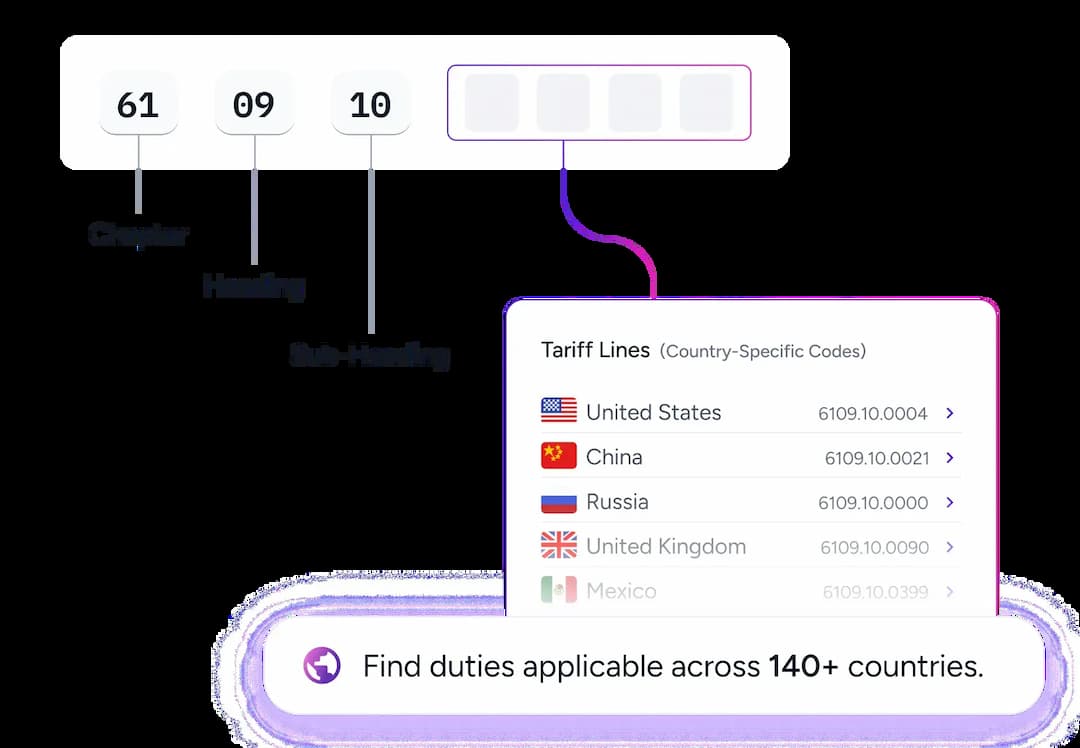
HS Code Lookup helps classify products under appropriate HS code and find duties applicable across 140+ countries. Find and discover HS classification, tariffs, taxes, controls, rulings, ECCNs, and default and preferential duties for HS code 2903.

WCO Notes for Heading 2903
29.03 - Halogenated derivatives of hydrocarbons.
- Saturated chlorinated derivatives of acyclic hydrocarbons :
2903.11 - - Chloromethane (methyl chloride) and chloroethane (ethyl chloride)
2903.12 - - Dichloromethane (methylene chloride)
2903.13 - - Chloroform (trichloromethane)
2903.14 - - Carbon tetrachloride
2903.15 - - Ethylene dichloride (ISO) (1,2-dichloroethane)
2903.19 - - Other
- Unsaturated chlorinated derivatives of acyclic hydrocarbons :
2903.21 - - Vinyl chloride (chloroethylene)
2903.22 - - Trichloroethylene
2903.23 - - Tetrachloroethylene (perchloroethylene)
2903.29 - - Other
- Fluorinated, brominated or iodinated derivatives of acyclic hydrocarbons :
2903.31 - - Ethylene dibromide (ISO) (1,2-dibromoethane)
2903.39 - - Other
- Saturated fluorinated derivatives of acyclic hydrocarbons :
2903.41 - - Trifluoromethane (HFC-23)
2903.42 - - Difluoromethane (HFC-32)
2903.43 - - Fluoromethane (HFC-41), 1,2-difluoroethane (HFC-152) and 1,1-difluoroethane (HFC-152a)
2903.44 - - Pentafluoroethane (HFC-125), 1,1,1-trifluoroethane (HFC-143a) and 1,1,2-trifluoroethane (HFC-143)
2903.45 - - 1,1,1,2-Tetrafluoroethane (HFC-134a) and 1,1,2,2-tetrafluoroethane (HFC-134)
2903.46 - - 1,1,1,2,3,3,3-Heptafluoropropane (HFC-227ea), 1,1,1,2,2,3-hexafluoropropane (HFC-236cb), 1,1,1,2,3,3-hexafluoropropane (HFC-236ea) and 1,1,1,3,3,3-hexafluoropropane (HFC-236fa)
2903.47 - - 1,1,1,3,3-Pentafluoropropane (HFC-245fa) and 1,1,2,2,3-pentafluoropropane (HFC-245ca)
2903.48 - - 1,1,1,3,3-Pentafluorobutane (HFC-365mfc) and 1,1,1,2,2,3,4,5,5,5-decafluoropentane (HFC-43-10mee)
2903.49 - - Other
- Unsaturated fluorinated derivatives of acyclic hydrocarbons :
2903.51 - - 2,3,3,3-Tetrafluoropropene (HFO-1234yf), 1,3,3,3-tetrafluoropropene (HFO-1234ze) and (Z)-1,1,1,4,4,4-hexafluoro-2-butene (HFO-1336mzz)
2903.59 - - Other
- Brominated or iodinated derivatives of acyclic hydrocarbons :
2903.61 - - Methyl bromide (bromomethane)
2903.62 - - Ethylene dibromide (ISO) (1,2-dibromoethane)
2903.69 - - Other
- Halogenated derivatives of acyclic hydrocarbons containing two or more different halogens :
2903.71 - - Chlorodifluoromethane (HCFC-22)
2903.72 - - Dichlorotrifluoroethanes (HCFC-123)
2903.73 - - Dichlorofluoroethanes (HCFC-141, 141b)
2903.74 - - Chlorodifluoroethanes (HCFC-142, 142b)
2903.75 - - Dichloropentafluoropropanes (HCFC-225, 225ca, 225cb)
2903.76 - - Bromochlorodifluoromethane (Halon-1211), bromotrifluoromethane (Halon-1301) and dibromotetrafluoroethanes (Halon-2402)
2903.77 - - Other, perhalogenated only with fluorine and chlorine
2903.78 - - Other perhalogenated derivatives
2903.79 - - Other
- Halogenated derivatives of cyclanic, cyclenic or cycloterpenic hydrocarbons :
2903.81 - - 1,2,3,4,5,6-Hexachlorocyclohexane (HCH (ISO)), including lindane (ISO, INN)
2903.82 - - Aldrin (ISO), chlordane (ISO) and heptachlor (ISO)
2903.83 - - Mirex (ISO)
2903.89 - - Other
- Halogenated derivatives of aromatic hydrocarbons :
2903.91 - - Chlorobenzene, o-dichlorobenzene and p-dichlorobenzene
2903.92 - - Hexachlorobenzene (ISO) and DDT (ISO) (clofenotane (INN), 1,1,1-trichloro-2,2-bis(p-chlorophenyl)ethane)
2903.93 - - Pentachlorobenzene (ISO)
2903.94 - - Hexabromobiphenyls
2903.99 - - Other
These are compounds obtained by the substitution in the structural formula of a hydrocarbon of one or more halogen atoms (fluorine, chlorine, bromine, iodine) for an equal number of hydrogen atoms.
(A) SATURATED CHLORINATED DERIVATIVES OF ACYCLIC HYDROCARBONS
(1) Chloromethane (methyl chloride). Colourless gas, usually presented liquefied in steel cylinders. Used as a refrigerant, as an anaesthetic and in organic synthesis.
(2) Dichloromethane (methylene chloride). A toxic, colourless, volatile liquid; used in organic synthesis.
(3) Chloroform (trichloromethane). A colourless volatile liquid, with a characteristic odour; used as an anaesthetic, as a solvent and in organic synthesis.
(4) Carbon tetrachloride. Colourless liquid; used in fire-extinguishers, and as a solvent for sulphur, oils, fats, varnishes, petroleum, resins, etc.
(5) Chloroethane (ethyl chloride). Gaseous, liquefied in special containers; used as an anaesthetic.
(6) Ethylene dichloride (ISO) (1,2-dichloroethane). Toxic, colourless liquid; used as a solvent.
(7) 1,2-Dichloropropane (propylene dichloride). Colourless, stable liquid. Chloroform-like odour. Used in organic synthesis, and as a solvent for fats, oils, waxes, gums and resins.
(8) Dichlorobutanes.
This heading excludes :
(a) Chloroparaffins if they are mixtures of chlorinated derivatives; solid chloroparaffins having the character of artificial waxes are classified in heading 34.04, while liquid chloroparaffins are classified in heading 38.24.
(b) Products put up as charges for fire-extinguishers or put up in fire-extinguishing grenades, of heading 38.13.
(B) UNSATURATED CHLORINATED DERIVATIVES OF ACYCLIC HYDROCARBONS
(1) Vinyl chloride (chloroethylene). Gas with an odour of chloroform; presented in liquid form in steel containers; used for the preparation of poly(vinyl chloride) of heading 39.04.
(2) Trichloroethylene. Colourless liquid with an odour of chloroform; solvent for varnishes, oils and fats; used in organic synthesis.
(3) Tetrachloroethylene (perchloroethylene); colourless liquid used as a dry-cleaning solvent.
(4) Vinylidene chloride.
(C) SATURATED FLUORINATED DERIVATIVES
OF ACYCLIC HYDROCARBONS
Trade in trifluoromethane (HFC-23), difluoromethane (HFC-32), fluoromethane (HFC-41), 1,2-difluoroethane (HFC-152), 1,1-difluoroethane (HFC-152a), pentafluoroethane (HFC-125), 1,1,1-trifluoroethane (HFC-143a), 1,1,2-trifluoroethane (HFC-143), 1,1,1,2-tetrafluoroethane (HFC-134a), 1,1,2,2-tetrafluoroethane (HFC-134), 1,1,1,2,3,3,3-heptafluoropropane (HFC-227ea), 1,1,1,2,2,3-hexafluoropropane (HFC-236cb), 1,1,1,2,3,3-hexafluoropropane (HFC-236ea), 1,1,1,3,3,3-hexafluoropropane (HFC-236fa), 1,1,1,3,3-pentafluoropropane (HFC-245fa), 1,1,2,2,3-pentafluoropropane (HFC-245ca), 1,1,1,3,3-pentafluorobutane (HFC-365mfc) and 1,1,1,2,2,3,4,5,5,5-decafluoropentane (HFC-43-10mee) is controlled by the Montreal Protocol on Substances that Deplete the Ozone Layer under the Kigali Amendment to the Protocol.
(D) UNSATURATED FLUORINATED DERIVATIVES
OF ACYCLIC HYDROCARBONS
2,3,3,3-Tetrafluoropropene (HFO-1234yf), 1,3,3,3-tetrafluoropropene (HFO-1234ze)and (Z)-1,1,1,4,4,4-hexafluoro-2-butene (HFO-1336mzz). Hydrofluoroolefins (HFOs) are unsaturated fluorocarbons (i.e. molecules with a double bond between two carbon atoms). The presence of the double bond makes the molecule have a very short atmospheric life and a very low global warming potential (GWP). The majority of HFOs are unsaturated HFCs and have GWPs in the range of 4 to 9 and are not controlled under the Montreal Protocol. For example, HFO-1234yf, increasingly used in mobile air-conditioning has a GWP of 4.
(E) BROMINATED OR IODINATED DERIVATIVES
OF ACYCLIC HYDROCARBONS
(1) Bromomethane (methyl bromide). Gaseous, liquefied in special containers; used in fire- extinguishers and as a refrigerant
(2) Bromoethane (ethyl bromide). Colourless liquid with an odour similar to that of chloroform; used in organic synthesis.
(3) Bromoform. Colourless liquid with a characteristic odour; used as a sedative.
(4) Bromoform. Colourless liquid with a characteristic odour; used as a sedative.
(5) Iodomethane (methyl iodide) and iodoethane (ethyl iodide). Liquids, used in organic synthesis.
(6) Di-iodomethane (methylene iodide).
(7) Iodoform. Yellow powder or yellow crystals with a characteristic odour; used in medicine as an antiseptic.
(8) Allyl iodide (3-iodopropene).
This heading excludes products put up as charges for fire-extinguishers or put up in fire-extinguishing grenades, of heading 38.13.
(F) HALOGENATED DERIVATIVES OF ACYCLIC HYDROCARBONS
CONTAINING TWO OR MORE DIFFERENT HALOGENS
Trade in chlorodifluoromethane (HCFC-22), dichlorotrifluoroethanes (HCFC-123), dichlorofluoroethanes (HCFC-141, 141b), chlorodifluoroethanes (HCFC-142, 142b), dichloropentafluoropropanes (HCFC-225, 225ca, 225cb), bromochlorodifluoromethane (Halon-1211), bromotrifluoromethane (Halon-1301), dibromotetrafluoroethanes (Halon-2402), trichlorofluoromethane (CFC-11), dichlorodifluoromethane (CFC-12), trichlorotrifluoroethanes (CFC-113), dichlorotetrafluoroethanes (CFC-114) and chloropentafluoroethanes (CFC-115) is controlled by the Montreal Protocol on Substances that Deplete the Ozone Layer.
This heading excludes products put up as charges for fire-extinguishers or put up in fire-extinguishing grenades, of heading 38.13.
(G) HALOGENATED DERIVATIVES OF CYCLANIC, CYCLENIC OR CYCLOTERPENIC HYDROCARBONS
(1) 1,2,3,4,5,6-Hexachlorocyclohexane (HCH (ISO)), including lindane (ISO, INN). White or yellowish powder or flakes; a very strong insecticide.
(2) Halogenated derivatives of cyclopropane or cyclobutane.
(3) Octachlorotetrahydro-4,7-endomethyleneindane, also a very strong insecticide.
(4) Halogenated derivatives of “cage” structure hydrocarbons, such as dodecachloro- pentacyclo [5.2.1.02,6.03,9.05,8] decane.
(5) Halogenated derivatives of cycloterpenes, such as chlorocamphene, bornyl chloride.
(H) HALOGENATED DERIVATIVES OF AROMATIC HYDROCARBONS
(1) Chlorobenzene. Inflammable liquid with a slightly aromatic odour; used in organic synthesis and also as a solvent for varnishes, resins and bitumens.
(2) o-Dichlorobenzene. Colourless liquid.
(3) m-Dichlorobenzene. Colourless liquid.
(4) p-Dichlorobenzene. White crystals, used mainly as an insecticide, an air freshener or as an intermediate in the manufacture of dyes.
(5) Hexachlorobenzene (ISO) and pentachlorobenzene (ISO). White needles insoluble in water.
(6) DDT (ISO) (clofenotane (INN), 1,1,1-trichloro-2,2-bis(p-chlorophenyl)ethane or dichlorodiphenyltrichloroethane)*. Colourless crystals or white to slightly off-white powder. Insecticide.
(7) Benzyl chloride. Colourless liquid with an agreeable odour, highly lachrymatory; used in organic synthesis.
(8) Monochloronaphthalenes, a (mobile liquid) or b (volatile crystals). They have an odour of naphthalene; used in organic synthesis, as plasticisers, etc.
(9) 1,4-Dichloronaphthalene, brilliant colourless crystals, and octachloronaphthalene, brilliant yellowish crystals, used as insecticides.
Liquid polychloronaphthalenes are classified in this heading if they are not mixtures; but those in the solid state which are mixtures having the character of artificial waxes are excluded (heading 34.04).
(10) Bromostyrene.
(11) Hexabromobiphenyls*. Typical examples are : 2.2'.4.4'.5.5'-hexabromobiphenyl* and 3.3'.4.4'.5.5'-hexabromobiphenyl. Colourless to off-white solids.
This heading excludes mixtures of isomers of hexabromobiphenyls (heading 38.24). This heading also excludes polychlorobiphenyls which are mixtures of chlorinated derivatives; those in the solid form having the character of artificial waxes fall in heading 34.04, and liquid polychlorobiphenyls are classified in heading 38.24.

What is HS code 2903?

How many sub-headings are there in HS code 2903?
International Trade Compliance Simplified