














HS Code Lookup for Heading 2907
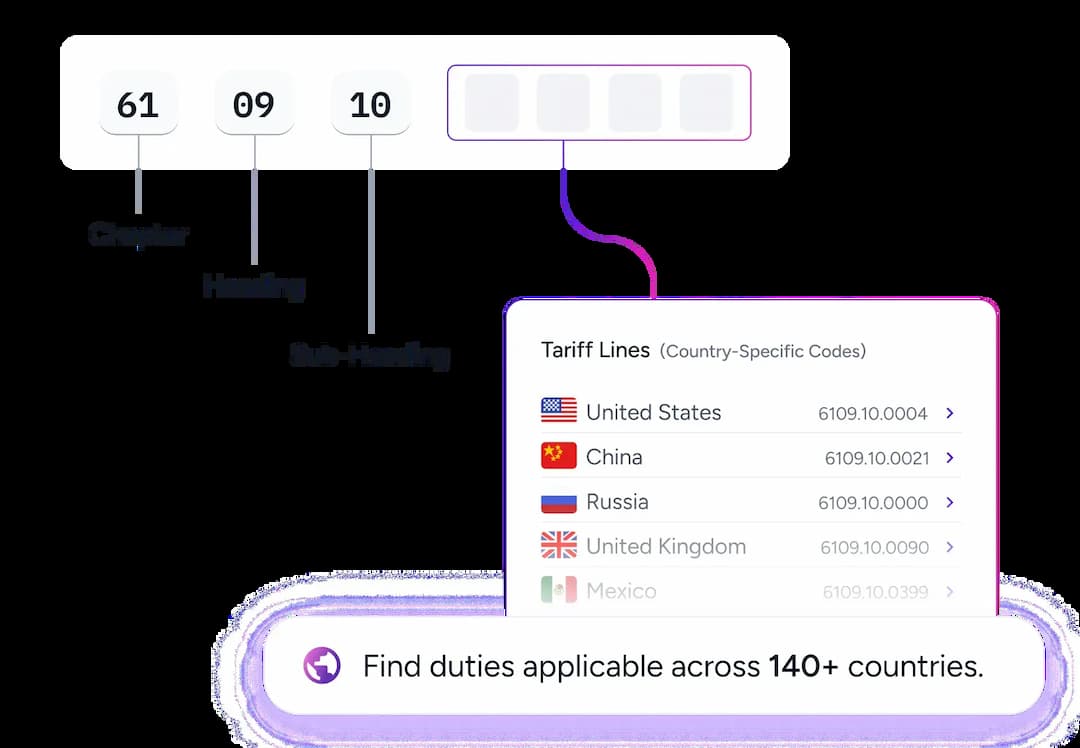
HS Code Lookup helps classify products under appropriate HS code and find duties applicable across 140+ countries. Find and discover HS classification, tariffs, taxes, controls, rulings, ECCNs, and default and preferential duties for HS code 2907.

WCO Notes for Heading 2907
Sub-Chapter III
PHENOLS, PHENOL-ALCOHOLS, AND THEIR HALOGENATED, SULPHONATED, NITRATED OR NITROSATED DERIVATIVES
29.07 - Phenols; phenol‑alcohols.
- Monophenols :
2907.11 - - Phenol (hydroxybenzene) and its salts
2907.12 - - Cresols and their salts
2907.13 - - Octylphenol, nonylphenol and their isomers; salts thereof
2907.15 - - Naphthols and their salts
2907.19 - - Other
- Polyphenols; phenol-alcohols :
2907.21 - - Resorcinol and its salts
2907.22 - - Hydroquinone (quinol) and its salts
2907.23 - - 4,4-Isopropylidenediphenol (bisphenol A, diphenylolpropane) and its salts
2907.29 - - Other
Phenols are obtained by replacing one or more hydrogen atoms of the benzene ring by the hydroxyl radical (-OH).
Replacement of one hydrogen atom gives monohydric phenols (monophenols); replacement of two or more hydrogen atoms results in polyhydric phenols (polyphenols).
This substitution in its turn may affect one or more benzene rings; in the first case mononuclear phenols are obtained, in the second, polynuclear phenols.
The hydroxyl group may also be present as a substitute in benzene homologues; in the case of toluene, a phenol homologue known as cresol is obtained, in the case of xylene, xylenol is obtained.
The heading also covers salts and metal alcoholates of phenols or phenol-alcohols.
(A) MONONUCLEAR MONOPHENOLS
(1) Phenol (hydroxybenzene) (C6H5OH). Obtained by fractional distillation of coal tars or by synthesis. White crystals, with a characteristic odour, which turn reddish when exposed to light, or may be in solution. It is an antiseptic product used in pharmacy. It is also used in the manufacture of explosives, synthetic resins, plastics, plasticisers and dyes.
To fall in this heading, phenol must have a purity of 90 % or more by weight. Phenol of lower purity is excluded (heading 27.07).
(2) Cresols (CH3C6H4OH)*. These phenols derived from toluene are found in varying proportions in coal tar oil.
o-Cresol is a white crystalline powder with a characteristic odour of phenol, deliquescent, turning brown with age; m-cresol is a colourless or yellowish oily liquid, strongly refractive, with an odourof creosote; p-cresol is a colourless crystalline mass which turns reddish and then brownish when exposed to light; it has the odour of phenol.
To fall in this heading, single or mixed cresols must contain 95 % or more by weight of cresol, all cresol isomers being taken together. Cresols of lower purity are excluded (heading 27.07).
(3) Octylphenol, nonylphenol and their isomers.
(4) Xylenols ((CH3)2C6H3OH). These are phenol derivatives of xylene. Six isomers are known; they are obtained from coal tar oils.
To fall in this heading, single or mixed xylenols must contain 95 % or more by weight of xylenol, all xylenol isomers being taken together. Xylenols of lower purity are excluded (heading 27.07).
(5) Thymol (5-methyl-2-isopropylphenol). Found in thyme oil. Colourless crystals with an odour of thyme; used in medicine, in perfumery, etc.
(6) Carvacrol (2-methyl-5-isopropylphenol). An isomer of thymol obtained from origanum oil; a viscous liquid with a penetrating odour.
(B) POLYNUCLEAR MONOPHENOLS
(1) Naphthols (C10H7OH)*. These are the phenols derived from naphthalene. There are two isomers :
(a) a-Naphthol. Colourless, shining crystalline needles, grey lumps or white powder, with a disagreeable odour faintly reminiscent of phenol. It is toxic and is used in organic synthesis (dyes, etc.).
(b) b-Naphthol. Brilliant colourless flakes or crystalline powder, white or slightly pink, with a very slight odour of phenol. It has the same uses as a-naphthol, and is also used in medicine and as an antioxidant for rubber, etc.
(2) o-Phenylphenol.
(C) POLYPHENOLS
(1) Resorcinol (m-dihydroxybenzene)*. Dihydric phenol; crystallises in tablets or in needles; colourless but turns brown in contact with air. Slight odour of phenol. Used for the manufacture of synthetic dyes and explosives, and in medicine and photography.
(2) Hydroquinone (quinol, p-dihydroxybenzene). Small shining crystalline flakes. Used for preparing organic dyes, in medicine and photography, or as an antioxidant especially for the manufacture of rubber.
(3) 4,4'-Isopropylidenediphenol (bisphenol A, diphenylolpropane)*. White flakes.
(4) Pyrocatechol (o-dihydroxybenzene). Colourless, shining crystalline needles or tablets, with a slight odour of phenol; used for preparing pharmaceutical and photographic products, etc.
(5) Hexylresorcinol.
(6) Heptylresorcinol.
(7) 2,5-Dimethylhydroquinone (2,5-dimethylquinol).
(8) Pyrogallol. Small scales or in a shining white crystalline powder, light and odourless; it readily turns brown in contact with air and light and is toxic. It is used for preparing dyes, as a mordant, in photography, etc.
(9) Phloroglucinol. Large colourless crystals, fluorescent in aqueous solution; used as a reagent in chemical analysis, in medicine, photography, etc.
(10) Hydroxyhydroquinone (1,2,4-trihydroxybenzene). Microscopic colourless crystals or powder which darkens on exposure to light.
(11) Dihydroxynaphthalenes (C10H6(OH)2). A group of ten compounds obtained by replacing two hydrogen atoms in the ring of the naphthalene molecule by two hydroxyl groups. Some are used in the manufacture of dyes.
(D) PHENOL-ALCOHOLS
These are derived from aromatic hydrocarbons by replacing one hydrogen atom on the benzene ring with a phenolic hydroxyl group, and another hydrogen atom not on the ring with an alcoholic hydroxyl group; thus they have the characteristics of both phenols and alcohols.
The most important is salicyl alcohol (saligenin) (HOC6H4CH2OH), white crystals, used in medicine as an analgesic and a febrifuge (antipyretic).

What is HS code 2907?

How many sub-headings are there in HS code 2907?
International Trade Compliance Simplified