















HS Code Lookup for Heading 2912
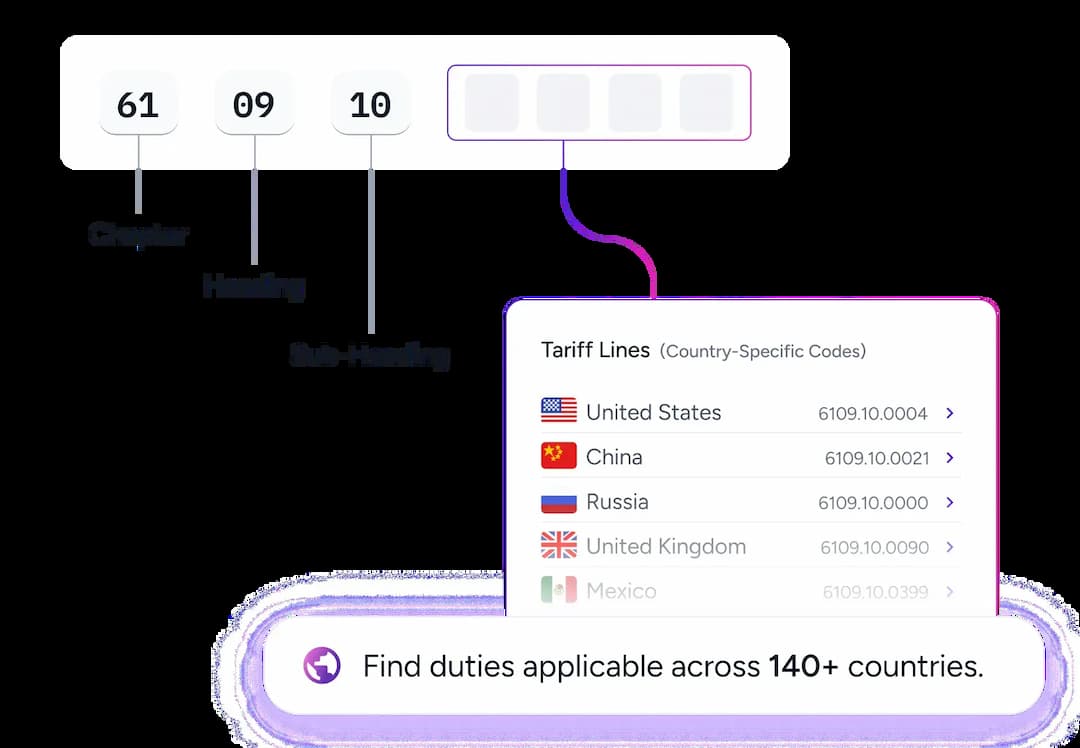
HS Code Lookup helps classify products under appropriate HS code and find duties applicable across 140+ countries. Find and discover HS classification, tariffs, taxes, controls, rulings, ECCNs, and default and preferential duties for HS code 2912.

WCO Notes for Heading 2912
Sub-Chapter V
ALDEHYDE‑FUNCTION COMPOUNDS
29.12 ‑ Aldehydes, whether or not with other oxygen function; cyclic polymers of aldehydes; paraformaldehyde.
‑ Acyclic aldehydes without other oxygen function :
2912.11 ‑ ‑ Methanal (formaldehyde)
2912.12 ‑ ‑ Ethanal (acetaldehyde)
2912.19 ‑ ‑ Other
‑ Cyclic aldehydes without other oxygen function :
2912.21 ‑ ‑ Benzaldehyde
2912.29 ‑ ‑ Other
‑ Aldehyde-alcohols, aldehyde-ethers, aldehyde-phenols and aldehydes with other oxygen function :
2912.41 ‑ ‑ Vanillin (4‑hydroxy‑3‑methoxybenzaldehyde)
2912.42 ‑ ‑ Ethylvanillin (3‑ethoxy‑4‑hydroxybenzaldehyde)
2912.49 ‑ ‑ Other
2912.50 ‑ Cyclic polymers of aldehydes
2912.60 ‑ Paraformaldehyde
These are compounds formed by oxidising primary alcohols; they contain the characteristic group :

They are generally colourless liquids with a strong, penetrating odour; many aromatic aldehydes readily oxidise on contact with air, being converted into acids.
The term “aldehydes, with other oxygen function” means aldehydes which contain also one or more of the oxygen functions referred to in previous sub‑Chapters (alcohol, phenol, ether, etc., functions).
(A) ALDEHYDES*
(I) Saturated acyclic aldehydes.
(1) Methanal (formaldehyde) (HCHO). Obtained by catalytic oxidation of methanol. Colourless gas with a penetrating odour, highly soluble in water. Its aqueous solutions at about 40 % are known as formalin or formol, a colourless liquid with a penetrating and suffocating odour. These solutions may contain methanol as a stabiliser.
Methanal has many applications; in organic synthesis (dyestuffs, explosives, pharmaceutical products, synthetic tanning agents, plastics, etc.), as an antiseptic, deodorant and reducing agent.
(2) Ethanal (acetaldehyde) (CH3CHO). Obtained by oxidation of ethanol or from acetylene. Mobile, colourless liquid with a pungent, fruity odour; caustic; very volatile, inflammable; miscible with water, alcohol and ether. Used in organic synthesis to make plastics, varnishes, or in medicine as an antiseptic.
(3) Butanal (butyraldehyde, normal isomer) (CH3CH2CH2CHO). Colourless liquid, miscible with water, alcohol and ether; used for the preparation of plastics, perfumes and accelerators for vulcanising rubber.
(4) Heptanal (heptaldehyde, oenanthol) (CH3(CH2)5CHO). Obtained by distilling castor oil; a colourless liquid with a penetrating odour.
(5) Octanal (caprylaldehyde) (C8H16O); nonanal (pelargonaldehyde) (C9H18O); decanal (capraldehyde) (C10H20O); undecanal (undecylic aldehyde) (C11H22O); dodecanal (lauraldehyde) (C12H24O), etc. These are used as raw materials in the perfumery industry.
(II) Unsaturated acyclic aldehydes.
(1) Propenal (acrylaldehyde, acraldehyde, acrolein) (CH2=CHCHO). Formed when fatty matter is burned; a liquid with a characteristic bitter and irritating odour; used in organic synthesis.
(2) 2‑Butenal (crotonaldehyde) (CH3CH=CHCHO). Found in the first distillation products of crude alcohol; a colourless liquid with a penetrating odour.
(3) Citral. Liquid with an agreeable odour, found in essential oil of tangerine, of citron, of lemons and, more especially, in lemon grass oil.
(4) Citronellaldehyde. Found in citron oil.
(III) Cyclanic, cyclenic and cycloterpenic aldehydes.
(1) Phellandral or tetrahydrocuminaldehyde. Found in fennel and eucalyptus oils.
(2) Cyclocitrals A and B. Obtained from citral.
(3) Perillaldehyde. Found in essential oils of the Perilla mankinensis.
(4) Safranal.
(IV) Aromatic aldehydes.
(1) Benzaldehyde(C6H5CHO)*. Highly refractive, colourless liquid with a characteristic odour of bitter almonds; used in organic synthesis, in medicine, etc.
(2) Cinnamaldehyde (C6H5CH=CHCHO). Oily yellowish liquid with a strong odour of cinnamon; used in perfumery.
(3) α‑Amylcinnamaldehyde.
(4) 3‑p‑Cumenyl‑2‑methylpropionaldehyde.
(5) Phenylacetaldehyde (C6H5CH2CHO). Liquid with a pronounced odour of hyacinths; used in perfumery.
(B) ALDEHYDE-ALCOHOLS, ALDEHYDE‑ETHERS, ALDEHYDE‑PHENOLS AND ALDEHYDES WITH OTHER OXYGEN FUNCTION
Aldehyde-alcohohols are compounds which contain both the aldehyde function and the alcohol function.
Aldehyde‑ethers are ethers which contain also the aldehyde group (-CHO).
Aldehyde‑phenols are compounds which contain both the phenolic hydroxyl group (C6H5OH) and the aldehyde group (-CHO).
The most important aldehyde-alcohols, aldehyde‑phenols and aldehyde‑ethers are :
(1) Aldol (CH3CH(OH)CH2CHO). Obtained by aldol condensation of acetaldehyde; colourless liquid which, when left undisturbed, polymerises to a crystalline mass (paraldol). Used in organic synthesis, for the manufacture of plastics, and in the flotation of ores.
(2) Hydroxycitronellaldehyde (C10H20O2). Colourless, slightly syrupy liquid with a very pronounced odour of lily of the valley; used as a fixative in perfumery.
(3) Glycollaldehyde (HOCH2CHO). Crystallises in colourless crystals.
(4) Vanillin (4‑hydroxy‑3‑methoxybenzaldehyde)*. The methyl ether of 3,4‑dihydroxybenzaldehyde (protocatechualdehyde); found in vanilla. Brilliant needles or crystalline white powder.
(5) Ethylvanillin (3‑ethoxy‑4‑hydroxybenzaldehyde). Fine white crystals.
(6) Salicylaldehyde (o‑hydroxybenzaldehyde) (HOC6H4CHO). Colourless oily liquid with a characteristic odour of bitter almonds; used for the manufacture of synthetic perfumes.
(7) 3,4‑Dihydroxybenzaldehyde (protocatechualdehyde) ((HO)2C6H3CHO). Brilliant colourless crystals.
(8) Anisaldehyde (CH3OC6H4CHO) (p‑methoxybenzaldehyde). Found in aniseed and fennel oils; colourless liquid. Used in perfumery under the name of “hawthorn essence (aubepine)”.
(C) CYCLIC POLYMERS OF ALDEHYDES
(1) Trioxan(trioxymethylene)*. A solid polymer of formaldehyde; white crystalline substance, soluble in water, alcohol or ether.
(2) Paraldehyde. A polymer of ethanal; colourless liquid with an agreeable ether‑like odour, highly inflammable. Used in organic synthesis, as a soporific and disinfectant in medicine, etc.
(3) Metaldehyde. Also a polymer of ethanal; crystalline white powder, insoluble in water. This heading covers only metaldehyde in the form of crystals or powders.
Metaldehyde put up in forms (for example, tablets, sticks or similar forms) for use as fuels is excluded (heading 36.06) (see Note 2 (a) to Chapter 36).
(D) PARAFORMALDEHYDE
This polymer (HO(CH2O)nH) is obtained by evaporating aqueous solutions of formaldehyde. A solid, white, flaky or powdered substance with a pronounced odour of formaldehyde. It is used to prepare plastics, waterproof glues and pharmaceutical products, and also as a disinfectant and a preserving agent.
This heading excludes aldehyde‑bisulphite compounds which are classified as sulphonated derivatives of alcohols (headings 29.05 to 29.11).

What is HS code 2912?

How many sub-headings are there in HS code 2912?
International Trade Compliance Simplified