














HS Code Lookup for Heading 2937
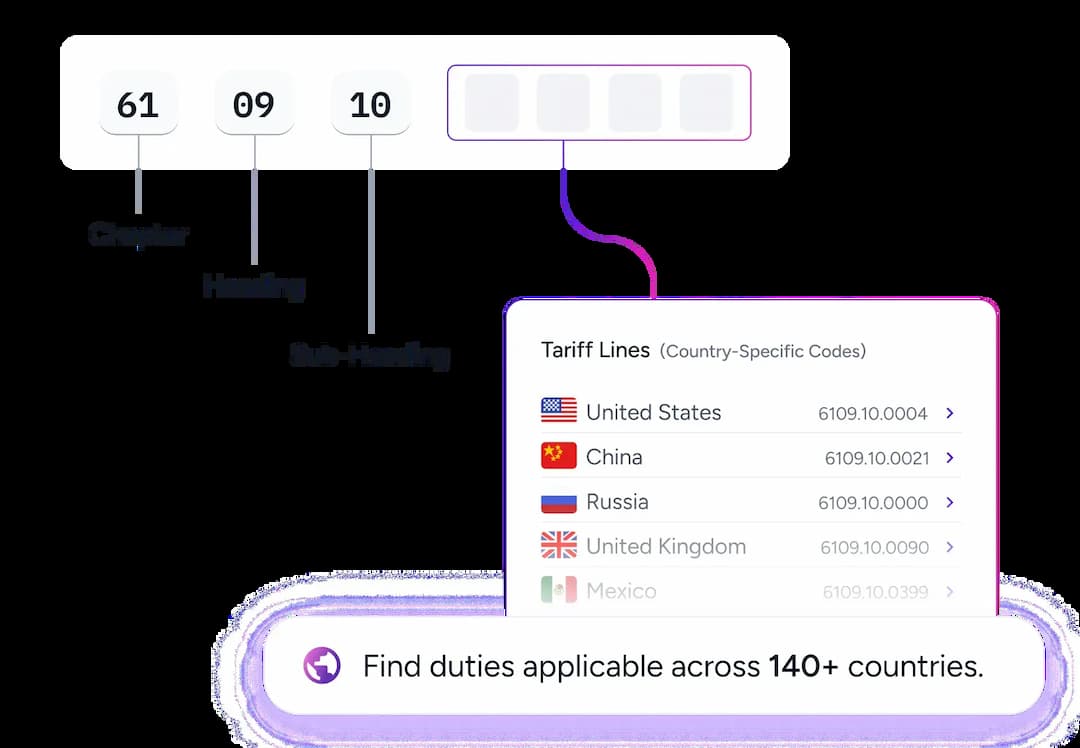
HS Code Lookup helps classify products under appropriate HS code and find duties applicable across 140+ countries. Find and discover HS classification, tariffs, taxes, controls, rulings, ECCNs, and default and preferential duties for HS code 2937.

WCO Notes for Heading 2937
29.37 - Hormones, prostaglandins, thromboxanes and leukotrienes, natural or reproduced by synthesis; derivatives and structural analogues thereof, including chain modified polypeptides, used primarily as hormones (+).
- Polypeptide hormones, protein hormones and glycoprotein hormones, their derivatives and structural analogues :
2937.11 - - Somatotropin, its derivatives and structural analogues
2937.12 - - Insulin and its salts
2937.19 - - Other
- Steroidal hormones, their derivatives and structural analogues :
2937.21 - - Cortisone, hydrocortisone, prednisone (dehydrocortisone) and prednisolone (dehydrohydrocortisone)
2937.22 - - Halogenated derivatives of corticosteroidal hormones
2937.23 - - Oestrogens and progestogens
2937.29 - - Other
2937.50 - Prostaglandins, thromboxanes and leukotrienes, their derivatives and structural analogues
2937.90 - Other
This heading includes :
(I) Natural hormones, which are active substances produced in the living tissues of man or animals, extremely small amounts of which are capable of inhibiting or stimulating the functioning of particular organs by acting directly on them or controlling the synthesis or secretion of secondary or tertiary hormone systems. A fundamental defining characteristic of a hormone is that it binds to a stereospecific molecular receptor to activate a response. The secretion of these substances, usually by the endocrine glands, is governed by the sympathetic and para-sympathetic systems. Hormones are carried by the blood, lymph or other fluids of the body. They may also originate in glands which are both endo- and exocrinal or in various cellular tissues. Transport in the blood is not a requisite for a hormonal response. Responses can occur after release of hormones into the interstitial fluid with binding to receptors in nearby cells (paracrine control) or to receptors on the cell that released the hormone (autocrine control).
(II) Natural prostaglandins, thromboxanes and leukotrienes, compounds which are secreted by the body and behave like locally-acting hormones. Prostaglandins are a class of hormones or hormone-like substances which are synthesised by the tissue in which they act (or act in the local cellular environment) by binding to specific cellular receptors and act as important modulators of cell activity in many tissues. These three related chemical families (arachidonic acid derivatives) are said to have “hormone-like action”.
(III) Natural hormones, prostaglandins, thromboxanes and leukotrienes reproduced by synthesis (including biotechnological processes), that is, having the same chemical structure as the natural substance.
(IV) Derivatives of natural or synthetically reproduced hormones, prostaglandins, thromboxanes and leukotrienes, such as salts, halogenated derivatives, cyclic acetals, esters, etc., including mixed derivatives (e.g., esters of halogenated derivatives), provided that they are used primarily as hormones.
(V) Analogues of hormones, prostaglandins, thromboxanes and leukotrienes. The term “analogue” refers to chemicals having a close structural relationship to the parent compound, but which are not considered to be derivatives. It includes compounds which have a structural resemblance to the natural compounds, but have had one or more atoms in the structure replaced by others.
(a) Analogues of polypeptide hormones are formed by adding, separating, replacing or altering certain amino acids in the natural polypeptide chain. Somatrem (INN), an analogue of the growth hormone somatotropin, is the result of adding a terminal amino acid to the natural somatotropin molecule. Ornipressin (INN), an analogue of natural argipressin (INN) and lypressin (INN), is the result of replacing an internal amino acid in the argipressin or lypressin molecule. The synthetic gonadoliberins, buserelin (INN), nafarelin (INN), fertirelin (INN), leuprorelin (INN) and lutrelin (INN), analogues of gonadorelin (INN) are the result of altering and replacing certain amino acids in the polypeptide chain of natural gonadorelin. Giractide (INN), an analogue of corticotropin (INN) has the same structure as the first 18 amino acids of natural corticotropin, with the first amino acid replaced. Metreleptin (INN), an analogue of leptin, is the recombinant methionyl derivative of human leptin. Saralasin (INN), which contains three different amino acids in comparison to the molecule of angiotensin II, should be considered as a structural analogue of angiotensin II, although with antagonist effects (the former is a hypotensor and the latter an hypertensor).
(b) Analogues of steroid hormones must have the gonane structure*, which can be altered by ring contraction or extension or by replacing some atoms in the ring by others (hetero-atoms). Domoprednate (INN) and oxandrolone (INN)represent two examples of this kind of analogues. The family of analogues and derivatives, which retain the fundamental structure of the gonane described, contains a large number of substances used as hormone inhibitors and antagonists (antihormones). Examples are cyproterone (INN), an antiandrogen, danazol (INN), an antigonadotropin, epostane (INN), which inhibits progesterone production.
(c) Analogues of prostaglandins, thromboxanes and leukotrienes may be formed by substitution of atoms in a chain, or formation or elimination of rings. In tilsuprost (INN), a prostaglandin analogue, oxygen and carbon atoms are replaced by nitrogen and sulphur atoms and one ring is closed.
(VI) Natural mixtures of hormones or their derivatives or of steroids recognised as having a hormonal effect (e.g., a natural mixture of corticosteroid hormones or of conjugated oestrogens). Deliberate mixtures or preparations are excluded (generally heading 30.03 or 30.04).
Hormone-releasing factors (hormone-stimulating factors), hormone inhibitors and hormone antagonists (antihormones) are also included in this heading (see Note 8 to this Chapter). The heading also includes derivatives and structural analogues of hormones, provided that they are based on natural hormones, or on those reproduced by synthesis, and that they act using mechanisms similar to those of hormones.
A list of the products of this heading, arranged according to chemical structure, is given below. This list is not exhaustive.
°
° °
List of products which are to be classified as products of heading 29.37 (*)
(A) POLYPEPTIDE HORMONES, PROTEIN HORMONES AND GLYCOPROTEIN HORMONES, THEIR DERIVATIVES AND
STRUCTURAL ANALOGUES
This part includes, inter alia :
(1) Somatotropin, its derivatives and structural analogues. Somatotropin (growth hormone, GH, STH (somatotropic hormone)). Water soluble protein which promotes growth of tissues and is involved in the regulation of other phases of protein metabolism. It is secreted by the somatotropic cells of the anterior pituitary gland. Secretion is regulated by a releasing factor (growth hormone-releasing hormone) and by an inhibitory factor, somatostatin. Human growth hormone (hGH) is a single polypeptide chain of 191 amino acids manufactured almost exclusively by recombinant DNA technology. This part also includes derivatives and analogues such as somatrem (INN) (methionyl hGH), acetylated hGH, desamido hGH and somenopor (INN) and antagonists such as pegvisomant (INN).
(2) Insulin and its salts. Insulin is a polypeptide containing 51 amino-acid groups and is produced in the islets of Langerhans of the pancreas of numerous animals. Human insulin can be obtained by extraction from the pancreas, by modification of bovine or porcine insulin or by biotechnological processes involving bacteria or yeasts to produce recombinant human insulin. Insulin is a factor in the cellular uptake of circulating glucose and other nutrients, as well as their storage as glycogen and fat. Pure insulin is a white, non-hygroscopic amorphous powder or shiny crystals, soluble in water. Its clinical use is in the treatment of diabetes. Insulin salts include insulin hydrochloride.
(3) Corticotropin (INN) (ACTH (adrenocorticotropic hormone), adrenocorticotropin). A polypeptide, soluble in water. It stimulates increased production of adrenocortical steroids. Giractide (INN) is an analogue of corticotropin.
(4) Lactogenic hormone (LTH, galactin, galactogene hormone, luteotrophin, mammotrophin, prolactin). A polypeptide which can be crystallised. Activates milk secretion and influences the activity of the corpus luteum.
(5) Thyrotrophin (INN) (thyrotrophic hormone, TSH (thyroid-stimulating hormone)). A glycoprotein which intervenes in the action of the thyroid gland on the blood and in the removal of iodine. It affects growth and secretion.
(6) Follicle-stimulating hormone (FSH). A glycoprotein, soluble in water. It activates sexual functions.
(7) Luteinising hormone (LH, ICSH (interstitial-cell-stimulating hormone), luteinostimulin). A glycoprotein, soluble in water. It stimulates sexual functions by stimulating steroid secretion, ovulation and interstitial cell development.
(8) Chorionic gonadotrophin (INN) (hCG (human chorionic gonadotrophin)). Formed in the placenta; it is a glycoprotein extracted from the urine of pregnant women. White crystals, relatively unstable in aqueous solution. Stimulates follicle maturity.
(9) Serum gonadotrophin (INN) (equine chorionic gonadotropin (eCG)). It is a gonad-stimulating glycoprotein produced in the placenta and endometrium of pregnant mares. Originally called pregnant mare serum gonadotropin.
(10) Oxytocin (INN) (a-hypophamin). A polypeptide, soluble in water. Its chief action is on the contraction of the uterus and on milk ejection from the mammary gland. Also included are the analogues carbetocin (INN), demoxytocin (INN), etc.
(11) Vasopressins : argipressin (INN) and lypressin (INN), their derivatives and structural analogues. Vasopressins are polypeptides which raise blood pressure and cause an increase in water retention by the kidney. Also included here are polypeptide analogues such as terlipressin (INN), desmopressin (INN), etc.
(12) Calcitonin (INN). (TCA (thyrocalcitonin)). A hypocalcaemic and hypophosphatemic polypeptide.
(13) Glucagon (INN) (HGF (hyperglycaemic-glycogenolytic factor)). A polypeptide which has the property of increasing the blood-glucose concentration.
(14) Thyroliberin (TRF, TRH). This polypeptide stimulates the secretion of thyrotropin.
(15) Gonadorelin (INN) (gonadoliberin, gonadotrophin releasing hormone, LRF, GnRH). This polypeptide promotes the secretion of follicle-stimulating and lutein-stimulating hormones in the pituitary gland. Also included are the polypeptide analogues buserilin (INN), goserilin (INN), fertirelin (INN), sermorelin (INN), etc.
(16) Somatostatin (INN) (SS, SRIH, SRIF). This polypeptide inhibits the release of growth hormone and TSH from the pituitary gland and has a neurotropic action.
(17) Atrial natriuretic hormone (ANH, ANF), a polypeptide hormone secreted from the atria of the heart. When the cardiac atrium is stretched by increased blood volume, secretion of ANH is stimulated. ANH in turn increases salt and water excretion and reduces blood pressure.
(18) Endothelin, a polypeptide hormone secreted by endothelial cells throughout the vasculature. Although endothelin is released into the blood circulation, it acts locally in a paracrine fashion to constrict adjacent vascular smooth muscle and to increase blood pressure.
(19) Inhibin and activin, hormones found in gonadal tissue.
(20) Leptin, a polypeptide hormone produced by adipose tissue that is thought to act on receptors in the brain to regulate body weight and fat deposition. Also included here is metreleptin (INN), the recombinant methionyl derivative of leptin, which has a similar activity and which is considered to be an analogue of leptin.
(B) STEROIDAL HORMONES, THEIR DERIVATIVES AND
STRUCTURAL ANALOGUES
(1) Corticosteroid hormones, secreted in the cortical zone of the adrenal glands, play an important role in the functioning of the body’s metabolism. They are also known as adrenal cortical hormones or corticoids, and are generally divided into two groups, depending upon their physiological action : (i) glucocorticoids, which regulate protein and carbohydrate metabolism and (ii) mineralocorticoids, which cause the retention of sodium and water by the body and hasten the excretion of potassium. The properties of mineralocorticoids are utilised in the treatment of kidney deficiencies and of Addison’s disease. These include the following corticosteroid hormones, derivatives and analogues :
(a) Cortisone (INN)*. A glucocorticoid which regulates protein and carbohydrate metabolism and also has a local anti-inflammatory effect.
(b) Hydrocortisone (INN) (cortisol)*. A glucocorticoid with effects similar to those of cortisone.
(c) Prednisone (INN) (dehydrocortisone). Glucocorticoid. A derivative of cortisone.
(d) Prednisolone (INN) (dehydrohydrocortisone). Glucocorticoid. A derivative of hydrocortisone.
(e) Aldosterone (INN). A mineralocorticoid.
(f) Cortodoxone (INN).
Some derivatives are modified so as to suppress their cortical hormone effect in favour of their anti-inflammatory effect, which is regarded as being a hormonal effect. These are principally derivatives of cortisone (INN), hydrocortisone (INN), prednisone (INN) and prednisolone (INN), which are used as anti-inflammatory and antirheumatism agents.
(2) Halogenated derivatives of corticosteroid hormones are steroids in which the hydrogen atom generally at the 6- or 9-position on the gonane ring is substituted by a chlorine or fluorine atom (e.g., dexamethasone (INN)) and which greatly enhance the glucocorticoid and anti-inflammatory effect of the corticoids from which they are derived. These derivatives are often further modified and marketed in the form of esters, acetonides (e.g., fluocinolone acetonide (INN)), etc.
(3) Oestrogens and progestogens. These are two major groups of sex hormones secreted by the male and female genital organs. They may also be obtained by synthesis. These hormones are also called progestins and gestagens.
Oestrogens are female sex hormones produced by the ovaries, testes, adrenal glands, placenta and other steroid-producing tissues. They are characterised by their ability to produce oestrus in the female mammal. Oestrogens are responsible for the development of female sex characteristics and are used in the treatment of menopause or in the preparation of contraceptive drugs. They include the following oestrogens, derivatives and analogues :
(a) Estrone (INN). A principal oestrogen in humans.
(b) Estradiol (INN). An important natural oestrogen.
(c) Estriol (INN). A natural oestrogen.
(d) Ethinyl estradiol (INN). An important synthetic oestrogen which is orally active and used as a main oestrogenic component in combination oral contraceptives.
(e) Mestranol (INN). Ether derivative of ethinyl estradiol. Used as an oral contraceptive.
Progestogens are a class of steroids named for their progestational effects, which are essential for the initiation and continuation of pregnancy. These female sex hormones prepare the uterus for pregnancy and for the maintenance of pregnancy. Because they suppress ovulation, many progestins are used as components of contraceptive drugs. They include :
(a) Progesterone (INN)*. The primary progestin in humans and an intermediate in the biosynthetic pathways of oestrogens, androgens and corticosteroids. It is produced by the corpus luteum after release of the ovum and in the adrenal gland, the placenta and the testes.
(b) Pregnandiol. Naturally occurring progestin with a much weaker biological activity than that of progesterone.
(4) Other steroidal hormones.
Androgens are a major group of sex hormones not included above, which are produced mainly by the testes and, to a lesser extent, by the ovaries, adrenal glands and placenta. Androgens are responsible for the development of male sex characteristics. Androgens influence metabolism, i.e., have an anabolic effect. Testosterone (INN) is one of the most important androgens.
This part also includes synthetic steroids used to inhibit or counteract the effects of hormones, such as anti-oestrogens, anti-androgens, and anti-progestogens (antiprogestins, antiestagens). Steroidal antiprogestins are progestin antagonists which have found many uses in the treatment of some diseases. Examples of this group include onapristone (INN) and aglepristone (INN).
The most important of these steroids in international trade are listed below. The products are cited in alphabetical order, according to their short names, followed by an indication of their main hormonal function. If several names exist, the name used is that of the International Nonproprietary Names for pharmaceutical preparations (INN) published by the World Health Organization or that of the International Nonproprietary Names Modified (INNM). The chemical names given are in accordance with the IUPAC 1957 Rules for Nomenclature of Steroids.
*
* *
List of steroids used primarily
for their hormone function*
Short name Chemical name ________________________________________________ | Main hormonal function ___________________ |
Adrenosterone androst-4-ene-3,11,17-trione | Androgen |
Aldosterone (INN) 11b,21-dihydroxy-3,20-dioxopregn-4-en-18-al | Corticosteroid |
Allylestrenol (INN) 17a-allyloestr-4-en-17b-ol | Progestogen |
(No short name) 5a-androstane-3,17-dione | Androgen intermediate |
Androstanolone (INN) 17b-hydroxy-5a-androstan-3-one | Androgen |
Androstenediols androst-5-ene-3b,17b-diol androst-5-ene-3b,17a-diol | Anabolic intermediate |
(No short name) androst-4-ene-3,17-dione | Androgen intermediate |
Androsterone 3a-hydroxy-5a-androstan-17-one | Androgen |
Betamethasone (INN) 9a-fluoro-11b,17a,21-trihydroxy-16b-methylpregna-1,4-diene-3,20-dione | Corticosteroid |
Bolasterone (INN) 17b-hydroxy-7a,17a-dimethylandrost-4-en-3-one | Anabolic |
Chlormadinone (INN) 6-chloro-17a-hydroxypregna-4,6-diene-3,20-dione | Progestogen |
Short name Chemical name ________________________________________________ | Main hormonal function ___________________ |
Chloroprednisone (INN) 6a-chloro-17a,21-dihydroxypregna-1,4-diene-3,11,20-trione | Corticosteroid |
Clocortolone (INN) 9a-chloro-6a-fluoro-11b,21-dihydroxy-16a-methylpregna-1,4- diene-3,20-dione | Corticosteroid |
Clostebol (INN) 4-chloro-17b-hydroxyandrost-4-en-3-one | Anabolic |
Corticosterone 11b,21-dihydroxypregn-4-ene-3,20-dione | Corticosteroid |
Cortisol - see Hydrocortisone | |
Cortisone (INN) 17a,21-dihydroxypregn-4-ene-3,11,20-trione | Corticosteroid |
11-Dehydrocorticosterone 21-hydroxypregn-4-ene-3,11,20-trione | Corticosteroid |
Deoxycorticosterone - see Desoxycortone | |
Desoxycortone (INN) 21-hydroxypregn-4-ene-3,20-dione | Corticosteroid |
Dexamethasone (INN) 9a-fluoro-11b,17a,21-trihydroxy-16a-methylpregna-1,4-diene-3,20-dione | Corticosteroid |
Dihydroandrosterone 5a-androstane-3a,17b-diol | Androgen intermediate |
Dydrogesterone (INN) 9b,10a-pregna-4,6-diene-3,20-dione | Progestogen |
Equilenin 3-hydroxyoestra-1,3,5(10),6,8-pentaen-17-one | Oestrogen |
Equilin 3-hydroxyoestra-1,3,5(10),7-tetraen-17-one | Oestrogen |
Short name Chemical name ________________________________________________ | Main hormonal function ___________________ |
Estradiol (INN) oestra-1,3,5(10)-triene-3,17b-diol | Oestrogen |
Estriol (INNM) oestra-1,3,5(10)-triene-3,16a,17b-triol | Oestrogen |
Estrone (INN) 3-hydroxyoestra-1,3,5(10)-trien-17-one | Oestrogen |
Ethinylestradiol (INN) 17a-ethynyloestra-1,3,5(10)-triene-3,17b-diol | Oestrogen |
Ethisterone (INN) 17a-ethynyl-17b-hydroxyandrost-4-en-3-one | Progestogen |
Ethylestrenol (INN) 17a-ethyloestr-4-en-17b-ol | Anabolic |
Etynodiol (INN) 17a-ethynyloestr-4-ene-3b,17b-diol | Progestogen |
Fludrocortisone (INN) 9a-fluoro-11b,17a,21-trihydroxypregn-4-ene-3,20-dione | Corticosteroid |
Flumetasone (INN) 6a,9a-difluoro-11b,17a,21-trihydroxy-16a-methylpregna-1,4-diene- 3,20-dione | Corticosteroid |
Fluocinolone (INNM) 6a,9a-difluoro-11b,16a,17a,21-tetrahydroxy-pregna-1,4-diene-3,20-dione | Corticosteroid |
Fluocortolone (INN) 6a-fluoro-11b,21-dihydroxy-16a-methylpregna-1,4-diene-3,20-dione | Corticosteroid |
Fluorometholone (INN) 9a-fluoro-11b,17a-dihydroxy-6a-methylpregna-1,4-diene-3,20-dione | Corticosteroid |
9a-Fluoroprednisolone 9a-fluoro-11b,17a,21-trihydroxypregna-1,4-diene-3,20-dione | Corticosteroid |
Short name Chemical name ________________________________________________ | Main hormonal function ___________________ |
Fluoxymesterone (INN) 9a-fluoro-11b,17b-dihydroxy-17a-methylandrost-4-en-3-one | Androgen |
Fluprednidene (INN) 9a-fluoro-11b,17a,21-trihydroxy-16-methylenepregna-1,4-diene- 3,20-dione | Corticosteroid |
Fluprednisolone (INN) 6a-fluoro-11b,17a,21-trihydroxypregna-1,4-diene-3,20-dione | Corticosteroid |
Flurandrenolone 6a-fluoro-11b,16a,17a,21-tetrahydroxypregn-4-ene-3,20-dione | Corticosteroid |
Formocortal (INN) 3-(2-chloroethoxy)-9a-fluoro-6-formyl-11b,21-dihydroxy-16a,17-isopropylidenedioxypregna-3,5-dien-20 one 21-acetate | Corticosteroid |
Gestonorone (INNM) 17b-ethyl-17a-hydroxyoestr-4-ene-3,20-dione | Progestogen |
Hydrocortisone (INN) 11b,17a,21-trihydroxypregn-4-ene-3,20-dione | Corticosteroid |
Hydroxyprogesterone (INN) 17a-hydroxypregn-4-ene-3,20-dione | Progestogen |
Lynestrenol (INN) 17a-ethynyloestr-4-en-17b-ol | Progestogen |
Medroxyprogesterone (INN) 17a-hydroxy-6a-methylpregn-4-ene-3,20-dione | Progestogen |
Megestrol (INN) 17a-hydroxy-6-methylpregna-4,6-diene-3,20-dione | Progestogen |
Mestanolone (INN) 17b-hydroxy-17a-methyl-5a-androstan-3-one | Anabolic |
Mesterolone (INN) 17b-hydroxy-1a-methyl-5a-androstan-3-one | Androgen |
Short name Chemical name ________________________________________________ | Main hormonal function ___________________ |
Mestranol (INN) 17a-ethynyl-3-methoxyoestra-1,3,5(10)-trien-17b-ol | Oestrogen |
Metandienone (INN) 17b-hydroxy-17a-methylandrosta-1,4-dien-3-one | Anabolic |
Metenolone (INN) 17b-hydroxy-1-methyl-5a-androst-1-en-3-one | Anabolic |
Methandriol (INN) 17a-methylandrost-5-ene-3b,17b-diol | Anabolic |
2-Methylhydrocortisone 11b,17a,21-trihydroxy-2b-methylpregn-4-ene-3,20-dione | Corticosteroid |
6a-Methylhydrocortisone 11b,17a,21-trihydroxy-6a-methylpregn-4-ene-3,20-dione | Corticosteroid |
Methylnortestosterone 17b-hydroxy-17a-methyloestr-4-en-3-one | Progestogen |
17a-Methyloestradiol 17a-methyloestra-1,3,5(10)-triene-3,17b-diol | Oestrogen |
Methylprednisolone (INN) 11b,17a,21-trihydroxy-6a-methylpregna-1,4-diene-3,20-dione | Corticosteroid |
Methyltestosterone (INN) 17b-hydroxy-17a-methylandrost-4-en-3-one | Androgen |
Nandrolone (INN) 17b-hydroxyoestr-4-en-3-one | Anabolic |
Norethandrolone (INN) 17a-ethyl-17b-hydroxyoestr-4-en-3-one | Anabolic |
Norethisterone (INN) 17a-ethynyl-17b-hydroxyoestr-4-en-3-one | Progestogen |
Noretynodrel (INN) 17a-ethynyl-17b-hydroxyoestr-5(10)-en-3-one | Progestogen |
Short name Chemical name ________________________________________________ | Main hormonal function ___________________ |
Norgestrel (INN) 13b-ethyl-17a-ethynyl-17b-hydroxygon-4-en-3-one | Progestogen |
Normethandrone - see Methylnortestosterone | |
Nortestosterone - see Nandrolone | |
Oxabolone (INNM) 4,17b-dihydroxyoestr-4-en-3-one | Anabolic |
Oxymesterone (INN) 4,17b-dihydroxy-17a-methylandrost-4-en-3-one | Anabolic |
Oxymetholone (INN) 17b-hydroxy-2-hydroxymethylene-17a-methyl-5a-androstan-3-one | Anabolic |
Paramethasone (INN) 6a-fluoro-11b,17a,21-trihydroxy-16a-methylpregna-1,4-diene-3,20-dione | Corticosteroid |
Prasterone (INN) 3b-hydroxyandrost-5-en-17-one | Androgen |
Prednisolone (INN) 11b,17a,21-trihydroxypregna-1,4-diene-3,20-dione | Corticosteroid |
Prednisone (INN) 17a,21-dihydroxypregna-1,4-diene-3,11,20-trione | Corticosteroid |
Prednylidene (INN) 11b,17a,21-trihydroxy-16-methylenepregna-1,4-diene-3,20-dione | Corticosteroid |
Pregnenolone (INN) 3b-hydroxypregn-5-en-20-one | Corticosteroid |
Progesterone (INN) pregn-4-ene-3,20-dione | Progestogen |
Stanolone - see Androstanolone |
Short name Chemical name ________________________________________________ | Main hormonal function ___________________ |
Testosterone (INN) 17b-hydroxyandrost-4-en-3-one | Androgen |
Tiomesterone (INN) 1a,7a-di(acetylthio)-17b-hydroxy-17a-methylandrost-4-en-3-one | Anabolic |
Triamcinolone (INN) 9a-fluoro-11b,16a,17a,21-tetrahydroxypregna-1,4-diene-3,20-dione | Corticosteroid |
(C) PROSTAGLANDINS, THROMBOXANES AND LEUKOTRIENES, THEIR DERIVATIVES AND STRUCTURAL ANALOGUES
These products are derivatives of arachidonic acid.
(1) Prostaglandins.
The most important arachidonic acid derivatives are prostaglandins, endogenous substances operating in minute doses as hormones and containing the fundamental structure of prostanoic acid. Prostaglandins influence the regulation of blood circulation, kidney function and the endrocrine system (e.g., by reducing the production of progesterone by the corpus luteum); they also stimulate the contraction of smooth muscles or dilation of blood vessels, prevent platelet aggregation and regulate gastric secretions. These include the following prostaglandins, derivatives and analogues :
(a) Alprostadil (INN) (prostaglandin E1). A primary prostaglandin crystallised from biological extracts. It is used as a vasodilator. It also functions to stimulate the release of erythropoietin from the renal cortex and inhibits blood platelet aggregation.
(b) Alfaprostol (INN). A synthetic prostaglandin analogue used in the treatment of infertility in mares.
(c) Tilsuprost (INN). A prostaglandin analogue which has had an oxygen and a carbon atom replaced by a nitrogen and a sulphur atom with ring closure. A synthetic prostaglandin and prostaglandin receptor agonist.
This group also includes other synthetic products such as prostalene (INN), dinoprost (INN), etc., which retain the basic structure of natural products and have similar physiological activity.
(2) Thromboxanes and leukotrienes.
Thromboxanes and leukotrienes, like prostaglandins, are synthesised in cells from arachidonic acid; although their function is comparable to that of prostaglandins and their structure is very similar, they do not contain the fundamental structure of prostanoic acid. Thromboxanes are biosynthetically derived from prostaglandins. They cause platelet aggregation and contraction of arteries, and are important regulators of the actions of polyunsaturated fatty acids. Leukotrienes received their name because of their origin in leukocytes and their conjugated triene structure. They are potent bronchoconstrictors and play an important role in hypersensitivity reactions.
(a) Thromboxane B2. A vasoconstrictor, a bronchoconstrictor and an inducer of blood platelet aggregation.
(b) Leukotriene C4. Found to be 100 to 1,000 times more potent than histamine or prostaglandins in their effects on pulmonary air passages.
(D) OTHER HORMONES
Classified here are other hormones whose structure differs from that of the hormones referred to above. An example is melatonin, which is found in the pineal gland and can be considered to be a derivative of indol. Other hormones classified here are the following :
(1) Catecholamine hormones, their derivatives and structural analogues.
This group of hormones includes those found in the medullar zone of the adrenal glands.
(a) Epinephrine (INN) (adrenaline or (-)-3,4-dihydroxy-a-[(methylamino)methyl]benzyl alcohol) and racepinephrine (INN) ((±)-3,4-dihydroxy-a-[(methylamino)methyl]benzyl alcohol). The structure of both of these hormones corresponds to the chemical name 1-(3,4-dihydroxyphenyl)-2-methylaminoethanol. Epinephrine is a light brown or nearly white crystalline powder, affected by light; it is slightly soluble in water and organic solvents. It may be derived from the adrenal glands of horses, but is obtained mostly by synthesis. A hypertension hormone, it stimulates the sympathetic nervous system, increases the number of corpuscles and the sugar content in blood; it also has a strong vasoconstrictive action.
(b) Norepinephrine (INN) (levarterenol, noradrenaline or (-)-2-amino-1-(3,4-dihydroxyphenyl)ethanol). Norepinephrine occurs as white crystals, soluble in water. Its physiological activity is intermediate between that of adrenaline and of ephedrine.
(2) Amino-Acid Derivatives.
(a) Levothyroxine (INNM) and DL-thyroxine (3-[4-(4-hydroxy-3,5-diiodophenoxy)-3,5-diiodophenyl]alanine or 3,5,3',5'-tetraiodothyronine). Thyroxine is extracted from the thyroid gland or obtained by synthesis. It is an aromatic amino acid; it occurs as white or yellowish crystals, insoluble in water or in any of the common solvents. It increases the basic metabolic rate and oxygen consumption, acts on the sympathetic system, controls the action of proteins and fats and makes up any iodine deficiency in the organism; used to treat goitre and cretinism. The L-isomer is the active form. The sodium salt is a white powder, slightly soluble in water, with similar activity.
(b) Liothyronine (INN) and rathyronine (INN) (DL-3,5,3'-triiodothyronine) (3-[4-(4-hydroxy-3-iodophenoxy)-3,5-diiodophenyl]alanine). Triiodothyronine is also extracted from the thyroid gland; its physiological activity is greater than that of thyroxine.
EXCLUSIONS
The heading excludes :
(1) Products not having a hormonal effect, but having a hormone-like structure :
(a) Androst-5-ene-3a,17a-diol, androst-5-ene-3a,17b-diol (heading 29.06) and their diacetates (heading 29.15).
(b) Adrenalone (INN) (3',4'-dihydroxy-2-methylaminoacetophenone) (heading 29.22).
(c) The following products which are classified in heading 29.22 :
(i) 2-Amino-1-(3,4-dihydroxyphenyl)butan-1-ol.
(ii) Corbadrine (INN) (2-amino-1-(3,4-dihydroxyphenyl)propan-1-ol, 3,4-dihydroxynorephedrine, homoarterenol).
(iii) Deoxyepinephrine (deoxyadrenaline,1-(3,4-dihydroxyphenyl)-2-methylaminoethane, epinin).
(iv) 3',4'-Dihydroxy-2-ethylaminoacetophenone (4-ethylaminoacetylcatechol).
(v) 1-(3,4-Dihydroxyphenyl)-2-methylaminopropan-1-ol (3,4-dihydroxyephedrine).
(vi) (±)-N-Methylepinephrine ((±)-1-(3,4-dihydroxyphenyl)-2-dimethylaminoethanol, methadrene, (±)-N-methyladrenaline).
(2) Products having a hormonal effect, but not having a hormone-like structure :
(a) Dienestrol (INN) (3,4-bis(p-hydroxyphenyl)hexa-2,4-diene) (heading 29.07).
(b) Hexestrol (INN) (3,4-bis(p-hydroxyphenyl)hexane) (heading 29.07).
(c) Diethylstilbestrol (INN) (trans-3,4-bis(p-hydroxyphenyl)hex-3-ene) (heading 29.07), its dimethyl ether (heading 29.09), its dipropionate (heading 29.15) and its furoate (heading 29.32).
(d) Clomifene (INN) (anti-oestrogen) (heading 29.22).
(e) Tamoxifen (INN) (anti-oestrogen) (heading 29.22).
(f) Flutamide (INN) (anti-androgen) (heading 29.24).
(g) Endothelin antagonists, such as darusentan (INN) (heading 29.33), atrasentan (INN) (heading 29.34) and sitaxentan (INN) (heading 29.35).
(3) Natural substances with hormonal effects, but which are not secreted in the bodies of humans or animals :
(a) Zearalenone, an anabolic agent (heading 29.32).
(b) Asperlicin, a cholecistoquinine antagonist (heading 29.33).
(4) The following products sometimes considered to be hormones but which have no real hormone activity :
(a) Cystine, cysteine (INN) and their hydrochlorides (heading 29.30).
(b) Methionine and its calcium salts (heading 29.30).
(c) Neurotransmitters and neuromodulators, such as sepranolone (INN) (heading 29.14), dopamine (heading 29.22), acetylcholine (heading 29.23), serotonin (5-hydroxytryptamine or 5-hydroxy-3-(ß-aminoethyl)indole) (heading 29.33), histamine (heading 29.33) and related products, such as their receptor agonists and antagonists.
(d) Leukemia-inhibiting factor (human) growth factor emfilermin (INN) (heading 29.33) and fibroblast growth factor repifermin (INN) (heading 29.33).
(e) NMDA (N-methyl-D-aspartic acid) receptor antagonists, such as lanicemine (INN) (heading 29.33) and nebostinel (INN) (heading 29.24).
(f) Heparin (heading 30.01).
(g) Modified immunological products (heading 30.02).
(5) Plant-growth regulators (e.g., phytohormones), natural or synthetic, which are classified :
(A) When unmixed and not put up for retail sale, according to their chemical composition, for instance :
(a) a-Naphthylacetic acid and its sodium salt (heading 29.16).
(b) 2,4-Dichlorophenoxyacetic acid (2,4-D), 2,4,5-T (ISO) (2,4,5-trichlorophenoxyacetic acid) and 4-chloro-2-methyl-phenoxyacetic acid (MCPA) (heading 29.18).
(c) b-Indolylacetic acid and its sodium salt (heading 29.33).
(B) When put up in forms or packings for retail sale or as preparations or articles, in heading 38.08.
(6) Antagonists of thromboxanes and leukotrienes, which are classified according to their structure (e.g., seratrodast (INN) (heading 29.18) and montelukast (INN) (heading 29.33)).
(7) Antagonists of tumor necrosis factor, such as ataquimast (INN) (heading 29.33).
(8) Immunological products of heading 30.02.
(9) Medicaments of heading 30.03 or 30.04, in particular, “Retard Insulin” (zinc-insulin, protamin-zinc insulin, globin-insulin, zinc-globin insulin, histone-insulin).
°
° °
Subheading Explanatory Note.
Subheadings 2937.11 to 2937.19
These subheadings include peptide hormones containing two or more amino acids.
______________________
(*) If a name is used in the International Nonproprietary Names or the International Nonproprietary Names (Modified) for pharmaceutical substances published by the World Health Organization, this name is mentioned first and marked (INN) or (INNM), respectively.

What is HS code 2937?

How many sub-headings are there in HS code 2937?
International Trade Compliance Simplified