














HS Code Lookup for Heading 2941
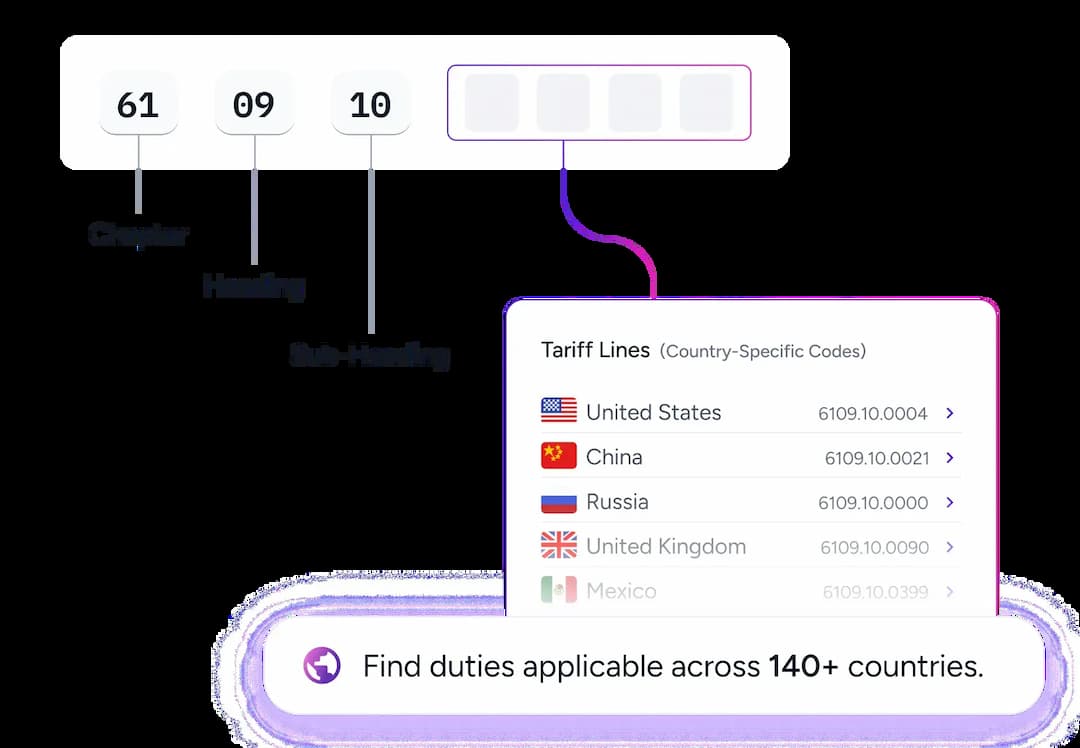
HS Code Lookup helps classify products under appropriate HS code and find duties applicable across 140+ countries. Find and discover HS classification, tariffs, taxes, controls, rulings, ECCNs, and default and preferential duties for HS code 2941.

WCO Notes for Heading 2941
29.41 - Antibiotics(+).
2941.10 - Penicillins and their derivatives with a penicillanic acid structure; salts thereof
2941.20 - Streptomycins and their derivatives; salts thereof
2941.30 - Tetracyclines and their derivatives; salts thereof
2941.40 - Chloramphenicol and its derivatives; salts thereof
2941.50 - Erythromycin and its derivatives; salts thereof
2941.90 - Other
Antibiotics are substances secreted by living micro‑organisms which have the effect of killing other micro‑organisms or inhibiting their growth. They are used principally for their powerful inhibitory effect on pathogenic micro‑organisms, particularly bacteria or fungi, or in some cases on neoplasms. They can be effective at a concentration of a few micrograms per ml in the blood.
Antibiotics may consist of a single substance or a group of related substances, their chemical structure may or may not be known or be chemically defined. They are chemically diverse and include the following :
(1) Heterocyclic, e.g., novobiocin, cephalosporins, streptothricin, faropenem (INN), doripenem (INN), monobactams (e.g., aztreonam (INN)). The most important of this class are the penicillins* which are secreted by several species of the fungus Penicillium. This class also includes procaine penicillin.
(2) Sugar‑related, e.g., streptomycins*.
(3) Tetracyclines and their derivatives, e.g., chlortetracycline (INN), oxytetracycline (INN)*.
(4) Chloramphenicol and its derivatives, e.g., thiamphenicol and florfenicol.
(5) Macrolides, e.g., erythromycin*, amphotericin B, tylosin.
(6) Polypeptides, e.g., actinomycins, bacitracin, gramicidins, tyrocidin.
(7) Other antibiotics, e.g., sarkomycin, vancomycin.
This heading also includes chemically modified antibiotics used as such. These may be prepared by isolating ingredients produced by natural growth of the micro‑organism and then modifying the structure by chemical reaction or by adding sidechain precursors to the growth‑medium so that desired groups are incorporated into the molecule by the cell‑processes (semi‑synthetic penicillins); or by bio‑synthesis (e.g., penicillins from selected amino‑acids).
Natural antibiotics reproduced by synthesis (e.g., chloramphenicol) are classified in this heading, as are certain synthetic products closely related to natural antibiotics and used as such (e.g., thiamphenicol).
In this heading, the term “derivatives” refers to active antibiotic compounds which could be obtained from a compound of this heading and which retain the essential characteristics of the parent compound, including its basic chemical structure.
This heading does not cover :
(a) Antibiotic preparations of a kind used in animal feeding (e.g. dried and standardised complete mycelium) (heading 23.09).
(b) Chemically defined organic compounds with a very low antibiotic activity, used as intermediates in the manufacture of antibiotics (earlier headings of this Chapter according to structure).
(c) Quinolinecarboxylic acid derivatives, nitrofurans, sulphonamides and other chemically defined organic compounds of earlier headings of this Chapter having antibacterial action.
(d) Deliberate intermixtures of antibiotics (e.g., a mixture of penicillin and streptomycin) for therapeutic or prophylactic uses (heading 30.03 or30.04).
(e) Intermediate products obtained during the manufacture of antibiotics by filtering and first‑stage extraction, with an antibiotic content generally not exceeding 70 % (heading 38.24).
°
° °
Subheading Explanatory Notes.
Subheading 2941.10
This subheading includes all penicillins, that is, all active antibiotic compounds whose molecules contain the penin or 6-aminopenicillanic acid skeleton of a ß-lactam of amino-(4-carboxy-5,5-dimethylthiazolidin-2-yl)acetic acid, in which the amine group of the lactam ring is attached to organic acids by an amide bond. Neither the structure of these organic acids, nor the salt formation or other substitutions on the carboxyl group of the thiazolidine ring, affect the classification. However, the basic structure of penin (skeleton) should remain unmodified.
This subheading includes, inter alia, ampicillin (INN), amoxicillin (INN) and talampicillin (INN).
However, this subheading excludes other antibiotics containing a beta-lactam ring such as cephalosporins (e.g., cefazolin (INN), cefaclor (INN)), cephamycins (e.g., cefoxitin (INN)), oxacephems, penems, carbapenems, etc.
Subheading 2941.20
Streptomycin derivatives are active antibiotics whose molecules contain in their structure all the three following constituents of the streptomycin skeleton : streptidine and methylglucosamine linked to 5-deoxylyxose. Esters in any position and glycosides are also considered as derivatives*.
This subheading includes, inter alia, dihydrostreptomycin (INN) and streptoniazid (INN). However, neitherbluensomycin (INN) which does not retain the two amidino groups of streptidine, nor other aminoglycosides containing derivatives of streptamine, such as neomycin (INN), are regarded as streptomycin derivatives.
Subheading 2941.30
Tetracycline derivatives are active antibiotics whose molecules contain partially hydrogenated 4-dimethylamino-naphthacene-2-carboxamide of the tetracycline skeleton. Esters are also considered as derivatives*.
This subheading includes, inter alia, chlortetracycline (INN), eravacycline (INN) and rolitetracycline (INN). However, anthracyclines of the “rubicin” type, such as aclarubicin (INN) and doxorubicin (INN), are not regarded as tetracycline derivatives.
Subheading 2941.40
Chloramphenicolderivatives are active antibiotics whose molecules contain N-(2-hydroxy-1-methyl-2-phenethyl)acetamide of the chloramphenicol skeleton*.
This subheading includes, inter alia, thiamphenicol (INN) and florfenicol (INN). However, cetofenicol (INN) does not belong to this group because it is not antibiotically active.
Subheading 2941.50
Erythromycin derivatives are active antibiotics whose molecules contain the following constituents of the erythromycin skeleton : 13-ethyl-13-tridecanolide with linked desosamine and mycarose (or cladinose). Esters are also considered as derivatives*.
This subheading includes, inter alia, clarithromycin (INN) and dirithromycin (INN). However, azithromycin (INN) which contains a 15-atom central ring and picromycin which contains no cladinose or mycarose, are not regarded as erythromycin derivatives.

What is HS code 2941?

How many sub-headings are there in HS code 2941?
International Trade Compliance Simplified