















HS Code Lookup for Chapter 37
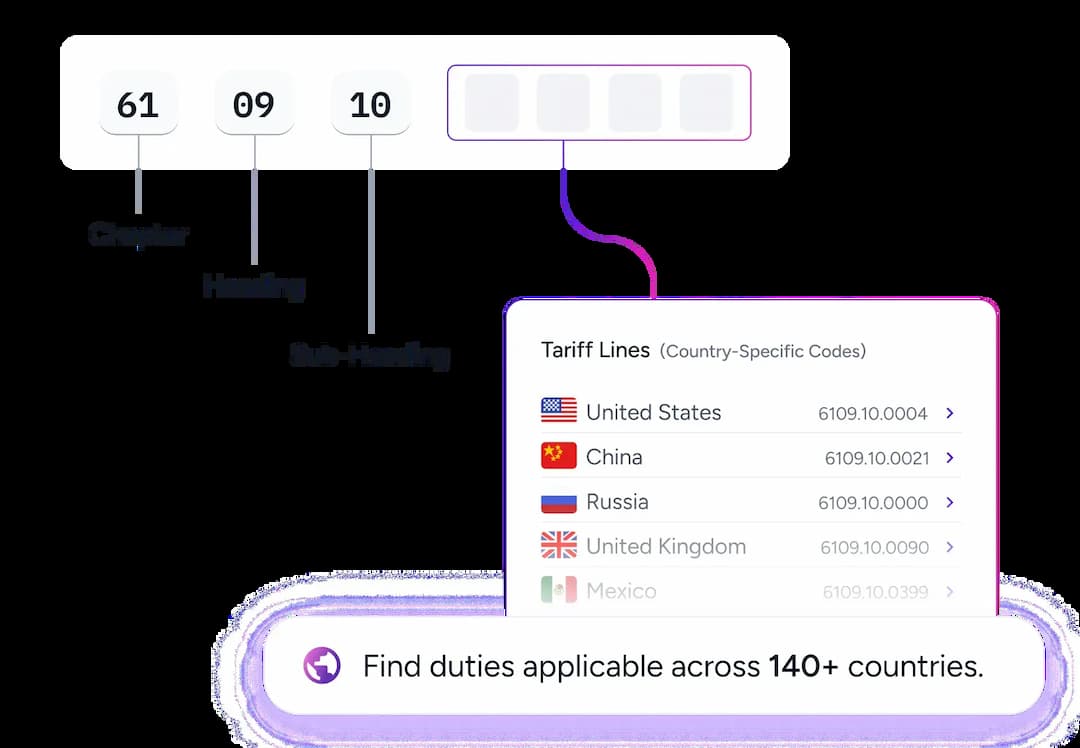
HS Code Lookup helps classify products under appropriate HS code and find duties applicable across 140+ countries. Find and discover HS classification, tariffs, taxes, controls, rulings, ECCNs, and default and preferential duties for HS code 37.

WCO Notes for Chapter 37
Chapter 37
Photographic or cinematographic goods
Notes.
1.- This Chapter does not cover waste or scrap.
2.- In this Chapter the word “photographic” relates to the process by which visible images are formed, directly or indirectly, by the action of light or other forms of radiation on photosensitive, including thermosensitive, surfaces.
GENERAL
The photographic plates, film, paper, paperboard and textiles of Chapter 37 are those with one or more layers of any emulsion sensitive to light or other forms of radiation having sufficient energy to cause the necessary reaction in photon (or photo) sensitive materials, i.e., radiation of wavelength no longer than approximately 1,300 nanometers in the electromagnetic spectrum (including gamma-rays, X-rays, ultra-violet and near-infrared radiation), as well as particle (or nuclear) radiation, whether for reproduction in monochrome or colour. Certain plates are, however, not coated with an emulsion but consist wholly or essentially of photosensitive plastics which may be affixed to a support. Infrared laser sensitive plates are often called thermosensitive/thermal plates or heat sensitive plates.
The most common emulsions are based on silver halides (silver bromide, silver bromide-iodide, etc.) or on salts of other precious metals, but certain other materials may be used, e.g., potassium ferricyanide or other iron compounds for blue-prints, potassium or ammonium dichromate for photomechanical engraving, diazonium salts for diazo emulsions, etc.
(A) Plates and film fall in the Chapter whether :
(1) Unexposed, i.e., not yet submitted to the action of light or other forms of radiation; or
(2) Exposed, whether or not developed (that is, chemically treated to render the image visible).
Plates and film remain in the Chapter whether negative (i.e., with lights and shades reversed), positive (including lavender positives used for the duplication of further positives), or reversible (i.e., with special emulsions which permit the direct production of positives).
(B) Photographic paper, paperboard and textiles are included in the Chapter only when unexposed or exposed (negative or positive) but not developed; after development, they are proper to Chapter 49 or Section XI.
Subject to special conditions explained in the Explanatory Note to heading 37.07, the Chapter also includes chemical products and flashlight materials of a kind used in photography.
This Chapter does not cover waste and scrap. Photographic or cinematographic waste and scrap containing precious metal or precious metal compounds, of a kind used principally for the recovery of precious metal, is classified in heading 71.12. Other photographic or cinematographic waste and scrap is classified according to constituent material (e.g., if of plastics, heading 39.15, if of paper, heading 47.07).

What is HS code 37?

How many headings are there in HS code 37?
International Trade Compliance Simplified