











The Traceability Gap: Managing Risk Across Suppliers Beyond Tier 1
Register Now

HS Code Lookup for Heading 3910

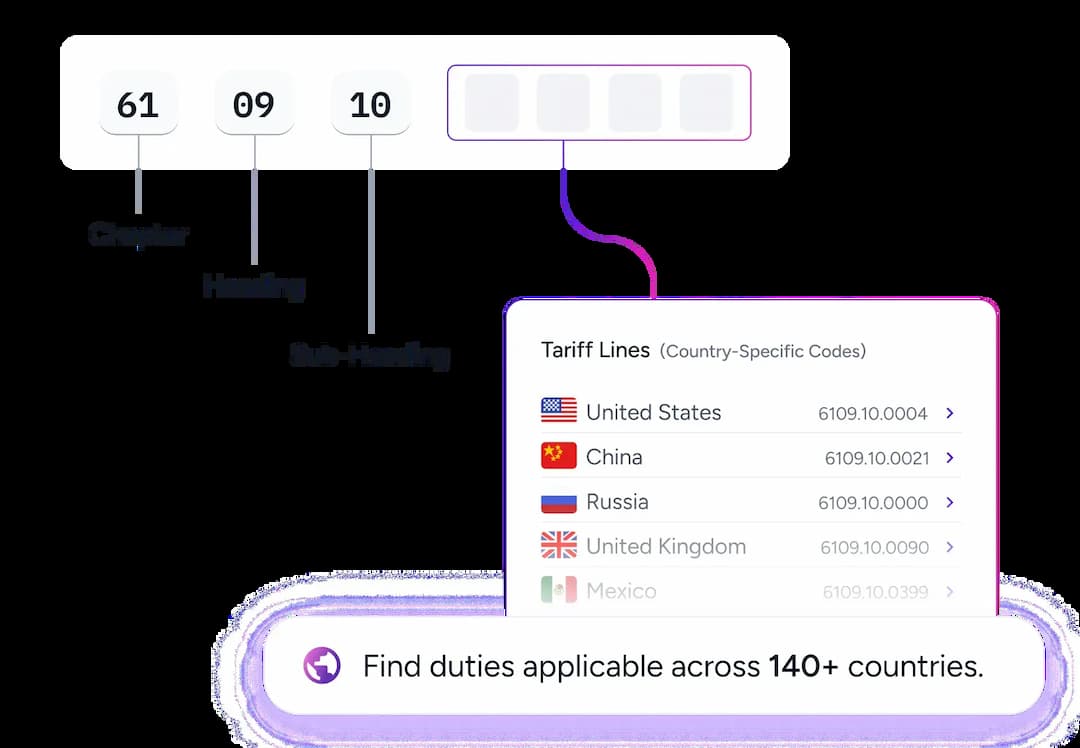
HS Code Lookup helps classify products under appropriate HS code and find duties applicable across 140+ countries. Find and discover HS classification, tariffs, taxes, controls, rulings, ECCNs, and default and preferential duties for HS code 3910.

search-icon
HS Code Image
Heading 3910
Plastics and articles thereof - Silicones in primary forms.
List of Sub Headings & Description

WCO Notes for Heading 3910

39.10 ‑ Silicones in primary forms.

The silicones of this heading are non‑chemically defined products containing in the molecule more than one silicon‑oxygen‑silicon linkage, and containing organic groups connected to the silicon atoms by direct silicon‑carbon bonds.

They have a high stability and may be either liquid, semi‑liquid or solid. The products include silicone oils, greases, resins and elastomers.

(1) Silicone oils and greases are used as lubricants remaining stable at high or low temperatures, as water‑repellent impregnating products, as dielectric products, as foam inhibitors, as mould release agents, etc. Lubricating preparations consisting of mixtures containing silicone greases or oils fall in heading 27.10 or 34.03 as the case may be (see corresponding Explanatory Notes).

(2) Silicone resins are used mainly in the manufacture of varnishes, insulating or waterproof coatings, etc., where stability at high temperature is required. They are also used in the preparation of laminates with glass fibre, asbestos or mica as the reinforcing material, as flexible moulds and for electrical encapsulation.

(3) Silicone elastomers, although not covered by the definition of synthetic rubber in Chapter 40, have some extensibility which is not changed by high or low temperatures. This property renders them suitable for manufacture into washers or other packings for appliances submitted to high or low temperatures. An application in the medical field is the manufacture of automatic brain valves used in cases of hydrocephalus.

For the classification of polymers (including copolymers), chemically modified polymers and polymer blends, see the General Explanatory Note to this Chapter.

The heading excludes silicones complying with the conditions of Note 3 to Chapter 34 (heading 34.02).

tips_icon
FAQs
What is HS code 3910?
Arrow button for expand and collapse
HS code 3910 includes Plastics and articles thereof - Silicones in primary forms..
How many sub-headings are there in HS code 3910?
Arrow button for expand and collapse
There are 1 sub-heading(s) in HS code 3910.
What is an HS Code and Why Does it Hold For Cross-Border Trade?
HS code is a standardized six-digit numerical classification system developed by the World Customs Organization (WCO) and acts as a universal language for simplifying the process of identifying and classifying traded products. They ensure consistent customs clearance, enable accurate duty calculation, and help identify relevant trade regulations. This simplifies the process for businesses, saving time, reducing risk, and promoting informed decision-making.
What are Controls and Why should Businesses Focus on Them?
In global trade, controls refer to a set of regulations and policies implemented by governments to manage the import and export of goods and services. These controls can take various forms, including tariffs, quotas, embargoes, export controls, and licensing requirements. Companies should prioritize understanding and adhering to them for compliance, reduced risk of legal issues, mitigating reputational damage, staying competitive, and building trust with governments.
What are Tariffs in Global Trade and Why should Businesses Focus on Them?
In global trade, tariffs are a type of tax levied by a government on imported goods. They act as a financial barrier to entry, increasing the overall cost of the imported product for domestic consumers and businesses. By understanding how tariffs work and their potential impact, companies can make informed decisions about pricing, sourcing, and market expansion, ultimately ensuring their competitiveness in the global marketplace.
What are FTAs in Global Trade and Why should Businesses Focus on Them?
In global trade, Free Trade Agreements (FTAs) are legally binding agreements between two or more countries aimed at reducing or eliminating barriers to trade between them. By understanding the terms of relevant FTAs and strategically incorporating them into their business plans, companies can enjoy reduced costs, expanded market access, and a more competitive edge in international trade.

International Trade Compliance Simplified

140+
Countries Covered
440+
Government Authorities
300+
FTAs Monitored
500K+
Customs Rulings
880K+
Import & Export Compliance Data Entities
Location
United States
3000 El Camino Real, Building 4, Suite 200, Palo Alto, California 94306
India
2nd Floor, Plot No. 136, Sector 44, Gurugram, Haryana 122003