














HS Code Lookup for Chapter 43
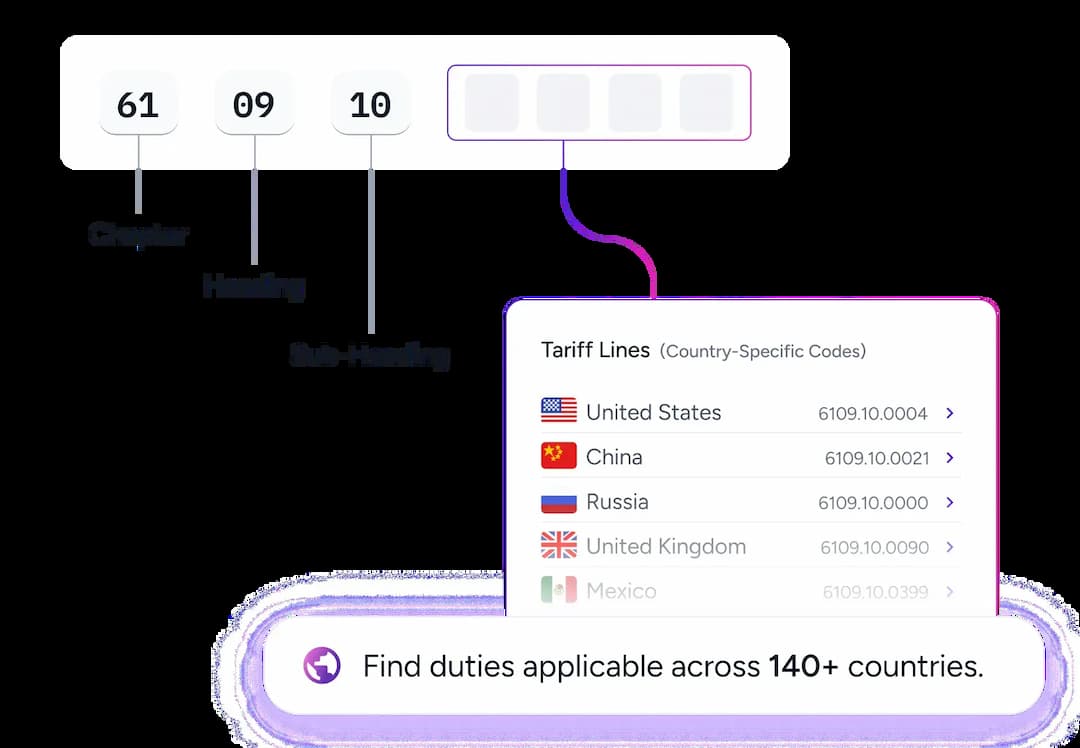
HS Code Lookup helps classify products under appropriate HS code and find duties applicable across 140+ countries. Find and discover HS classification, tariffs, taxes, controls, rulings, ECCNs, and default and preferential duties for HS code 43.

WCO Notes for Chapter 43
Chapter 43
Furskins and artificial fur; manufactures thereof
Notes.
1.‑ Throughout the Nomenclature references to “furskins”, other than to raw furskins of heading 43.01, apply to hides or skins of all animals which have been tanned or dressed with the hair or wool on.
2.‑ This Chapter does not cover :
(a) Birdskins or parts of birdskins, with their feathers or down (heading 05.05 or 67.01);
(b) Raw hides or skins, with the hair or wool on, of Chapter 41 (see Note 1 (c) to that Chapter);
(c) Gloves, mittens and mitts, consisting of leather and furskin or of leather and artificial fur (heading 42.03);
(d) Articles of Chapter 64;
(e) Headgear or parts thereof of Chapter 65; or
(f) Articles of Chapter 95 (for example, toys, games, sports requisites).
3.‑ Heading 43.03 includes furskins and parts thereof, assembled with the addition of other materials, and furskins and parts thereof, sewn together in the form of garments or parts or accessories of garments or in the form of other articles.
4.‑ Articles of apparel and clothing accessories (except those excluded by Note 2) lined with furskin or artificial fur or to which furskin or artificial fur is attached on the outside except as mere trimming are to be classified in heading 43.03 or 43.04 as the case may be.
5.‑ Throughout the Nomenclature the expression “artificial fur” means any imitation of furskin consisting of wool, hair or other fibres gummed or sewn on to leather, woven fabric or other materials, but does not include imitation furskins obtained by weaving or knitting (generally, heading 58.01 or 60.01).
GENERAL
This Chapter covers :
(1) Raw furskins other than raw hides and skins of heading 41.01, 41.02 or 41.03.
(2) Hides and skins tanned or dressed with the hair or wool on, unassembled or assembled.
(3) Apparel, clothing accessories and other manufactured articles of furskin (subject to the exceptions specified in the Explanatory Note to heading 43.03).
(4) Artificial fur and articles thereof.
It is to be noted that birdskins and parts of birdskins, with their feathers or down, are not treated as furskins; they fall in heading 05.05 or 67.01.
*
* *
It is to be noted that headings 43.01 to 43.03 cover furskins and articles of furskin of some species of wild animals which are now threatened with extinction or which may become so unless trade in specimens of such species is strictly regulated. Such species are listed in the Appendices of the 1973 Convention on International Trade in Endangered Species of Wild Fauna and Flora (Washington Convention).

What is HS code 43?

How many headings are there in HS code 43?
International Trade Compliance Simplified