















HS Code Lookup for Heading 4819
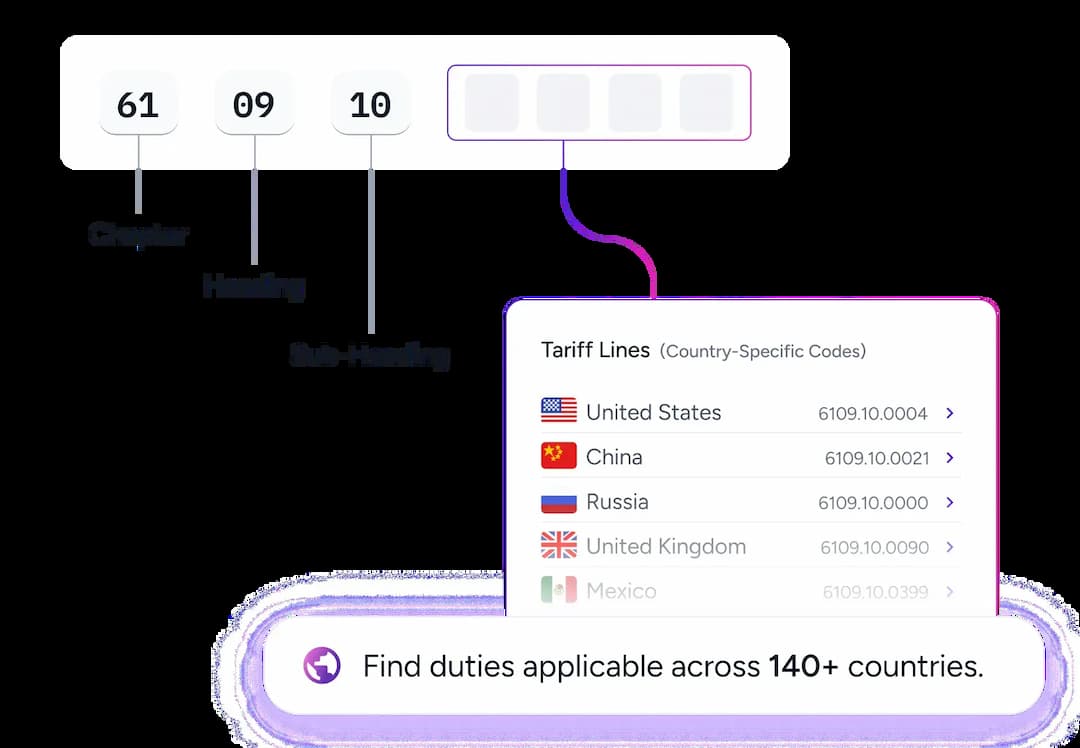
HS Code Lookup helps classify products under appropriate HS code and find duties applicable across 140+ countries. Find and discover HS classification, tariffs, taxes, controls, rulings, ECCNs, and default and preferential duties for HS code 4819.

WCO Notes for Heading 4819
48.19 ‑ Cartons, boxes, cases, bags and other packing containers, of paper, paperboard, cellulose wadding or webs of cellulose fibres; box files, letter trays, and similar articles, of paper or paperboard of a kind used in offices, shops or the like.
4819.10 ‑ Cartons, boxes and cases, of corrugated paper or paperboard
4819.20 ‑ Folding cartons, boxes and cases, of non-corrugated paper or paperboard
4819.30 ‑ Sacks and bags, having a base of a width of 40 cm or more
4819.40 ‑ Other sacks and bags, including cones
4819.50 ‑ Other packing containers, including record sleeves
4819.60 ‑ Box files, letter trays, storage boxes and similar articles, of a kind used in offices, shops or the like
(A) Cartons, boxes, cases, bags and other packing containers.
This group covers containers of various kinds and sizes generally used for the packing, transport, storage or sale of merchandise, whether or not also having a decorative value. The heading includes cartons, boxes, cases, bags, cones, packets, sacks, paperboard drums (containers), whether manufactured by rolling or by any other method, and whether or not fitted with reinforcing circular bands of other materials, tubular containers for posting documents, protective garment bags, jars, pots and the like (e.g., for milk or cream), whether or not waxed. The heading also covers special purpose paper bags such as bags for vacuum cleaners, bags for travel sickness, and record boxes and sleeves.
The heading includes folding cartons, boxes and cases. These are :
‑ cartons, boxes and cases in the flat in one piece, for assembly by folding and slotting (e.g., cake boxes);
and
‑ containers assembled or intended to be assembled by means of glue, staples, etc., on one side only, the construction of the container itself providing the means of forming the other sides, although, where appropriate, additional means of fastening, such as adhesive tape or staples may be used to secure the bottom or lid.
The articles of this group may be printed, e.g., with the name of the merchant, directions for use, illustrations. Thus, seed packets with pictures of the products and sowing directions, in addition to the name of the firm, or chocolate or cereal packets with pictures for the amusement of children remain classified in this heading.
The articles of this heading may also have reinforcements or accessories of materials other than paper (e.g., textile backings, wooden supports, string handles, corners of metal or plastics).
(B) Box files, letter trays and similar articles of a kind used in offices, shops or the like.
This group covers containers, such as filing cabinets, box files, letter trays, storage boxes and similar articles of a rigid and durable type, and generally of better finish than the packing containers of group (A) above. They are used for the filing or storage of documents or stock of various kinds in offices, shops, warehouses, etc.
These articles may have reinforcements or accessories of non‑paper materials (e.g., hinges, handles, locking devices of metal, wood, plastics or textile material). They may also be provided with frames of metal, plastics, etc., for the insertion of indication cards.
The heading excludes :
(a) Articles of heading 42.02 (travel goods, etc.).
(b) Articles of plaited paper (heading 46.02).
(c) Coated, covered and printed paper or paperboard of heading 48.11, presented in rolls, used for the manufacture of containers and creased and marked to identify individual containers to be cut from the rolls.
(d) Albums for samples or for collections (heading 48.20).
(e) Sacks and bags of woven paper yarn, of heading 63.05.

What is HS code 4819?

How many sub-headings are there in HS code 4819?
International Trade Compliance Simplified