















HS Code Lookup for Heading 5906
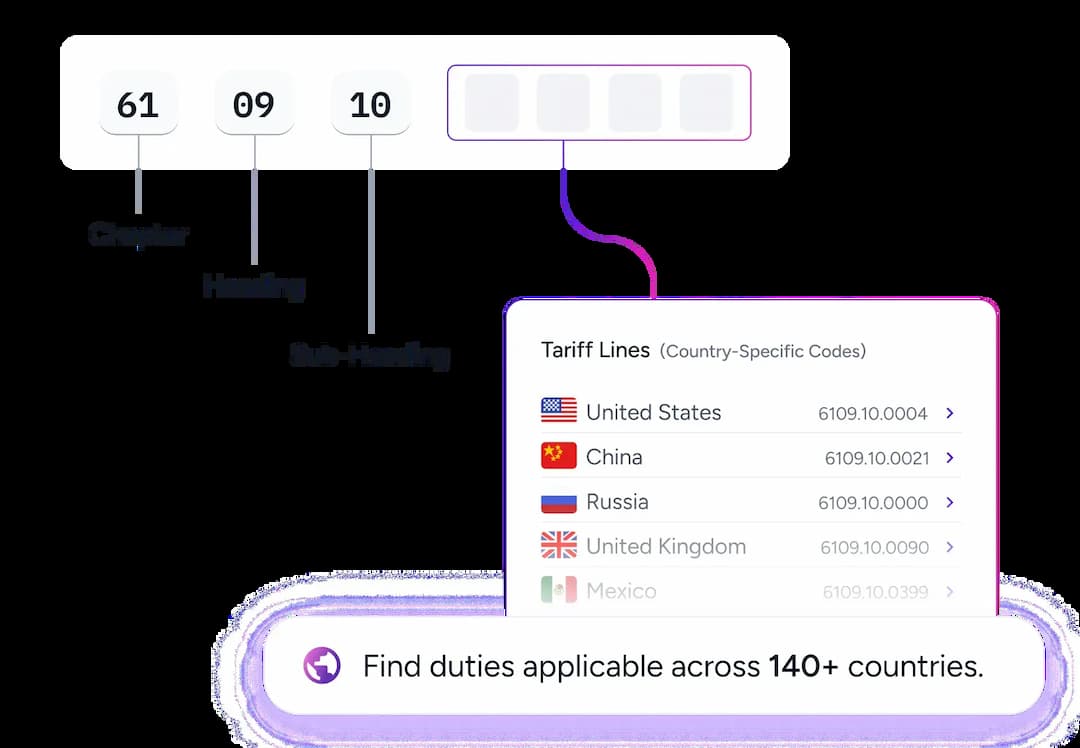
HS Code Lookup helps classify products under appropriate HS code and find duties applicable across 140+ countries. Find and discover HS classification, tariffs, taxes, controls, rulings, ECCNs, and default and preferential duties for HS code 5906.

WCO Notes for Heading 5906
59.06 ‑ Rubberised textile fabrics, other than those of heading 59.02.
5906.10 ‑ Adhesive tape of a width not exceeding 20 cm
‑ Other :
5906.91 ‑ ‑ Knitted or crocheted
5906.99 ‑ ‑ Other
This heading covers :
(A) Textile fabrics impregnated, coated, covered or laminated with rubber, including dipped fabrics (other than those of heading 59.02), of a weight :
(1) not exceeding 1,500 g/m2, irrespective of the proportions of textile and rubber; or
(2) if exceeding 1,500 g/m2, containing more than 50 % by weight of textile material.
These rubberised fabrics are used principally for the manufacture of waterproof apparel, special radiation protection garments, pneumatic articles, camping equipment, sanitary goods, etc.
Certain upholstery fabrics, lightly coated on one side with rubber latex, are not necessarily waterproof but nevertheless remain in this heading.
These fabrics should not be confused with fabrics assembled in layers with rubber adhesives, such as those used for coachwork or for footwear. A cross‑section of these latter fabrics shows no thickness of rubber and they normally fall in Chapters 50 to 55.
(B) Fabrics made from yarn, strip or the like, impregnated, coated, covered or sheathed with rubber, of heading 56.04.
(C) Weftless fabrics composed of parallel textile yarns agglomerated by gumming or calendering with rubber, irrespective of their weight per square metre. These products are used for the manufacture of tyres, rubber tubes, transmission or conveyor belts or belting, etc.
(D) Adhesive tape, including electrical insulating tape, in which the backing is of textile fabric, whether or not previously rubberised, and the adhesive of rubber.
The heading excludes :
(a) Adhesive tapes impregnated or coated with pharmaceutical substances or put up in forms or packings for retail sale for medical, surgical, dental or veterinary purposes (heading 30.05).
(b) Rubberised fabrics of the kind described in paragraph (A) (2) above but containing not more than 50 % by weight of textile material (heading 40.05 or 40.08).
(c) Plates, sheets or strip of cellular rubber, combined with textile fabric, where the textile fabric is present merely for reinforcing purposes (heading 40.08). As regards criteria for distinguishing between these products and similar products of heading 59.06, see Item (A) of the Explanatory Note to heading 40.08.
(d) Conveyor or transmission belts and belting, generally consisting of a carcass composed of several plies of textile fabric (whether or not rubberised) covered with vulcanised rubber (heading 40.10).
(e) Carpets, linoleum and other floor coverings backed with rubber to ensure greater flexibility and adhesion to the floor (Chapter 57 or heading 59.04 as the case may be).
(f) Quilted textile products of heading 58.11.
(g) Textile fabrics (whether or not felt‑lined) consisting of several layers of fabric assembled with rubber and vulcanised under pressure, of the kind used for the manufacture of card clothing, printing blankets or other similar articles of a kind used for technical purposes, including narrow fabrics made of velvet impregnated with rubber, for covering weaving spindles (weaving beams), of heading 59.11.
(h) Rubberised fabrics made up as described in Part (II) of the General Explanatory Note to Section XI (generally Chapters 61 to 63).

What is HS code 5906?

How many sub-headings are there in HS code 5906?
International Trade Compliance Simplified