















HS Code Lookup for Heading 5911
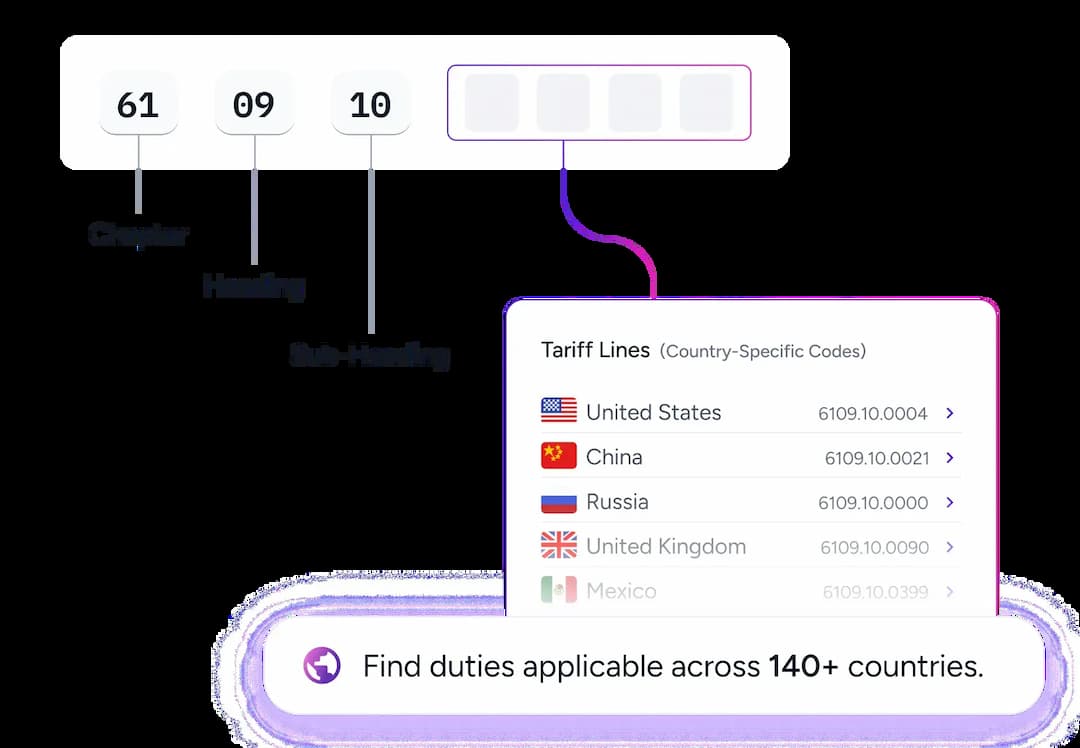
HS Code Lookup helps classify products under appropriate HS code and find duties applicable across 140+ countries. Find and discover HS classification, tariffs, taxes, controls, rulings, ECCNs, and default and preferential duties for HS code 5911.

WCO Notes for Heading 5911
59.11 ‑ Textile products and articles, for technical uses, specified in Note 8 to this Chapter (+).
5911.10 ‑ Textile fabrics, felt and felt-lined woven fabrics, coated, covered or laminated with rubber, leather or other material, of a kind used for card clothing, and similar fabrics of a kind used for other technical purposes, including narrow fabrics made of velvet impregnated with rubber, for covering weaving spindles (weaving beams)
5911.20 ‑ Bolting cloth, whether or not made up
‑ Textile fabrics and felts, endless or fitted with linking devices, of a kind used in paper‑making or similar machines (for example, for pulp or asbestos‑cement) :
5911.31 ‑ ‑ Weighing less than 650 g/m2
5911.32 ‑ ‑ Weighing 650 g/m2 or more
5911.40 ‑ Filtering or straining cloth of a kind used in oil presses or the like, including that of human hair
5911.90 ‑ Other
The textile products and articles of this heading present particular characteristics which identify them as being for use in various types of machinery, apparatus, equipment or instruments or as tools or parts of tools.
The heading includes, in particular, those textile articles which are excluded from other headings and directed to heading 59.11 by any specific provision of the Nomenclature (for example, Note 1 (e) to Section XVI). It should be noted however, that certain textile parts and accessories of the goods of Section XVII, such as safety seat belts, shaped motor car body linings and insulating panels (heading 87.08) and carpets for motor cars (Chapter 57), are not classified in this heading.
(A) TEXTILE FABRICS AND OTHER TEXTILE PRODUCTS, FOR TECHNICAL USES, IN THE PIECE, CUT TO LENGTH OR SIMPLY CUT TO RECTANGULAR (INCLUDING SQUARE) SHAPE
Provided they do not have the character of the products of headings 59.08 to 59.10, these products are classified here (and not in any other heading of Section XI), whether in the piece, cut to length or simply cut to rectangular (including square) shape.
This group covers only the textile fabrics and other textile products as defined in Note 8 (a) to the Chapter, and listed at (1) to (6) below.
(1) Textile fabrics, felt and felt‑lined woven fabrics, coated, covered or laminated with rubber, leather or other material (e.g., plastics), of a kind used for card clothing, and similar fabrics of a kind used for other technical purposes, including narrow fabrics made of velvet impregnated with rubber, for covering weaving spindles (weaving beams).
(2) Bolting cloths. These are porous fabrics (for example, with a gauze, leno or plain weave), geometrically accurate as to size and shape (usually square) of the meshes, which must not be deformed by use. They are mainly used for sifting (e.g., flour, abrasive powders, powdered plastics, cattle food), filtering or for screen printing. Bolting cloths are generally made of hard twisted undischarged silk yarn or of synthetic filament yarn.
(3) Filtering or straining cloth (e.g., woven filter fabrics and needled filter fabrics), whether or not impregnated, of a kind used in oil presses or for similar filtering purposes (e.g., in sugar refineries or breweries) and for gas cleaning or similar technical applications in industrial dust collecting systems. The heading includes oil filtering cloth, certain thick heavy fabrics of wool or of other animal hair, and certain unbleached fabrics of synthetic fibres (e.g., nylon) thinner than the foregoing but of a close weave and having a characteristic rigidity. It also includes similar filtering or straining cloth of human hair.
(4) Flat woven textile fabrics with multiple warp or weft, whether or not felted, impregnated or coated, of a kind used in machinery or for other technical purposes.
(5) Textile fabrics, reinforced with metal, of a kind used for technical purposes; the metal thread (bare metal, wire twisted or gimped with textile yarn, etc.) may, for example, be incorporated during weaving (in particular, as warp) or introduced between plies of the material.
Felt reinforced with metal is, however, excluded (heading 56.02).
(6) Cords, braids and the like of a kind used in industry as packing or lubricating materials; these are usually of square section, coated or impregnated with grease, graphite, talc, etc., and sometimes reinforced with metal. Cords, etc., not coated or impregnated, remain classified here provided they are clearly recognisable as products used in industry as packing or lubricating materials.
(B) TEXTILE ARTICLES OF A KIND USED FOR TECHNICAL PURPOSES
All textile articles of a kind used for technical purposes (other than those of headings 59.08 to 59.10) are classified in this heading and not elsewhere in Section XI (see Note 8 (b) to the Chapter); for example :
(1) Any of the fabrics of (A) above which have been made up (cut to shape, assembled by sewing, etc.), for example, straining cloths for oil presses made by assembly of several pieces of fabric; bolting cloth cut to shape and trimmed with tapes or furnished with metal eyelets or cloth mounted on a frame for use in screen printing.
(2) Textile fabrics and felts, endless or fitted with linking devices, of a kind used in paper‑making or similar machines (for example, for pulp or asbestos‑cement) (excluding machinery belts of heading 59.10).
(3) Articles formed of linked monofilament yarn spirals and having similar uses to the textile fabrics and felts of a kind used in paper‑making or similar machines referred to in (2) above.
(4) Gaskets and diaphragms for pumps, motors, etc., and washers (excluding those of heading 84.84).
(5) Discs, sleeves and pads for shoe polishing and other machines.
(6) Textile bags for oil presses.
(7) Cords cut to length, with knots, loops, or metal or glass eyelets, for use on Jacquard or other looms.
(8) Loom pickers.
(9) Bags for vacuum cleaners, filter bags for air filtration plant, oil filters for engines, etc.
The textile articles of this heading may incorporate accessories in other material provided the articles remain essentially articles of textile.
°
° °
Subheading Explanatory Note.
Subheading 5911.90
Articles formed of linked monofilament yarn spirals and having similar uses to the textile fabrics and felts of a kind used in paper‑making or similar machines fall in this subheading and not in subheading 5911.31 or 5911.32.
______________________

What is HS code 5911?

How many sub-headings are there in HS code 5911?
International Trade Compliance Simplified