














HS Code Lookup for Heading 6307
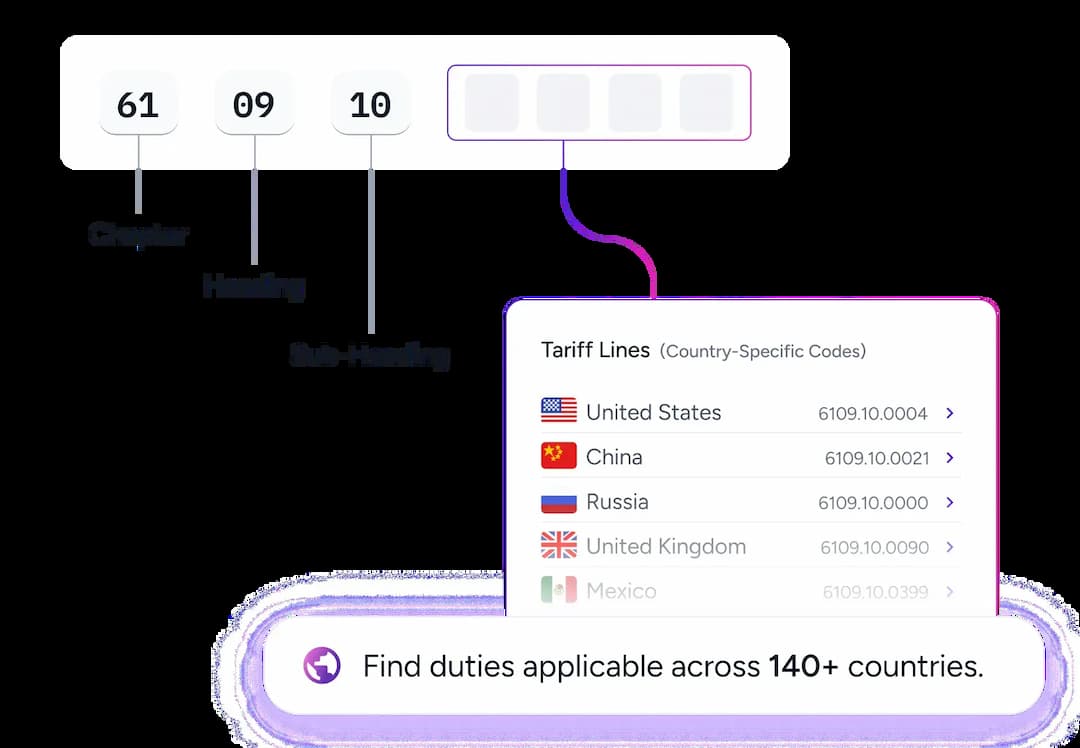
HS Code Lookup helps classify products under appropriate HS code and find duties applicable across 140+ countries. Find and discover HS classification, tariffs, taxes, controls, rulings, ECCNs, and default and preferential duties for HS code 6307.

WCO Notes for Heading 6307
63.07 ‑ Other made up articles, including dress patterns.
6307.10 - Floor‑cloths, dish‑cloths, dusters and similar cleaning cloths
6307.20 - Life‑jackets and life‑belts
6307.90 - Other
This heading covers made up articles of any textile material which are not included more specifically in other headings of Section XI or elsewhere in the Nomenclature.
It includes, in particular :
(1) Floor-cloths, dish-cloths, dusting cloths and similar cleaning cloths (whether or not impregnated with a cleaning preparation, but excluding those of heading 34.01 or 34.05).
(2) Life‑jackets and life‑belts.
(3) Dress patterns, usually made of stiff canvas; these are sometimes supplied with the various parts stitched together in the form of the garment.
(4) Flags, pennants and banners, including bunting for entertainments, galas or other purposes.
(5) Domestic laundry or shoe bags, stocking, handkerchief or slipper sachets, pyjama or nightdress cases and similar articles.
(6) Garment bags (portable wardrobes) other than those of heading 42.02.
(7) Loose covers for motor‑cars, machines, suitcases, tennis rackets, etc.
(8) Flat protective sheets (excluding tarpaulin and ground sheets of heading 63.06).
(9) Textile coffee‑filters, icing bags, etc.
(10) Shoe‑polishing pads (excluding those of heading 34.05).
(11) Pneumatic cushions (excluding camping goods of heading 63.06).
(12) Tea cosy covers.
(13) Pincushions.
(14) Boot, shoe, corset, etc. laces with fitted ends; but laces consisting of spun yarns or cords with fitted ends are excluded (heading 56.09).
(15) Belts which, although worn around the waist, do not have the character of belts of heading 62.17, e.g., belts for occupational use (electricians’, aviators’, parachutists’, etc.); webbing carrier straps and similar articles. (Straps having the character of articles of saddlery or harness are excluded ‑ heading 42.01.)
(16) Carry cots, portable cradles and similar carriers for children.
Infants’ seats of the type intended to be hooked, for example, over the backs of car seats are excluded (heading 94.01).
(17) Umbrella or sun umbrella covers and cases.
(18) Fans and hand screens, with textile mounts (leaves) and frames of any material, and mounts presented separately. However, fans or hand screens with frames of precious metal are classified in heading 71.13.
(19) Packing cloths which, after use as bale wrappings, are roughly or loosely stitched together at the edges, but which do not constitute sacks or bags or unfinished sacks or bags of heading 63.05.
(20) Cheese‑cloths, cut into rectangles, with the ends of the warp threads knotted to prevent unravelling. (Cheese‑cloths woven in the piece prepared for cutting to size or shape, but requiring further fabrication before use, are to be classified as piece goods.)
(21) Trimmings for umbrellas, sun umbrella, walking‑sticks, etc; sword‑knots and the like.
(22) Textile face-masks of a kind worn by surgeons during operations.
(23) Face‑masks for protection against dust, odours, etc., not equipped with a replaceable filter, but consisting of several layers of nonwovens, whether or not treated with activated carbon or having a central layer of synthetic fibres.
(24) Rosettes (e.g. those awarded at competitions), other than those for garments.
(25) Pieces of textile fabric which have undergone some working (such as hemming or the formation of necklines), intended for the manufacture of garments but not yet sufficiently completed to be identifiable as garments or parts of garments.
(26) Support articles of the kind referred to in Note 1 (b) to Chapter 90 for joints (e.g., knees, ankles, elbows or wrists) or muscles (e.g., thigh muscles), other than those falling in other headings of Section XI.
(27) Nonwoven articles, cut to a specific shape, coated on one side with an adhesive protected by a sheet of paper or other material and designed to adhere around the lower part of the breast in order to form or shape the breast.
Besides the finished articles listed above, this heading covers articles in the length, made up within the meaning of Note 7 to Section XI, provided they are not included in other headings of Section XI. For instance, it applies to textile draught excluders for doors or windows (including those stuffed with wadding).
The heading excludes textile articles classified in more specific headings of this Chapter or of Chapters 56 to 62. It further excludes :
(a) Saddlery and harness for any kind of animal (heading 42.01).
(b) Travel goods (suit‑cases, rucksacks, etc.), shopping‑bags, toilet‑cases, etc., and all similar containers of heading 42.02.
(c) Printed matter (Chapter 49).
(d) Labels, badges and similar articles of heading 58.07, 61.17 or 62.17.
(e) Knitted headbands (heading 61.17).
(f) Sacks and bags of heading 63.05.
(g) Footwear, parts of footwear (including removable in‑soles), and other articles (gaiters, spats, leggings, etc.) of Chapter 64.
(h) Headgear and parts and fittings thereof of Chapter 65.
(ij) Umbrellas and sun umbrellas (heading 66.01).
(k) Artificial flowers, foliage or fruit and parts thereof, and articles made of artificial flowers, foliage or fruit (heading 67.02).
(l) Pneumatic canoes, kayaks and other craft (heading 89.03).
(m) Measuring tapes (heading 90.17).
(n) Watch straps (heading 91.13).
(o) Toys, games and entertainment articles, etc., of Chapter 95.
(p) Mops (heading 96.03), hand sieves and hand riddles (heading 96.04) and powder‑puffs (heading 96.16).
(q) Sanitary towels (pads) and tampons, napkins (diapers) and napkin liners and similar articles of heading 96.19.
______________________

What is HS code 6307?

How many sub-headings are there in HS code 6307?
International Trade Compliance Simplified