














HS Code Lookup for Heading 6309
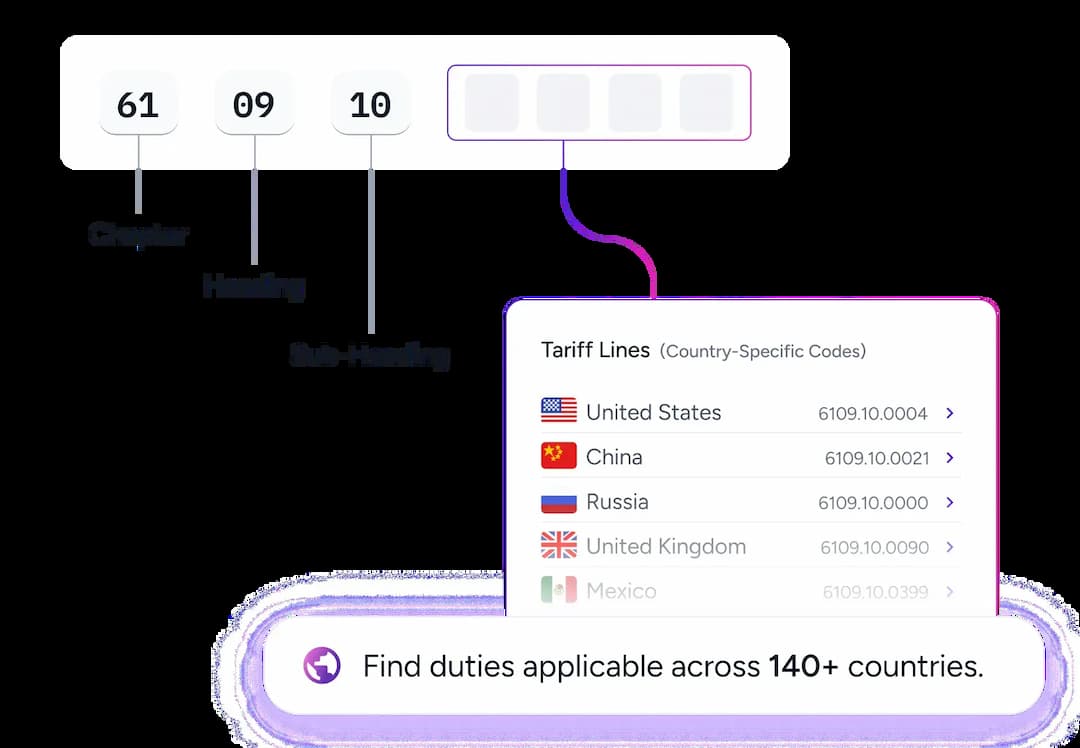
HS Code Lookup helps classify products under appropriate HS code and find duties applicable across 140+ countries. Find and discover HS classification, tariffs, taxes, controls, rulings, ECCNs, and default and preferential duties for HS code 6309.

WCO Notes for Heading 6309
Sub‑Chapter III
WORN CLOTHING AND WORN TEXTILE ARTICLES; RAGS
63.09 ‑ Worn clothing and other worn articles.
In order to be classified in this heading the articles, of which a limitative list is given in paragraphs (1) and (2) of this Explanatory Note, must comply with both of the following requirements. If they do not meet these requirements they are classified in their appropriate headings.
(A) They must show signs of appreciable wear, whether or not they require cleaning or repair before use.
New articles with faults in weaving, dyeing, etc., and shop‑soiled articles are excluded from this heading.
(B) They must be presented in bulk (e.g., in railway goods wagons) or in bales, sacks or similar bulk packings, or in bundles tied together without external wrapping, or packed roughly in crates.
Thesearticles are normally traded in large consignments, usually for resale, and are less carefully packed than is generally the case with new articles.
*
* *
Subject to compliance with the above requirements, this heading covers the goods in the following limitative list only :
(1) The following articles of textile materials of Section XI : clothing and clothing accessories (e.g., garments, shawls, scarves, stockings and socks, gloves and collars), blankets and travelling rugs, household linen (e.g., bed sheets and table linen) and furnishing articles (e.g., curtains and table covers). The heading also includes parts of such clothing or clothing accessories.
However, the heading excludes furnishing articles specified in Chapter 57 or heading 58.05 (carpets and other textile floor coverings including “Kelem”, “Schumacks”, “Karamanie”, and similar hand woven rugs, and tapestries) even when showing signs of appreciable wear and irrespective of their packing. The articles falling in Chapter 94 and in particular those specified in heading 94.04 (mattress supports; articles of bedding and similar furnishing articles fitted with springs or stuffed or internally fitted, for example, mattresses, quilts, eiderdowns, cushions, pouffes, pillows) are also excluded from this heading irrespective of their degree of wear or their packing.
(2) Footwear and headgear of all kinds and of any material other than of asbestos (e.g., leather, rubber, textile materials, straw or plastics).
All other articles (e.g., sacks and bags, tarpaulins, tents and camping goods) showing signs of wear are excluded from this heading and are to be classified with the corresponding new articles.

What is HS code 6309?

How many sub-headings are there in HS code 6309?
International Trade Compliance Simplified