















HS Code Lookup for Heading 7002
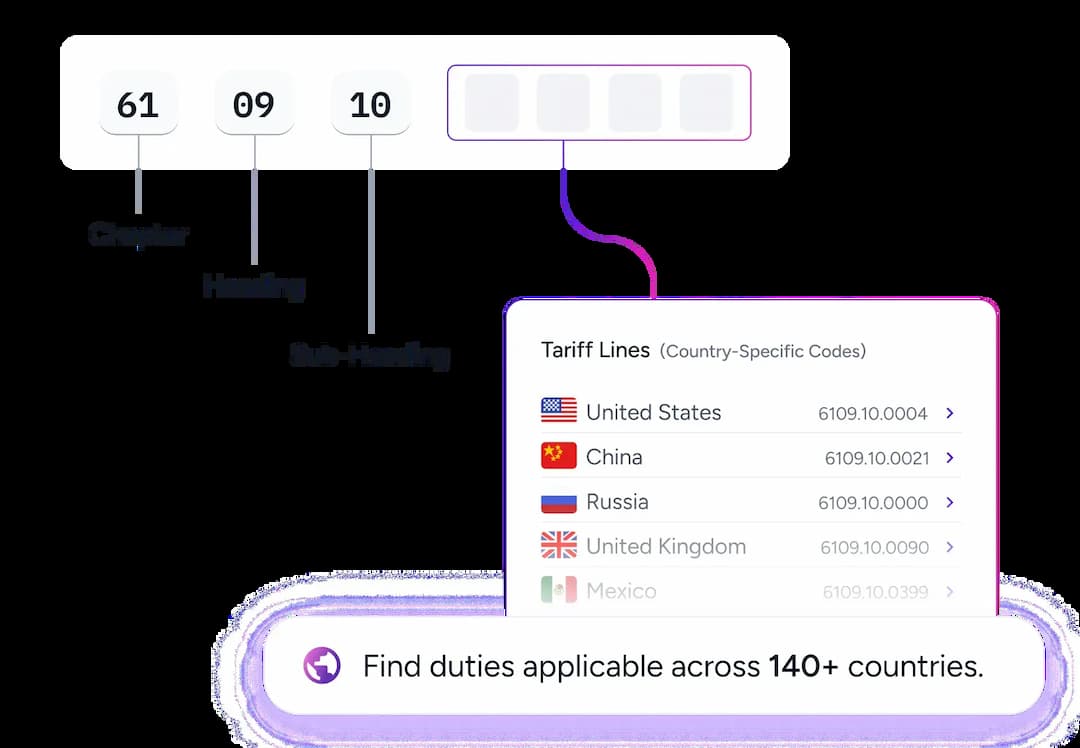
HS Code Lookup helps classify products under appropriate HS code and find duties applicable across 140+ countries. Find and discover HS classification, tariffs, taxes, controls, rulings, ECCNs, and default and preferential duties for HS code 7002.

WCO Notes for Heading 7002
70.02 - Glass in balls (other than microspheres of heading 70.18), rods or tubes, unworked.
7002.10 - Balls
7002.20 - Rods
- Tubes :
7002.31 - - Of fused quartz or other fused silica
7002.32 - - Of other glass having a linear coefficient of expansion not exceeding 5 x 10⁻⁶ per Kelvin within a temperature range of 0 °C to 300 °C
7002.39 - - Other
This heading covers :
(1) Solid glass balls, which are generally manufactured by moulding or pressing or on double-screw machines, and which may be used, inter alia, as raw material for the production of fibre, or for the preparation of lithographic plates.
(2) Glass rods and tubing of various diameters, which are generally obtained by drawing (combined with blowing in the case of tubing); they may be used for many purposes (e.g., for chemical or industrial apparatus; in the textile industry; for further manufacture into thermometers, ampoules, electric or electronic bulbs and valves, or ornaments). Certain tubes for fluorescent lighting (used mainly for advertising purposes) are drawn with partitions running through the length.
This group includes “enamel” glass, in bars, rods or tubes (“enamel” glass is defined in the Explanatory Note to heading 70.01).
Balls of this heading must be unworked; similarly rod and tubing must be unworked (i.e., as obtained direct from the drawing process or merely cut into lengths the ends of which may have been simply smoothed).
The heading excludes balls, rod and tubing made into finished articles or parts of finished articles recognisable as such; these are classified under the appropriate heading (e.g., heading 70.11, 70.17 or 70.18, or Chapter 90). If worked, but not recognisable as being intended for a particular purpose, they fall in heading 70.20.
This heading includes tubes (whether or not cut to length) of glass which has had fluorescent material added to it in the mass. On the other hand, tubes coated inside with fluorescent material, whether or not otherwise worked, are excluded (heading 70.11).
Glass balls having the character of toys (veined glass marbles put up in any form, and glass balls of any kind put up in packets for the amusement of children) are classified in heading 95.03. Glass balls, which have been ground after shaping, used for stoppering certain bottles fall in heading 70.10.
The heading also excludes the spherical glass grains (microspheres, not exceeding 1 mm in diameter) used, for example, for the manufacture of panels for road signs, reflecting signs or cinema screens, or in the cleaning of aeroplane jet engines or metallic surfaces (heading 70.18).

What is HS code 7002?

How many sub-headings are there in HS code 7002?
International Trade Compliance Simplified