














HS Code Lookup for Heading 7006
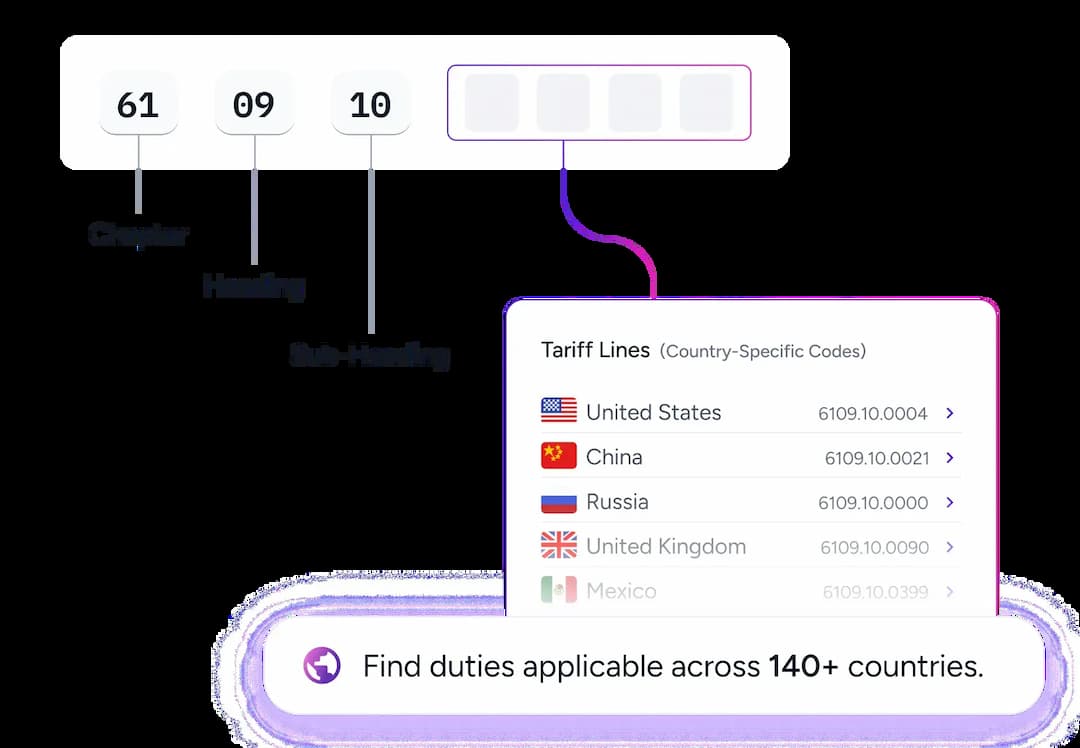
HS Code Lookup helps classify products under appropriate HS code and find duties applicable across 140+ countries. Find and discover HS classification, tariffs, taxes, controls, rulings, ECCNs, and default and preferential duties for HS code 7006.

WCO Notes for Heading 7006
70.06 - Glass of heading 70.03, 70.04 or 70.05, bent, edge-worked, engraved, drilled, enamelled or otherwise worked, but not framed or fitted with other materials.
This heading covers glass of the types referred to in headings 70.03 to 70.05 which has been subjected to one or more of the processes mentioned below. The heading does not, however,include safety glass (heading 70.07), multiple-walled insulating units of glass (heading 70.08) or glass in the form of mirrors (heading 70.09).
The heading includes :
(A) Bent or curved glass such as the special glass (e.g., for display windows) which is obtained by hot-bending or hot-curving (in a suitable furnace and over moulds) flat glass sheets, with the exception, however, of the bent or curved glass of heading 70.15.
(B) Glass with worked edges (ground, polished, rounded, notched, chamfered, bevelled, profiled, etc.), thus acquiring the character of articles such as slabs for table-tops, for balances or other weighing machinery, for observation slits and the like, for signs of various kinds, fingerplates, glasses for photograph frames, etc., window panes, glass fronts for furniture, etc.
(C) Glass perforated or fluted as a subsequent operation, etc.
(D) Glass which has been surface worked after manufacture, for example, glass subjected to obscuring processes (sand-blasted glass, or glass rendered dull by treatment with emery or acid); frosted glass; glass engraved or etched by any process; enamelled glass (i.e., glass decorated with enamel or vitrifiable colours); glass bearing designs, decorations, various motifs, etc., produced by any process (hand painting, printing, window transparencies, etc.) and all other glass decorated in any other way, except glass hand painted so as to constitute a painting of heading 97.01.
This heading covers not only flat glass in the form of semi-finished products (e.g., sheets without any particular purpose), but also articles of flat glass designed for a specific purpose, subject to their being neither framed, backed, nor fitted with material other than glass. The heading thus includes, inter alia, fingerplates (for doors or switches) made entirely of bevelled or perforated glass and sign-plates, even when bevelled, coloured or bearing designs or other decorations.
On the other hand, glass sheets set in wood or in base metal, designed for framing photographs, pictures, etc., fall in heading 44.14 or 83.06 respectively; decorative glass mirrors, whether or not framed, with printed illustrations on one surface, fall in heading 70.09 or 70.13; serving trays consisting of a glass plate, whether or not coloured, with a frame and handles, etc., fall in heading 70.13; advertising panels, sign-plates, address plates, panels, letters, figures and similar motifs backed with paper, paperboard, felt, metal, etc., or framed fall in heading 70.20 (or in heading 94.05, if illuminated). Similarly, glass plates framed or mounted in other materials, and thereby assuming the character of parts of machines or appliances or parts of articles of furniture, are classified with those machines, appliances or articles of furniture.
Glass plates for articles of furniture, not framed or mounted in other materials, remain classified in this heading if presented separately, but are classified with the articles of furniture if they are presented at the same time (whether or not assembled) and clearly intended for incorporation therein.
Photographic glass plates (sensitised, exposed or developed) fall in Chapter 37. Glass plates bearing electrical circuits consisting of impressed conductive metallic pastes, and heating glass plates bearing metallised strips or designs acting as electrical resistances fall in Chapter 85.

What is HS code 7006?

How many sub-headings are there in HS code 7006?
International Trade Compliance Simplified