














HS Code Lookup for Heading 7009
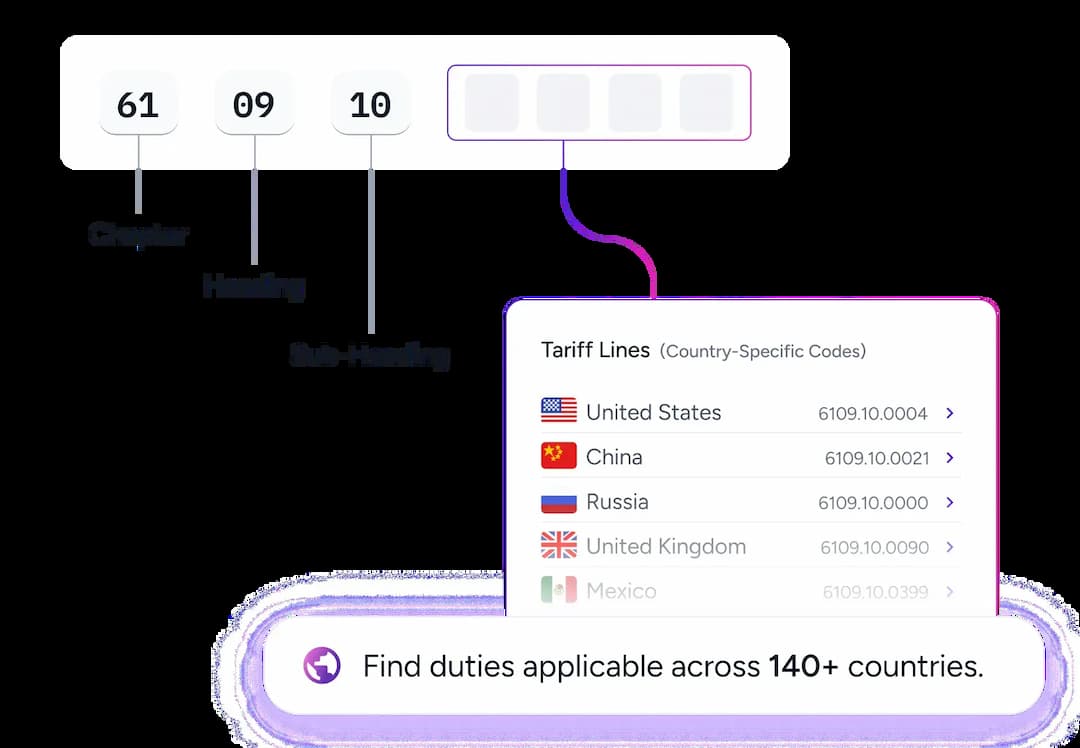
HS Code Lookup helps classify products under appropriate HS code and find duties applicable across 140+ countries. Find and discover HS classification, tariffs, taxes, controls, rulings, ECCNs, and default and preferential duties for HS code 7009.

WCO Notes for Heading 7009
70.09 - Glass mirrors, whether or not framed, including rear-view mirrors.
7009.10 - Rear-view mirrors for vehicles
- Other :
7009.91 - - Unframed
7009.92 - - Framed
The term “glass mirrors” applies to glass, one surface of which has been coated with metal (usually silver, sometimes platinum or aluminium) to give a clear and brilliant reflection.
In the silvering method a dilute ammoniacal solution of silver nitrate (mixed with a reducing solution based on potassium sodium tartrate or invert sugar) is used. These products are poured on to the surface of the glass after it has been scrupulously cleaned. The reduction of the silver salts forms a lasting and brilliant deposit of metallic silver.
In the platinum deposition process, a compound of platinum chloride is brushed on to the glass, which is then heated almost to softening point. This gives a very adherent coating of metal.
The metal coating (particularly if it is of silver) is given protective coatings, sometimes consisting of one or more coatings of varnish or an electrolytic deposit of copper, itself protected by a coating of varnish.
This heading covers mirrors in sheets, whether or not further worked. It also includes shaped mirrors of any size, for example, mirrors for furniture, for interior decoration, for railway carriages, etc.; toilet mirrors (including hand or hanging mirrors); pocket mirrors (whether or not in a protective case). The heading further includes magnifying or reducing mirrors and rear-view mirrors (e.g., for vehicles). All these mirrors may be backed (with paperboard, fabric, etc.), or framed (with metal, wood, plastics, etc.), and the frame itself may be trimmed with other materials (fabric, shells, mother of pearl, tortoise-shell, etc.). Mirrors designed for placing on the floor or ground (for example, cheval-glasses or swing-mirrors of the type used in tailors’ fitting rooms or in footwear shops) also remain in this heading in accordance with Note 1 (b) to Chapter 94.
This heading also covers mirrors, whether or not framed, bearing printed illustrations on one surface, provided they retain the essential character of mirrors. However, once the printing is such as to preclude use as a mirror, these goods are classifiable in heading 70.13 as decorative articles of glass.
It should be noted, however, that mirrors converted into parts of articles of furniture of Chapter 94 (e.g., wardrobe doors) are classified with those articles of furniture.
The heading further excludes :
(a) Mirrors which have been converted into other articles by the addition of some extra part, e.g., certain serving trays with handles (heading 70.13); on the other hand table-centres consisting of a simple mirror remain classified in this heading.
(b) Mirrors the mounts or frames of which contain precious metal or metal clad with precious metal, whether or not with natural or cultured pearls or with diamonds or other precious or semi-precious stones (natural, synthetic or reconstructed) (other than as minor trimmings) (heading 71.14), or whose mounts or frames otherwise contain natural or cultured pearls or precious or semi-precious stones (natural, synthetic or reconstructed) (heading 71.16).
(c) Optically worked glass mirrors (Chapter 90) (see corresponding Explanatory Notes).
(d) Mirrors combined with other elements and constituting toys, games or hunting or shooting requisites (e.g., lark mirrors) (Chapter 95).
(e) Mirrors of an age exceeding 100 years (heading 97.06).

What is HS code 7009?

How many sub-headings are there in HS code 7009?
International Trade Compliance Simplified