















HS Code Lookup for Heading 8440
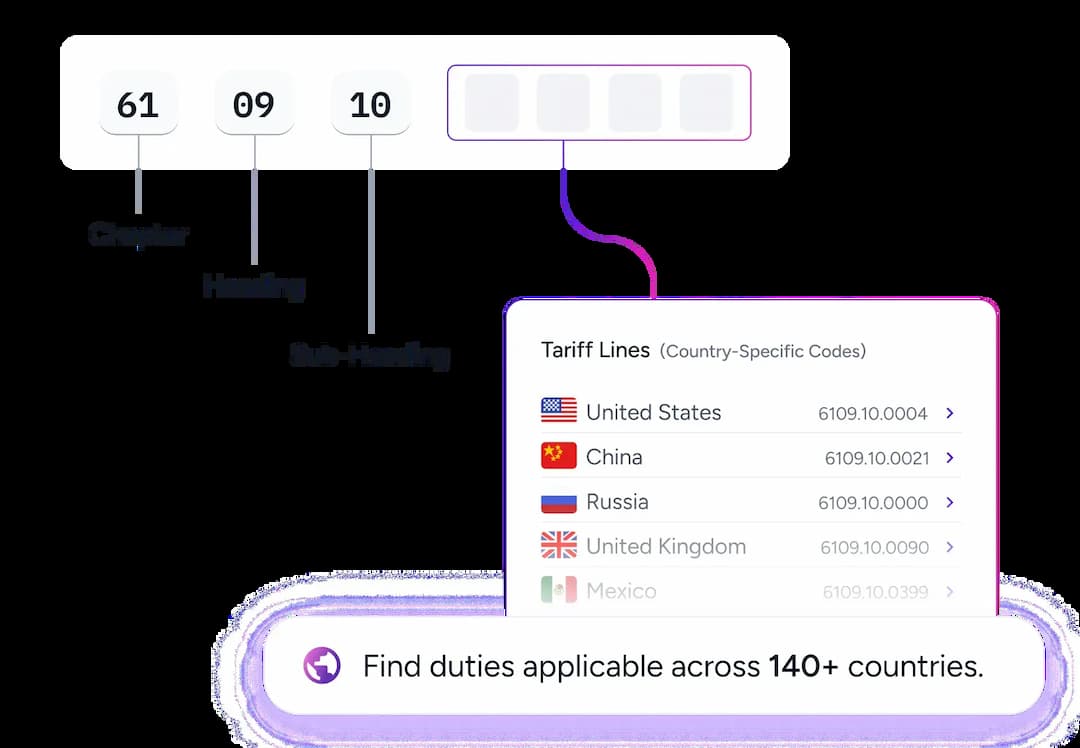
HS Code Lookup helps classify products under appropriate HS code and find duties applicable across 140+ countries. Find and discover HS classification, tariffs, taxes, controls, rulings, ECCNs, and default and preferential duties for HS code 8440.

WCO Notes for Heading 8440
84.40 - Book-binding machinery, including book-sewing machines.
8440.10 ‑ Machinery
8440.90 ‑ Parts
This heading covers machines used in the manufacture of books (including booklets, brochures, periodicals, writing‑books and the like).
The heading includes :
(1) Leaf‑folding machines for book‑binding. These fold large sheets of paper a number of times to give a size suitable for pages. They remain here even if they can also be used for other folding operations.
(2) Stapling machines and wire‑stitching machines, including those also usable in the manufacture of cardboard boxes or the like.
(3) Gathering and stitching machines. In these the sheets are laid by hand on a conveyor‑chain, gathered in sections, headed up and then delivered to the stitching head.
(4) Rolling or hammering machines. These press the folded leaves of unbound volumes before sewing.
(5) Machines used to “grecquer” the backs of unsewn books, i.e., to make shallow cuts in the back of the volume for receiving the cross threads.
(6) Book‑sewing machines, including both simple types for sewing only, and very complicated machines which consist of a feeder to place the folded sheets into the machine, a sewing device equipped to sew the sheets together and usually to place a textile reinforcement over the back.
(7) Machines for flattening or rounding the backs before covering.
(8) Machines for gluing strips of paper or textile on to loose pages which are to be incorporated into a book, or on to maps to be assembled into atlases, in order to make binding practicable.
(9) Machines for gluing paper covers on to cheap books, brochures, etc.
(10) Machines for the manufacture of book covers. These usually include feeders to bring in the necessary sheets of paper, cardboard, book cloth, etc., a gluing device and a press, and also sometimes provision for heating and drying.
(11) Machines for flattening the finished book covers. These consist of a roller system and tables.
(12) Machines for fixing the stitched volumes of books, etc., into the covers by gluing and pressing. Some machines are equipped with a device to insert loose pictures, designs, maps or the like.
(13) Machines for gilding or colouring the edges of books.
(14) Machines for stamping or gilding letters or designs on book covers and sometimes also on other goods (e.g., leather goods), but excluding general purpose presses (heading 84.79) and printing presses using interchangeable characters assembled in blocks (heading 84.43).
(15) Page numbering machines (e.g., for registers and ledgers).
(16) Machines for assembling pages more or less permanently by means of metal or plastic spirals (or rings) passing through perforations in the pages. They normally consist of a perforating appliance and a spiralling device.
PARTS
Subject to the general provisions regarding the classification of parts (see the General Explanatory Note to Section XVI), parts of the machines of this heading are also classified here.
*
* *
The heading excludes :
(a) Tables, usually of wood, with a screw device for holding the cross threads, used in the hand sewing of books (heading 44.21).
(b) Knives for cutting machines (heading 82.08).
(c) Machines for folding paper or cardboard (other than page‑folding for books); machines for cutting or grooving paper or cardboard; machines for trimming bound or stitched books, periodicals, brochures, etc.; machines for trimming edges and corners of books or for making thumb‑indexing insets; machines for stacking sheets of paper; stapling machines suitable only for cardboard box manufacture (heading 84.41).
(d) Margin setting, folding or page signature marking machines for use with printing machines (heading 84.43).
(e) Textile cutting machines (heading 84.51).
(f) Needles for sewing machines (heading 84.52).
(g) Machines for working leather used in book‑binding (heading 84.53).
(h) Stapling machines of a kind used in offices to fix documents together (heading 84.72).

What is HS code 8440?

How many sub-headings are there in HS code 8440?
International Trade Compliance Simplified