














HS Code Lookup for Heading 8458
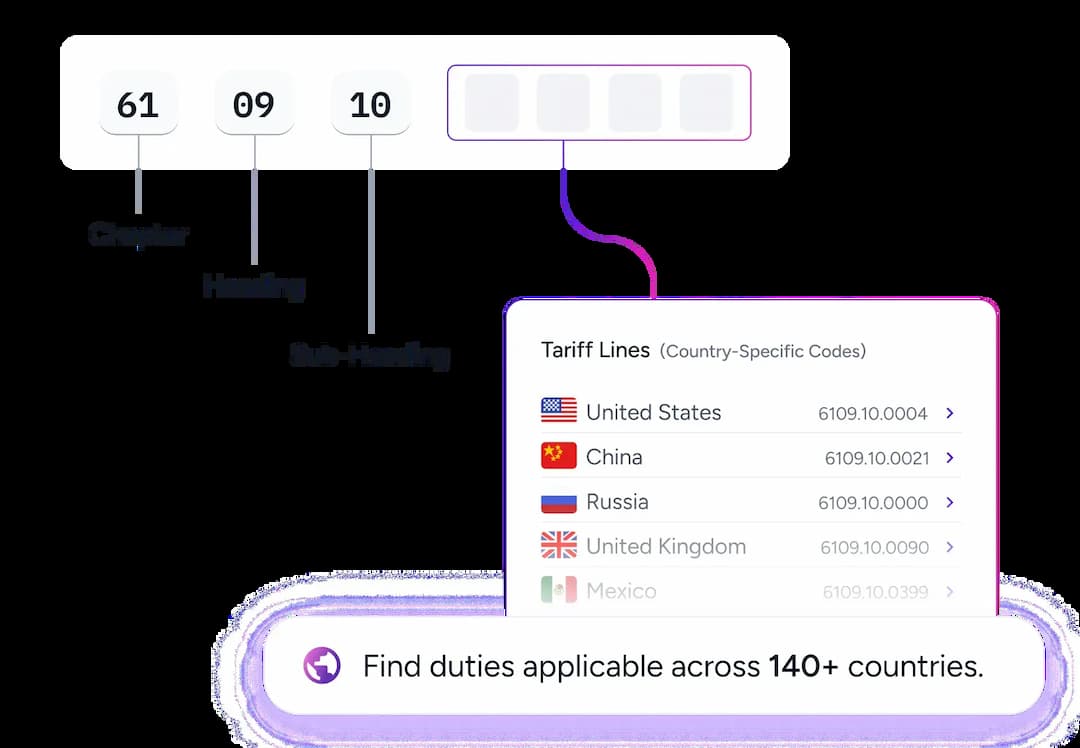
HS Code Lookup helps classify products under appropriate HS code and find duties applicable across 140+ countries. Find and discover HS classification, tariffs, taxes, controls, rulings, ECCNs, and default and preferential duties for HS code 8458.

WCO Notes for Heading 8458
84.58 ‑ Lathes (including turning centres) for removing metal (+).
‑ Horizontal lathes :
8458.11 ‑ ‑ Numerically controlled
8458.19 ‑ ‑ Other
‑ Other lathes :
8458.91 ‑ ‑ Numerically controlled
8458.99 ‑ ‑ Other
The lathes (including turning centres) of this heading are machines used for surface‑working metal by cutting away or otherwise removing metal.
These machines can be distinguished from tools (pneumatic, hydraulic or with motor) for working in the hand of heading 84.67, by the fact that they are usually designed to be mounted on the floor, or on a bench, or on a wall or on another machine, and are thus usually provided with a base plate, mounting frame, stand, etc.
The heading includes :
(1) Lathes, whether or not automatic, including slide lathes, vertical lathes, capstan or turret lathes, production (or copying) lathes. However, spinning lathes which function by deforming the metal are classified in heading 84.63.
(2) Spindle or axle turning machines, for turning simultaneously and symmetrically the two ends of the spindles or axles of large wheels, etc.
(3) Turning centres, for removing metal.
PARTS AND ACCESSORIES
Subject to the general provisions regarding the classification of parts (see the General Explanatory Note to Section XVI), parts and accessories (other than the tools of Chapter 82) of the lathes of this heading are classified in heading 84.66.
*
* *
The heading also excludes :
(a) Machine‑tools for working any material by removal of material, by laser or other light or photon beam, ultrasonic, electro‑discharge, electro‑chemical, electron beam, ionic‑beam or plasma arc processes; water-jet cutting machines (heading 84.56).
(b) Machining centres, unit construction machines (single station) and multi‑station transfer machines, for working metal (heading 84.57).
(c) Cutting‑off machines (heading 84.61).
(d) Tools for working in the hand, pneumatic, hydraulic or with self‑contained electric or non-electric motor (heading 84.67).
(e) Machines and appliances for testing, of heading 90.24.
°
° °
Subheading Explanatory Note.
Subheadings 8458.11 and 8458.91
Numerically controlled machine-tools are, as a group, know by their abbreviations CNC (Computer Numerical Control) or NC (Numerical Control). The terms “Computer Numerical Control” and “Numerical Control” can be regarded as synonymous. To qualify as a numerically controlled machine-tool, the functions and movements of the machine-tool, tool or workpiece must be performed according to pre-programmed instructions. The programming is normally executed in an NC-specific language, for example, ISO-code. Programs and other data are stored in order to be accessible directly or subsequently. Numerically controlled machine-tools always integrate a control unit (separate “stand alone” unit or built in), incorporating an automatic data processing machine or a microprocessor, as well as servo systems, in order to achieve the desired motions of the machine-tool, tool or workpiece. CNC-machines, CNC-lathes and NC-milling machines are examples of numerically controlled machine-tools.
If the control unit is not presented with the machine-tool, the latter is nevertheless to be considered as a numerically controlled machine-tool provided it has the specific characteristics of this type of machine.

What is HS code 8458?

How many sub-headings are there in HS code 8458?
International Trade Compliance Simplified