















HS Code Lookup for Heading 8482
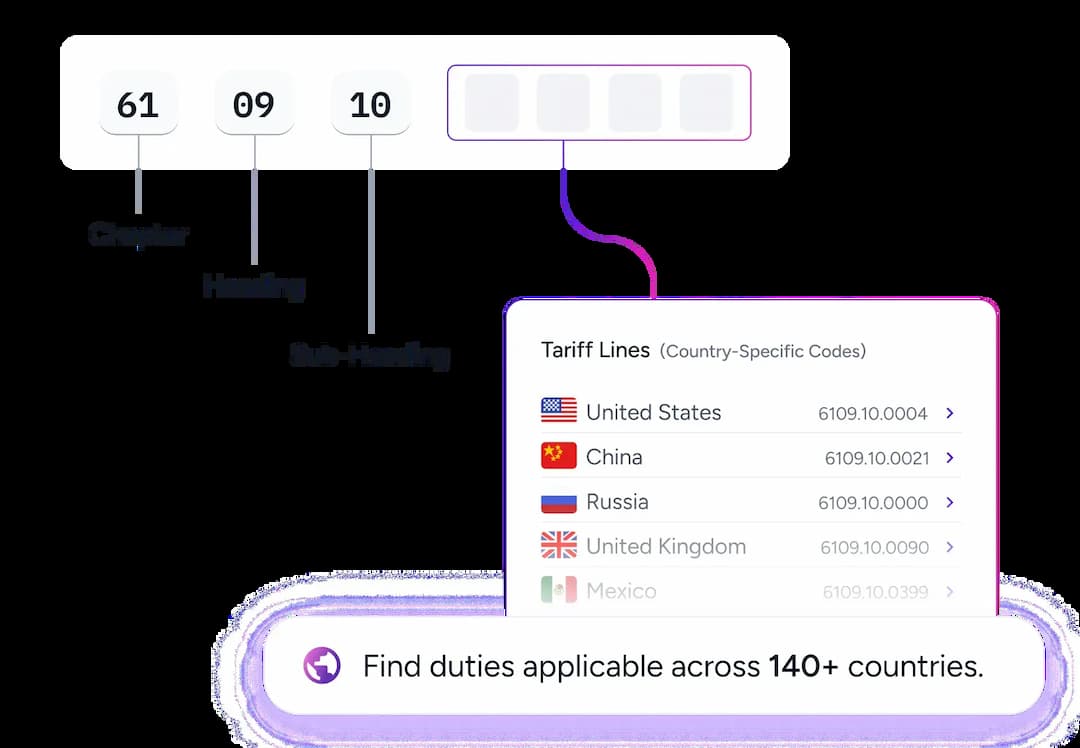
HS Code Lookup helps classify products under appropriate HS code and find duties applicable across 140+ countries. Find and discover HS classification, tariffs, taxes, controls, rulings, ECCNs, and default and preferential duties for HS code 8482.

WCO Notes for Heading 8482
84.82 ‑ Ball or roller bearings.
8482.10 ‑ Ball bearings
8482.20 ‑ Tapered roller bearings, including cone and tapered roller assemblies
8482.30 ‑ Spherical roller bearings
8482.40 ‑ Needle roller bearings, including cage and needle roller assemblies
8482.50 ‑ Other cylindrical roller bearings, including cage and roller assemblies
8482.80 ‑ Other, including combined ball/roller bearings
‑ Parts :
8482.91 ‑ ‑ Balls, needles and rollers
8482.99 ‑ ‑ Other
This heading covers all ball, roller or needle roller type bearings. They are used in place of smooth metal bearings and enable friction to be considerably reduced. They are generally fitted between the bearing housing and the shaft or axle, and may be designed to give radial support (radial bearings) or to resist thrust (thrust bearings). Certain bearings may be designed for both radial and thrust support.
Normally, bearings consist of two concentric rings (races) enclosing the balls or rollers, and a cage which keeps them in place and ensures that their spacing remains constant.
The bearings classified in this heading include :
(A) Ball bearings, with single or double rows of balls. This group also includes slide mechanisms with bearing balls, for example :
(1) Those consisting of a steel outer ring rigidly locked with a brass inner ring which has six slots arranged lengthwise and in the shape of elongated ellipses enclosing small steel balls.
(2) The restricted‑travel type, of steel, comprising a grooved cylinder, a ball cage and a housing.
(3) The free‑travelling type, of steel, comprising a segment, a casing enclosing the bearing balls, and a guide rail with a groove of triangular section.
(B) Roller bearings, with single or double rows of rollers of any shape (cylindrical, conical, barrel‑shaped, etc.).
(C) Needle roller bearings. These differ from ordinary roller bearings in that they are bearings with cylindrical rollers of a uniform diameter not exceeding 5 mm and having a length which is at least three times the diameter. The ends of the rollers may be rounded (see Subheading Note 4 to the Chapter). These rollers are fitted between the two rings of the bearing and in most cases no cage is used.
Owing to the high pressure to which they are exposed, bearings are normally of steel (especially chromium steel), though some for particular uses are of bronze, copper or plastics.
PARTS
The heading also covers parts of ball, roller or needle roller bearings, e.g. :
(1) Polished steel balls (whether for bearings of this heading or not), the maximum and minimum diameters of which do not differ from the nominal diameter by more than 1 % or by more than 0.05 mm whichever is less; balls not conforming to this definition are classified in heading 73.26 (see Chapter Note 7).
(2) Bearing balls of copper, bronze, plastics, etc.
(3) Needles or rollers for bearings, of any shape.
(4) Rings, cages, fixing sleeves, etc.
*
* *
The heading does not cover machinery parts incorporating ball, roller or needle roller bearings; these are classified in their own appropriate headings, e.g. :
(a) Bearing housings and bearing brackets (heading 84.83).
(b) Bicycle hubs (heading 87.14).

What is HS code 8482?

How many sub-headings are there in HS code 8482?
International Trade Compliance Simplified