















HS Code Lookup for Heading 8485
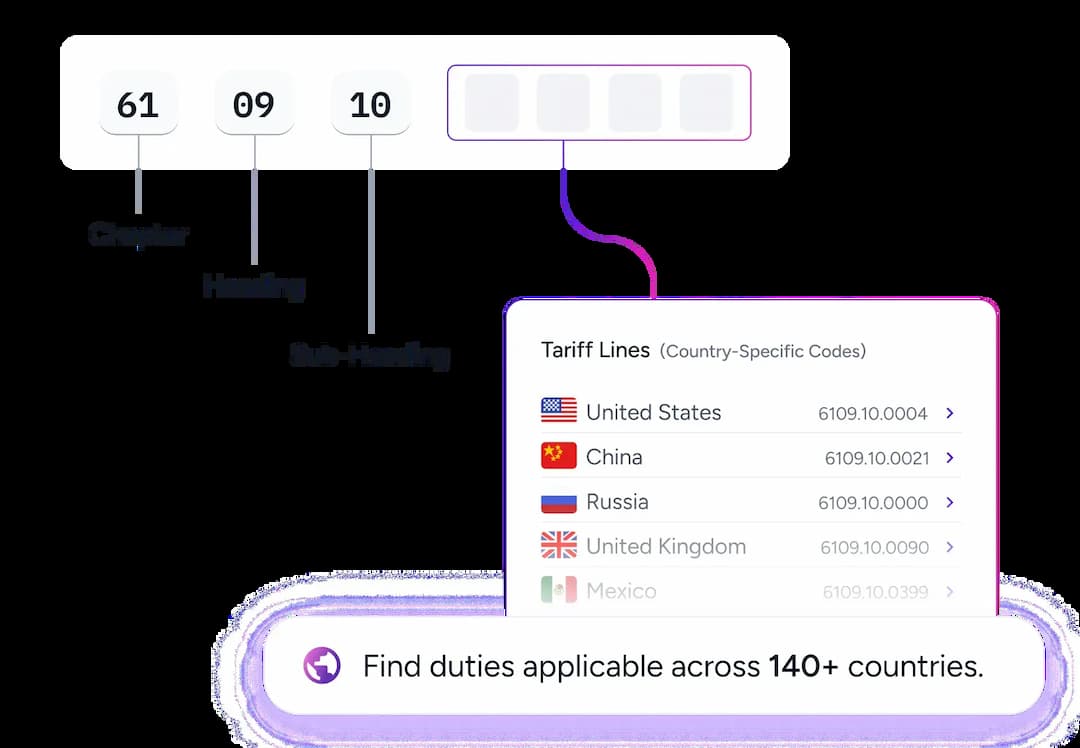
HS Code Lookup helps classify products under appropriate HS code and find duties applicable across 140+ countries. Find and discover HS classification, tariffs, taxes, controls, rulings, ECCNs, and default and preferential duties for HS code 8485.

WCO Notes for Heading 8485
84.85 ‑ Machines for additive manufacturing.
8485.10 ‑ By metal deposit
8485.20 - By plastics or rubber deposit
8485.30 - By plaster, cement, ceramics or glass deposit
8485.80 ‑ Other
8485.90 ‑ Parts
This heading covers machines of a kind used for additive manufacturing (also referred to as 3D printing) which is a process for the formation of physical objects based on a digital model. The machine creates the object, on the basis of a design file provided to the machine, by the successive addition and layering, and consolidation and solidification, of material. The machine uses selective application of an energy source, e.g., lasers, resistors, electron beams or UV light, to produce a 3-dimensional object out of materials such as metals, plastics, rubber, plaster, cement, ceramics, glass, wood, paper or seed cells. Depending on the type of machine and the material used, a wide variety of objects can be created in this fashion, including medical devices, prosthetics, art, firearms, buildings and parts thereof, clothes and parts.
This heading covers various types of additive manufacturing machines, for example :
(1) Binder jetting machines which use powder and a liquid binder to create objects. The powder (e.g., metal, plastics, rubber or glass) is spread in layers and each layer has a liquid binder added to glue the powder together. In this way the layers are hardened and joined to form the object, which is then cleaned and cured.
(2) Stereolithography machines layer liquid materials (e.g., photopolymer resins or plastics). The UV laser scans and hardens the first layer of plastics and then the platform rises, allowing the successive layers of plastics to be hardened.
(3) Material jetting machines layer plastics, such as Polypropylene (PP), High-density polyethylene (HDPE), Polystyrene (PS), Polymethyl methacrylate (PMMA), Polycarbonate (PC), Acrylonitrile Butadiene Styrene (ABS), High Impact Polystyrene (HIPS) and Environmentally Degradable Plastic (ED). The material drips out of a nozzle and is then hardened by a UV light.
(4) Material extrusion machines heat filaments inside an extrusion nozzle that moves in a vertical and horizontal motion, depositing the melted material which then hardens.
(5) Powder bed fusion machines use laser scans or electron beams to melt powder materials layer by layer in order to form an object.
(6) Additive manufacturing machines that layer sheets (commonly of plastics) and fuse those layers together according to a digital model to produce specific three-dimensional objects. These differ from sheet laminating machines, which bond two or more sheets together to form a composite material.
(7) Directed energy deposition machines, which use electron beams to melt materials as they are being deposited in order to form an object.
PARTS
Subject to the general provisions regarding the classification of parts (see the General Explanatory Note to Section XVI), parts of the goods of this heading are also classified here, including printer cartridges specifically designed for containing materials and limited to use with a particular 3D printer, excluding those without electronic components or mechanical mechanisms.

What is HS code 8485?

How many sub-headings are there in HS code 8485?
International Trade Compliance Simplified