















HS Code Lookup for Heading 9012
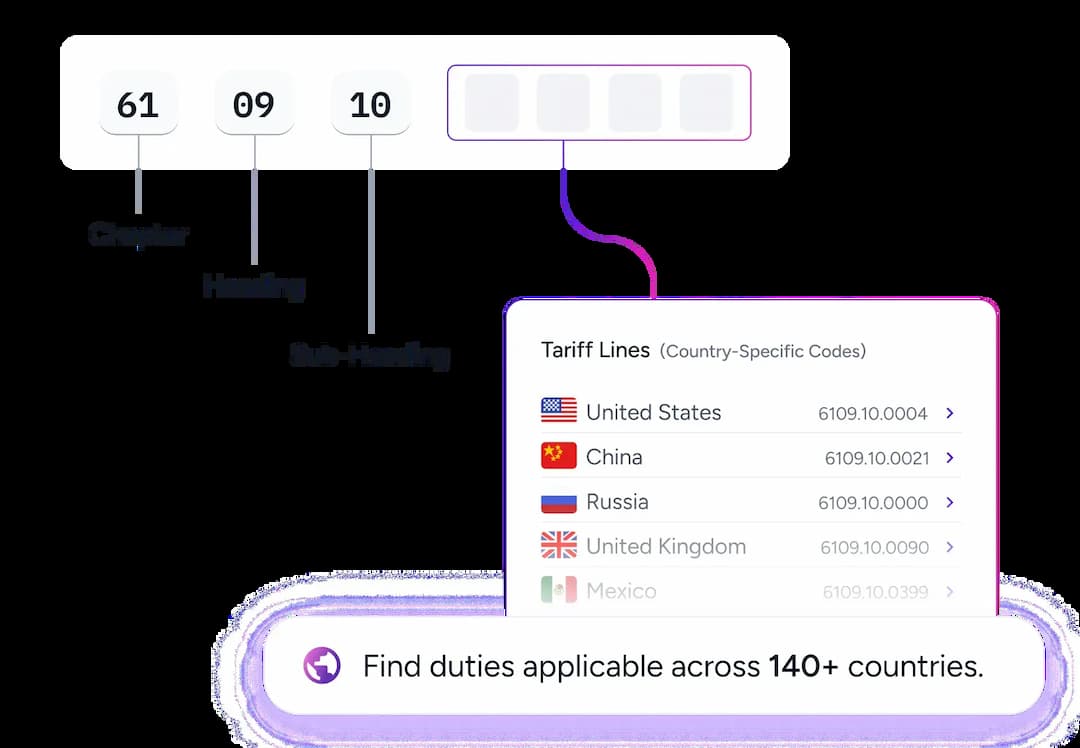
HS Code Lookup helps classify products under appropriate HS code and find duties applicable across 140+ countries. Find and discover HS classification, tariffs, taxes, controls, rulings, ECCNs, and default and preferential duties for HS code 9012.

WCO Notes for Heading 9012
90.12 ‑ Microscopes other than optical microscopes; diffraction apparatus.
9012.10 ‑ Microscopes other than optical microscopes; diffraction apparatus
9012.90 ‑ Parts and accessories
This heading includes :
(A) Electron microscopes differ from optical microscopes in that they use a beam of electrons instead of light rays.
The normal type of electron microscope is an assembly of the following devices usually enclosed in a common frame as a unit :
(1) A device (known as an electron gun) for emitting and accelerating the electrons.
(2) A system (playing the part of the optical system of an ordinary microscope) consisting of electrostatic or electromagnetic “lenses” (which are respectively electrically charged plates or coils carrying a current); these act as condenser, objective and projector. There is usually also a further so‑called field “lens”, between the objective and the projector, which serves to vary the range of magnification while not altering the scope of the scanned field.
(3) The specimen stage.
(4) The vacuum pump unit which maintains a vacuum in the electron tube; these are sometimes self‑contained units connected to the appliance.
(5) The elements for visual observation on a fluorescent screen and for photographic recording of the image.
(6) Control stands and panels bearing the elements controlling and regulating the electron beam.
This heading also includes scanning electron microscopes in which a very fine beam of electrons is directed repeatedly onto different points of the sample. Information is obtained by measuring, for example, the electrons transmitted, the secondary electrons emitted, or the optical rays. The result may then be displayed on a monitor screen which can be incorporated in the microscope.
The electron microscope has many uses both in the field of pure science (biological or medical research, composition of matter, etc.), and in industrial technique (examination of fumes, dust, textile fibres, colloids, etc.; examination of the structure of metals, paper, etc.).
(B) Proton microscopes. In place of electrons, these employ protons which have a wavelength 40 times shorter than the former. A correspondingly higher separating power is thus obtained and this permits the production of even more highly magnified images.
The structure and functioning of the proton microscope do not differ appreciably from those of the electron microscope; the electron gun is replaced by a proton gun and the source used is hydrogen.
(C) Electron diffraction apparatus. By means of a beam of electrons directed at a specimen, these produce diffraction patterns which are photographed. The dimensions, orientation and atomic arrangement of the crystals of the specimen examined can be calculated from the diameter, intensity and sharpness of the rings in the pattern.
This apparatus, which is chiefly used for studies on corrosion, lubrication, catalysis, etc., does not differ appreciably in principle from an electron microscope, and has the same essential elements (electron gun, cathode‑ray tube, electro‑magnetic coils, specimen holder, etc.). Moreover it should be noted that certain electron microscopes may be equipped with a diffraction chamber and can therefore perform a double function (visual examination and production of a diffraction pattern).
*
* *
PARTS AND ACCESSORIES
Subject to the provisions of Notes 1 and 2 to this Chapter (see the General Explanatory Note), parts and accessories suitable for use solely or principally with microscopes, other than optical microscopes, or diffraction apparatus are also classified here; examples are the frame and its constituent chambers and the specimen stage. On the other hand, the heading excludes vacuum pumps (heading 84.14), electrical equipment (batteries, rectifiers, etc.) (Chapter 85), and electrical measuring instruments (voltmeters, milliammeters, etc.) (heading 90.30).

What is HS code 9012?

How many sub-headings are there in HS code 9012?
International Trade Compliance Simplified