















HS Code Lookup for Heading 9108
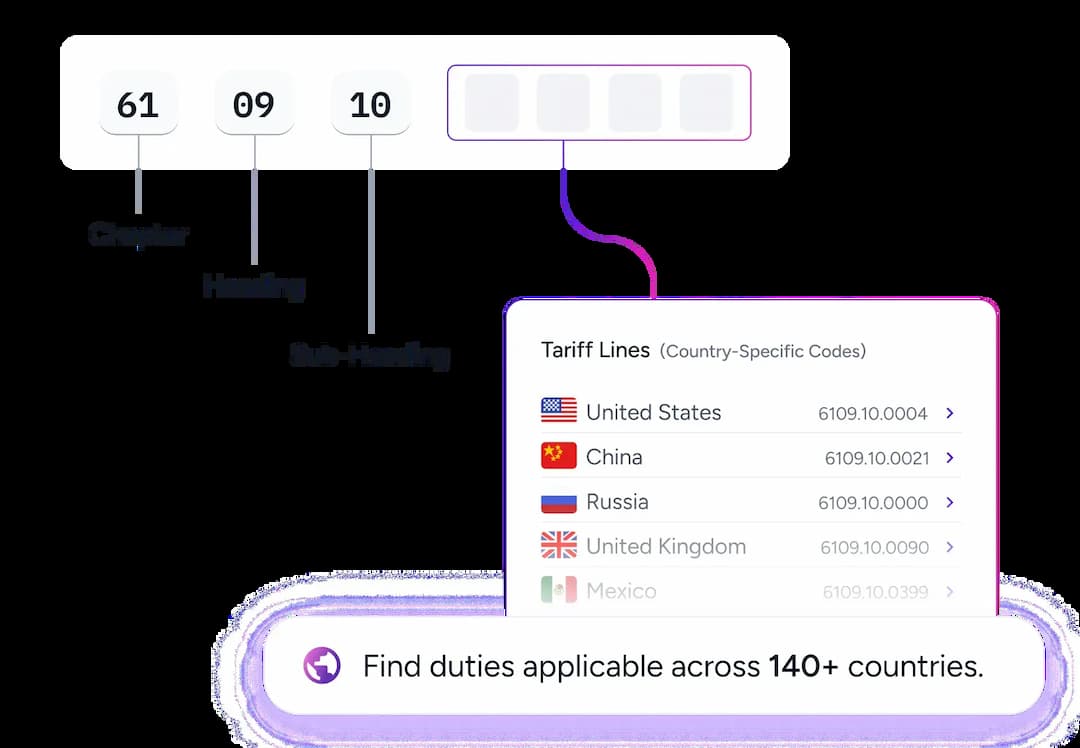
HS Code Lookup helps classify products under appropriate HS code and find duties applicable across 140+ countries. Find and discover HS classification, tariffs, taxes, controls, rulings, ECCNs, and default and preferential duties for HS code 9108.

WCO Notes for Heading 9108
91.08 ‑ Watch movements, complete and assembled.
‑ Electrically operated :
9108.11 ‑ ‑ With mechanical display only or with a device to which a mechanical display can be incorporated
9108.12 ‑ ‑ With opto‑electronic display only
9108.19 ‑ ‑ Other
9108.20 ‑ With automatic winding
9108.90 ‑ Other
This heading applies to assembled watch movements without cases, that is to say, complete and ready for use. These movements may be of five principal types :
(1) mechanical movements;
(2) electronic movements of the balance‑spring type;
(3) electronic movements with a flexural resonator (tuning fork);
(4) quartz movements with an analogue time display (hands);
(5) quartz movements with an electronic digital time display (light-emitting diodes (LED) or liquid crystal display (LCD)).
Mechanical or electronic movements with an analogue time display may be presented without dial or hands. In electronic (solid state) movements with a digital time display, the display cell forms an integral part of the movement; without it the movement cannot function and hence cannot be regarded as complete and assembled within the meaning of this heading.
Under Chapter Note 3, the expression “watch movements” in this heading means devices regulated by a balance‑wheel and hairspring, quartz crystal or any other system capable of determining intervals of time, with a display or a system to which a mechanical display can be incorporated. Such watch movements shall not exceed 12 mm in thickness and 50 mm in width, length or diameter. These movements are therefore mainly intended for the watches and clocks of headings 91.01 to 91.03, but they remain classified here even if for incorporation in other articles of this Chapter or even in instruments or apparatus of other Chapters (measuring or precision instruments, pedometers, explosive devices, etc.).
The heading excludes movements not conforming to the above conditions (heading 91.09 or 91.10), and spring‑operated motors of heading 84.12.
The movements of this heading may be unpolished, polished, nickel‑plated, rhodium‑plated, silvered, gilded, varnished, etc.
Battery or accumulator powered watch movements are classified in this heading, whether or not the battery or accumulator is present.

What is HS code 9108?

How many sub-headings are there in HS code 9108?
International Trade Compliance Simplified