















HS Code Lookup for Heading 9111
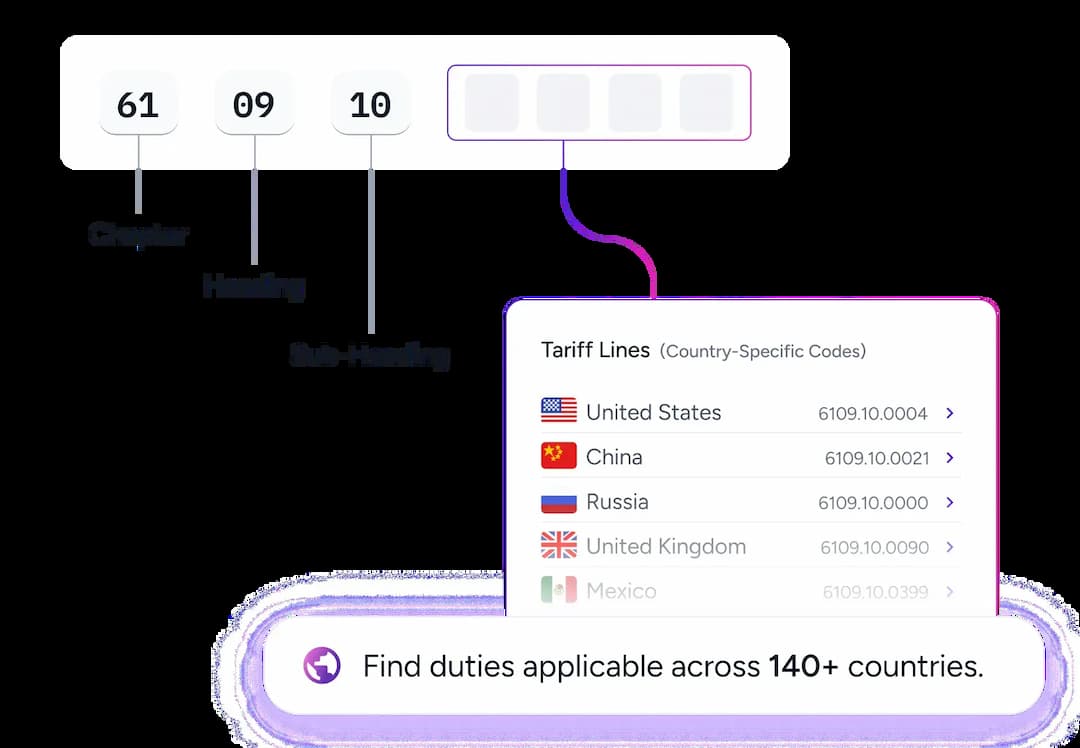
HS Code Lookup helps classify products under appropriate HS code and find duties applicable across 140+ countries. Find and discover HS classification, tariffs, taxes, controls, rulings, ECCNs, and default and preferential duties for HS code 9111.

WCO Notes for Heading 9111
91.11 ‑ Watch cases and parts thereof.
9111.10 ‑ Cases of precious metal or of metal clad with precious metal
9111.20 ‑ Cases of base metal, whether or not gold‑ or silver‑plated
9111.80 ‑ Other cases
9111.90 ‑ Parts
This heading covers :
(A) Cases for the watches of heading 91.01 or 91.02 (pocket‑watches, wrist‑watches, chronograph watches, etc.), with or without glasses, presented without movements.
(B) Parts of these cases, including :
(1)The case body, i.e., the framework of the case. It may havehinges for the bottom, and in pocket‑watches the case bodies have also hinges for the dome and the bezel.
(2)The pendant, welded to the case body, with the watch bow (for pocket‑watches) and the bushings.
(3)The dome, the inner cover protecting the movement (does not exist in ordinary watches).
(4)The bezel, the part which holds the glass. The edge for holding the glass in place is more especially referred to as the groove.
(5)The bottom, which closes the watch on the opposite side from the glass. Ordinary watches have only one, while hunters have a second similar piece (the cover) which protects the glass.
Cases for wrist‑watches have no pendant or watch bow proper, but have lugs for attaching the wrist‑straps. These lugs consist of several parts, including the bar which may be fixed or spring‑operated. Some ladies’ wrist‑watches have no lugs but are provided with claws for attaching a cord.
Wrist‑watch cases often consist of only two parts, the case body and the bottom being combined. Sometimes, the bottom and the bezel each bear one part of the dome, or the bezel and the case body are in one piece. In more highly finished types, the movement is first enclosed in a protective dome.
Watch cases and parts thereof may be of any material. They are mainly made of base metal (steel, nickel, etc., polished, chromium‑plated, silvered or gilded), or of precious metal, or of metal clad with precious metal, or sometimes of plastics, ivory, agate, mother-of-pearl or tortoise‑shell. They may be ornamented (engine‑turned, engraved, chased, trimmed with natural or cultured pearls, natural, synthetic or reconstructed precious or semi‑precious stones, etc.).
The heading excludes :
(a) Simple protective covers for watches, nor watch glasses; these are classified in their own appropriate headings.
(b) Parts of general use as defined in Note 2 to Section XV (which include springs for watch cases), of base metal (Section XV) and similar goods of plastics (Chapter 39).
(c) Clock cases and cases of a similar type for other goods of this Chapter, and parts thereof (heading 91.12).

What is HS code 9111?

How many sub-headings are there in HS code 9111?
International Trade Compliance Simplified