















HS Code Lookup for Heading 9406
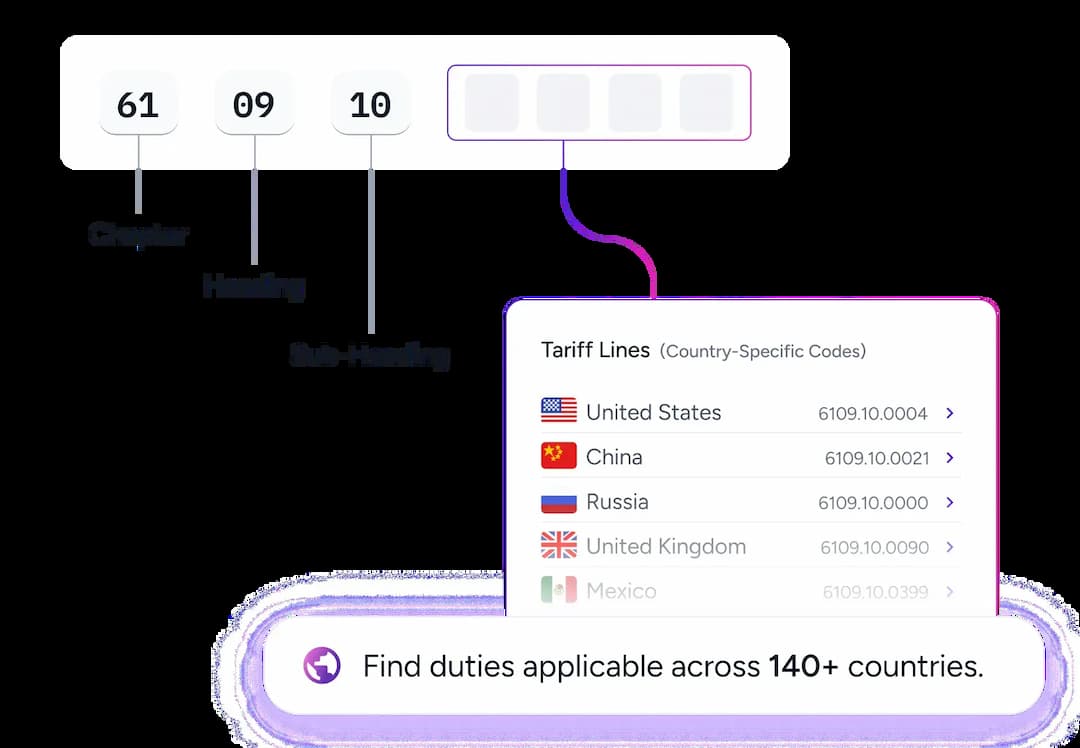
HS Code Lookup helps classify products under appropriate HS code and find duties applicable across 140+ countries. Find and discover HS classification, tariffs, taxes, controls, rulings, ECCNs, and default and preferential duties for HS code 9406.

WCO Notes for Heading 9406
94.06 ‑ Prefabricated buildings (+).
9406.10 ‑ Of wood
9406.20 ‑ Modular building units, of steel
9406.90 ‑ Other
This heading covers prefabricated buildings, also known as “industrialised buildings”, of all materials.
These buildings, which can be designed for a variety of uses, such as housing, worksite accommodation, offices, schools, shops, sheds, garages and greenhouses, are generally presented in the form of :
- complete buildings, fully assembled, ready for use;
- complete buildings, unassembled;
- incomplete buildings, whether or not assembled, having the essential character of prefabricated buildings.
In the case of buildings presented unassembled, the necessary elements may be presented partially assembled (for example, walls, trusses) or cut to size (beams, joists, in particular) or, in some cases, in indeterminate or random lengths for cutting on the site (sills, insulation, etc.).
The buildings of this heading may or may not be equipped. However, only built‑in equipment normally supplied is to be classified with the buildings. This includes electrical fittings (wiring, sockets, switches, circuit‑breakers, bells, etc.), heating and air conditioning equipment (boilers, radiators, air conditioners, etc.), sanitary equipment (baths, showers, water heaters, etc.), kitchen equipment (sinks, hoods, cookers, etc.) and items of furniture which are built in or designed to be built in (cupboards, etc.).
Prefabricated buildings include “modular building units” with a steel structure, also referred to as modules. They are normally presented in the size and shape of a standard shipping container intended for multi-modal transport. However, they are substantially or completely pre-fitted internally with internal walls, floorings, ceilings, doors, windows and electrical and plumbing facilities as appropriate to the type of building module. They may also be equipped with other fixtures and fittings such as staircases, built-in furniture, kitchen equipment, sanitary fixtures, external cladding and roofing. They are structurally self-supporting and designed for assembly with other modules horizontally or vertically to become permanent buildings, such as hospitals, hotels, residential, communal facilities, or schools. They may be presented with assembly components to link modules.
However, modular building units do not include units with a permanent chassis (“mobile homes”) (Chapter 87).
Material for the assembly or finishing of prefabricated buildings (e.g., nails, glues, plaster, mortar, electric wire and cables, tubes and pipes, paints, wallpaper, carpeting) is to be classified with the buildings, provided it is presented therewith in appropriate quantities.
Presented separately, parts of buildings and equipment, whether or not identifiable as intended for these buildings, are excluded from the heading and are in all cases classified in their own appropriate headings.
°
° °
Subheading Explanatory Notes
Subheading 9406.10
For the purposes of classification in this subheading, the expression “of wood” refers to prefabricated buildings with wooden structure, exterior walls, floor (if floor present), and other characteristic constructive elements consisting predominantly of wood.
Subheading 9406.20
This subheading does not cover fabricated buildings that are presented as either “flat pack” or in assembly units that are not structurally self-supporting (subheading 9406.90) and fully self-contained buildings, such as those used as street kiosks or worksite offices, which have been built using steel shipping containers, but are not designed for assembly with other modules (subheading 9406.90).
____________

What is HS code 9406?

How many sub-headings are there in HS code 9406?
International Trade Compliance Simplified