















HS Code Lookup for Heading 5801
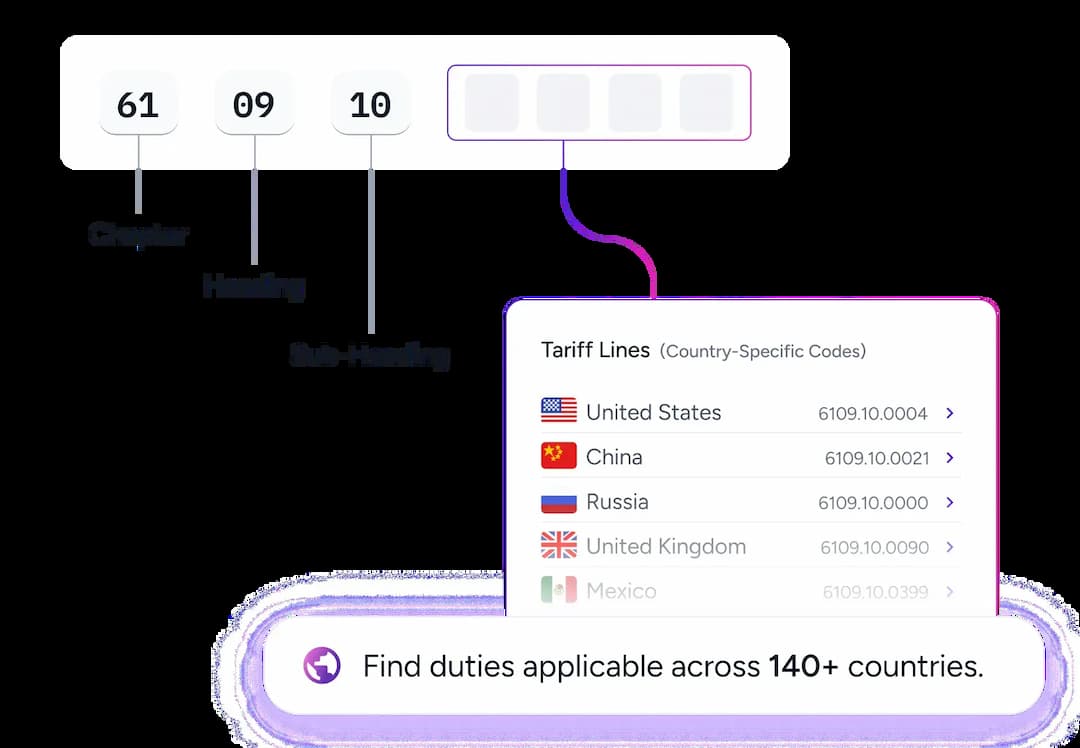
HS Code Lookup helps classify products under appropriate HS code and find duties applicable across 140+ countries. Find and discover HS classification, tariffs, taxes, controls, rulings, ECCNs, and default and preferential duties for HS code 5801.

WCO Notes for Heading 5801
58.01 ‑ Woven pile fabrics and chenille fabrics, other than fabrics of heading 58.02 or 58.06 (+).
5801.10 ‑ Of wool or fine animal hair
‑ Of cotton :
5801.21 ‑ ‑ Uncut weft pile fabrics
5801.22 ‑ ‑ Cut corduroy
5801.23 ‑ ‑ Other weft pile fabrics
5801.26 ‑ ‑ Chenille fabrics
5801.27 ‑ ‑ Warp pile fabrics
‑ Of man‑made fibres :
5801.31 ‑ ‑ Uncut weft pile fabrics
5801.32 ‑ ‑ Cut corduroy
5801.33 ‑ ‑ Other weft pile fabrics
5801.36 ‑ ‑ Chenille fabrics
5801.37 ‑ ‑ Warp pile fabrics
5801.90 ‑ Of other textile materials
(A) WOVEN PILE FABRICS, OTHER THAN FABRICS OF HEADING 58.02
Woven pile fabrics are composed of at least three series of threads : tight warp and weft forming the ground fabric and a warp or weft forming a pile. This pile consists of either tufts or loops over the whole or part of the surface; it is generally on one side only, but sometimes on both.
Warp pile fabrics (velvets, plushes, moquettes, etc.) may be produced by raising the pile warp over wires inserted in the direction of the weft. The loops thus formed are cut either during the weaving or subsequently, or occasionally left uncut for looped or uncut pile fabrics. The loops or tufts of cut pile are held in place by the weft threads.
Warp pile fabrics are also produced by weaving two fabrics face to face with a common pile warp; the two fabrics are then separated by cutting to produce two fabrics with a cut pile.
Cut weft pile fabrics (velveteens, corduroys, etc.) have a pile usually produced by weft threads which alternately pass under the warp and then float on the surface over two or more warp threads. After weaving, the portions floating on the surface are cut, the cut ends standing up to form the pile. A similar result is obtained by inserting wire parallel to the warp, the weft pile being cut during weaving. The tufts of pile are thus held in place by the warp threads.
Weft pile fabrics which have not yet had the floats cut, at which stage they have no pile standing up, are included in this heading (see Chapter Note 2).
(B) CHENILLE FABRICS
Chenille fabrics are very similar to the chenille carpets of heading 57.02; like these, their pile surface (usually on both sides) is produced by chenille yarns. They are generally manufactured by means of an additional weft of chenille yarn or by inserting chenille yarn, in different lengths and colours, into the warp during weaving of the ground fabric.
*
* *
Pile fabrics and chenille fabrics are made of various materials but silk, wool, fine animal hair, cotton and man‑made fibres are most commonly used for the pile.
All these fabrics may be plain, ribbed or figured or may be embossed after weaving; figured pile fabrics include those with a surface only partly covered with pile, or with a surface of partly cut or partly looped pile (ciselé velvets) thus producing very varied designs. Woven pile fabrics imitating furskins (e.g., astrakhan, caracul or imitation leopard skins) are also classified here, but imitation furskins made, for example, by sewing or gumming in the pile are excluded (heading 43.04).
It should be noted that many of the fabrics of this heading are manufactured in the same way as the carpets of heading 57.02; they are, however, easily distinguished from carpets by the fact that, being designed primarily as furnishing or clothing fabrics and not as floor coverings, they are made with finer materials and have a much more supple ground fabric.
The heading does not cover :
(a) Bouclé fabrics, ratines and other fabrics which present an appearance similar to pile fabrics, but which are woven with special yarn (e.g., bouclé yarn) or produced by treatment (e.g., scraping or teasing) of normal woven fabrics (in general Chapters 50 to 55).
(b) Terry towelling and similar woven terry fabrics and tufted textile fabrics of heading 58.02.
(c) Pile, etc., fabrics within the definition of narrow woven fabrics (heading 58.06).
(d) Knitted fabrics or stitch‑bonded goods with a cut or looped pile surface (heading 60.01 or 56.02, as the case may be).
(e) Pile, etc., fabrics made up within the meaning of Part (II) of the General Explanatory Note to Section XI.
°
° °
Subheading Explanatory Note.
Subheadings 5801.22 and 5801.32
For the purposes of subheadings 5801.22 and 5801.32, the following illustrations of the section through the warp should be used to distinguish cut corduroy from other cut weft pile fabrics :

Velveteen :


What is HS code 5801?

How many sub-headings are there in HS code 5801?
International Trade Compliance Simplified