















HS Code Lookup for Heading 7306
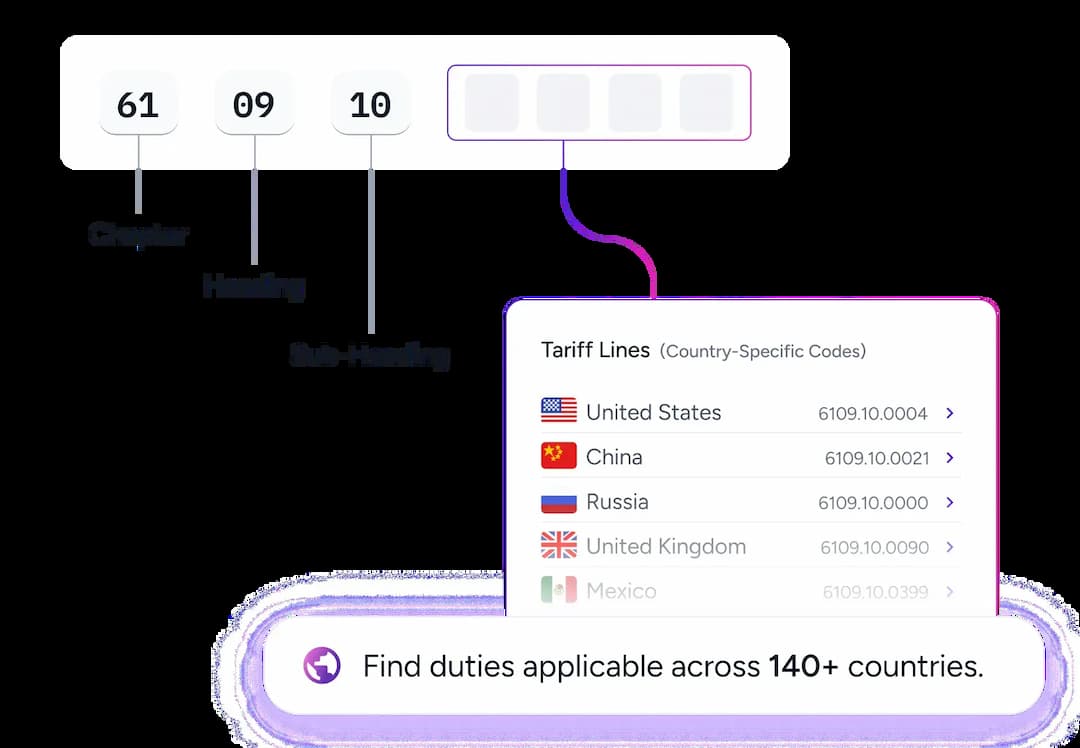
HS Code Lookup helps classify products under appropriate HS code and find duties applicable across 140+ countries. Find and discover HS classification, tariffs, taxes, controls, rulings, ECCNs, and default and preferential duties for HS code 7306.

WCO Notes for Heading 7306
73.06 ‑ Other tubes, pipes and hollow profiles (for example, open seam or welded, riveted or similarly closed), of iron or steel (+).
- Line pipe of a kind used for oil or gas pipelines :
7306.11 - - Welded, of stainless steel
7306.19 - - Other
- Casing and tubing of a kind used in drilling for oil or gas :
7306.21 - - Welded, of stainless steel
7306.29 - - Other
7306.30 - Other, welded, of circular cross-section, of iron or non-alloy steel
7306.40 - Other, welded, of circular cross-section, of stainless steel
7306.50 - Other, welded, of circular cross-section, of other alloy steel
- Other, welded, of non-circular cross-section :
7306.61 - - Of square or rectangular cross-section
7306.69 - - Of other non-circular cross-section
7306.90 - Other
The provisions of the Explanatory Note to heading 73.05 apply, mutatis mutandis, to the articles of this heading.
This heading also includes :
(1) Tubes and pipes welded by forging, known as butt‑welded tubes and pipes.
(2) Tubes and pipes with closed edges, i.e. tubes and pipes, in which the edges touch or cover each other and which are known as open seam tubes. However, products having an open slit along the whole length are classified as sections in heading 72.16, 72.22 or 72.28.
(3) Tubes and pipes in which the abutting edges are joined by clipping.
Certain longitudinally welded tubes and pipes of this heading have undergone hot or cold drawing or rolling to obtain products having a reduced outside diameter or wall thickness and tighter size tolerances. These cold‑working methods also allow different surface finishes to be obtained including polished surfaces, as mentioned in the Explanatory Note to heading 73.04.
See the General Explanatory Note to this Chapter concerning the distinction between tubes and pipes and hollow profiles.
*
* *
This heading includes, in particular, line pipes of a kind used for oil or gas, casing and tubing of a kind used in drilling for oil or gas, tubes and pipes suitable for use in boilers, superheaters, heat exchangers, condensers, feed‑water heaters for power stations, galvanised or black tubes (so‑called gas tubes) for high or medium pressure steam or water distribution in buildings, as well as tubes for water or gas street distribution mains. In addition tubes, pipes and hollow profiles are used for the manufacture of parts for automobiles or for machinery, bicycle frames, prams, or for other structural uses, scaffolding or tubular structures or building construction. “Open seam” tubes are used, for example, as frames for metal furniture.
This heading also includes tubes, pipes and hollow profiles coated with plastics or with glass wool combined with bitumen as well as finned or gilled tubes with longitudinal or transversal fins.
The heading excludes :
(a) Tubes and pipes of cast iron (heading 73.03) and tubes and pipes of iron or steel of heading 73.04 or 73.05.
(b) Hollow profiles of cast iron (heading 73.03) and hollow profiles of iron or steel of heading 73.04.
(c) Tube or pipe fittings of iron or steel (heading 73.07).
(d) Flexible tubing of iron or steel, with or without fittings (including thermostatic bellows and expansion joints) (heading 83.07).
(e) Insulated electrical conduit tubing (heading 85.47).
(f) Tubes, pipes and hollow profiles made up into specific identifiable articles, e.g., those prepared for use in structures (heading 73.08), tubular sections of central heating radiators (heading 73.22), exhaust manifolds for internal combustion piston engines (heading 84.09), other machinery parts (Section XVI), exhaust boxes (silencers) and exhaust pipes of vehicles of Chapter 87 (e.g., heading 87.08 or 87.14), saddle pillars and frames for cycles (heading 87.14).
°
° °
Subheading Explanatory Note.
Subheadings 7306.11, 7306.19, 7306.21 and 7306.29
The provisions of the Explanatory Note to subheadings 7304.11, 7304.19, 7304.22, 7304.23, 7304.24 and 7304.29 apply, mutatis mutandis, to these subheadings.

What is HS code 7306?

How many sub-headings are there in HS code 7306?
International Trade Compliance Simplified