















HS Code Lookup for Heading 8104
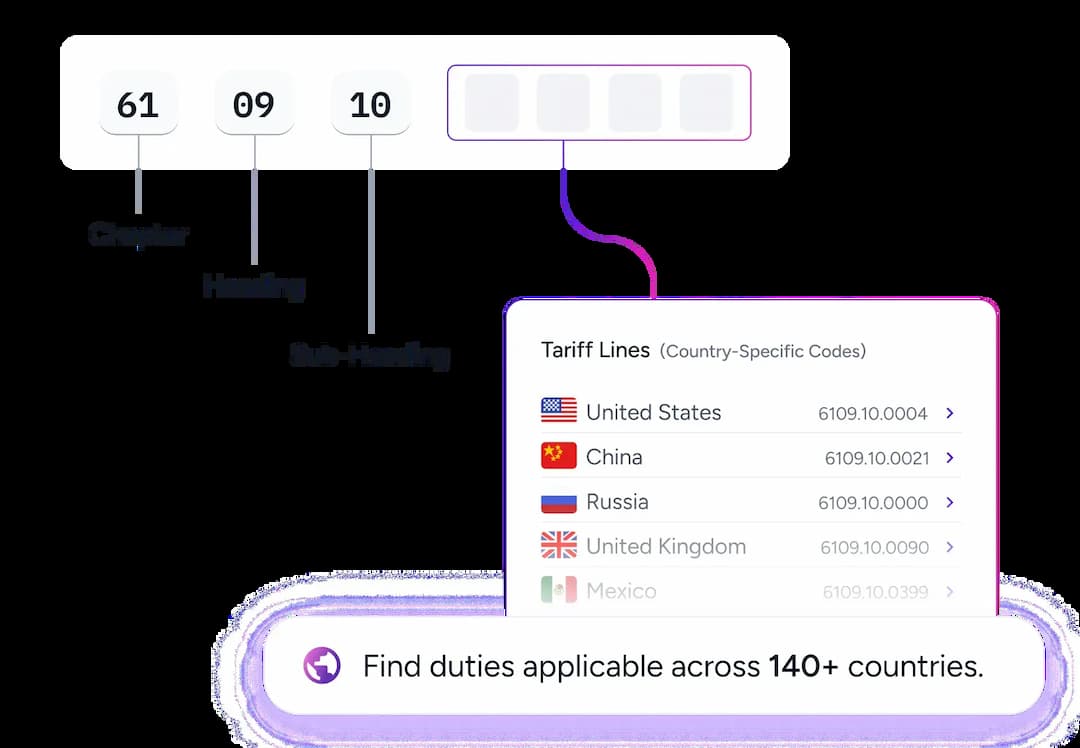
HS Code Lookup helps classify products under appropriate HS code and find duties applicable across 140+ countries. Find and discover HS classification, tariffs, taxes, controls, rulings, ECCNs, and default and preferential duties for HS code 8104.

WCO Notes for Heading 8104
81.04 ‑ Magnesium and articles thereof, including waste and scrap (+).
‑ Unwrought magnesium :
8104.11 ‑ ‑ Containing at least 99.8 % by weight of magnesium
8104.19 ‑ ‑ Other
8104.20 ‑ Waste and scrap
8104.30 ‑ Raspings, turnings and granules, graded according to size; powders
8104.90 ‑ Other
Magnesiumis extracted from a number of raw materials almost all of which fall, not in Chapter 26 (Ores), but in Chapter 25 or 31, e.g., dolomite (heading 25.18), magnesite (or giobertite) (heading 25.19) and carnallite (heading 31.04). It is also extracted from sea water or natural brines (heading 25.01) and from lyes containing magnesium chloride.
In the first stage of the industrial preparation of the metal, magnesium chloride or magnesium oxide (magnesia) is produced by methods varying according to the source of magnesium used. The extraction of the metal is then usually based on one of the two following types of reaction :
(A) Electrolysis of fused magnesium chloride mixed with fluxes such as alkali metal chlorides or fluorides. The separated magnesium collects on the surface of the bath around the cathodes and chlorine is withdrawn at the anodes.
(B) Thermal reduction of magnesia with carbon, ferro‑silicon, silicon carbide, calcium carbide, aluminium, etc. The high temperature of the reaction vaporises the metal which, after rapid cooling, condenses in a very pure state.
The metal obtained by electrolysis normally requires further refinement. Magnesium obtained by thermal reduction is normally so pure that it can be melted and ingotted without further refining.
*
* *
Magnesium is a silvery‑white metal like aluminium, but it is even lighter than the latter. It can take on a high polish, but this disappears fairly quickly on exposure to air because of the formation of an oxide film which protects the metal against corrosion. Magnesium wire, strip, foil and powder burn fiercely with a dazzling light and must be handled with care. There is a risk of explosion in fine magnesium powder when mixed with air.
*
* *
Unalloyed magnesium is used in the preparation of many chemical compounds, as a de‑oxidising and de‑sulphurising agent in metallurgy (e.g., in the manufacture of iron, copper, nickel and their alloys), in pyrotechnics, etc.
The pure metal has poor mechanical properties, but with other elements it forms strong alloys which can be rolled, forged, extruded and cast, and which therefore find many industrial applications in the light metal industries.
*
* *
The principal magnesium alloys which may be classified in this Chapter under the provisions of Note 5 to Section XV (see the General Explanatory Note to that Section) include :
(1) Magnesium‑aluminium or magnesium‑aluminium‑zinc alloys often containing manganese. These are magnesium based alloys of the “Elektron” or “Dow” metal type.
(2) Magnesium‑zirconium alloys, often containing added zinc.
(3) Magnesium‑manganese or magnesium‑cerium alloys.
The lightness, strength and corrosion resistance of these alloys make them suitable for use in the aircraft industry (e.g., for engine casings, wheels, carburettors, magneto bases, petrol or oil tanks); in the automobile industry; in building construction; in the manufacture of machinery parts and accessories, especially of textile machines (spindles, bobbins, winders, etc.), machine‑tools, typewriters, sewing machines, chain saws, lawn mowers, ladders or material handling equipment, or as lithographic plates, etc.
*
* *
The classification of magnesium products is not affected by treatments such as those described in the General Explanatory Note to Chapter 72, designed to improve the properties, appearance, etc., of the metal.
This heading covers :
(1) Unwrought magnesium in ingots, notch bars, slabs, sticks, cakes, cubes and billets and similar forms. These goods are generally for rolling, drawing, extruding or forging, or for casting into shaped articles.
(2) Magnesium waste and scrap. The Explanatory Note to heading 72.04 applies, mutatis mutandis, to this heading.
This group covers raspings, turnings and granules which have not been graded or sorted according to size. Raspings, turnings and granules which have been graded or sorted according to size are described in group (3) below.
(3) Bars, rods, profiles, plates, sheets and strip, foil, wire, tubes and pipes, hollow profiles, powders and flakes, raspings, turnings and granules of uniform size.
This group comprises the following commercial forms of magnesium :
(a) Products (i.e., wrought bars, rods, profiles, wire, plates, sheets, strip and foil) obtained by rolling, drawing, extruding, forging, etc., the products of group (1) above; tubes and pipes and hollow profiles (see the corresponding Explanatory Notes to headings for similar products of other base metals).
These goods are used when a metal which is both light and strong is required (see above).
(b) Raspings, turnings and granules of uniform size and all types of powders and flakes.
These products are used in pyrotechnics (fire‑works, signals, etc.), as reducing agents in chemical or metallurgical processes, etc. Raspings, turnings and granules are specially made and graded to make them suitable for these purposes.
(4) Other articles.
This group comprises all articles of magnesium not included in the preceding groups or covered by Note 1 to Section XV or included in Chapter 82 or 83, or more specifically covered elsewhere in the Nomenclature.
As magnesium is mainly used in the manufacture of aircraft, vehicle and machinery parts (see above), most magnesium articles are classified elsewhere (especially in Sections XVI and XVII).
Articles classified here include :
(a) Structures and parts of structures.
(b) Reservoirs, vats and similar containers, not fitted with mechanical or thermal equipment, and casks, drums and cans.
(c) Wire cloth.
(d) Bolts, nuts, screws, etc.
This heading excludes slag, ash and residues from the manufacture of magnesium (heading 26.20).
°
° °
Subheading Explanatory Note.
Subheadings 8104.11 and 8104.19
These subheadings also cover ingots and similar unwrought forms cast from remelted magnesium waste and scrap.

What is HS code 8104?

How many sub-headings are there in HS code 8104?
International Trade Compliance Simplified