















HS Code Lookup for Heading 9205
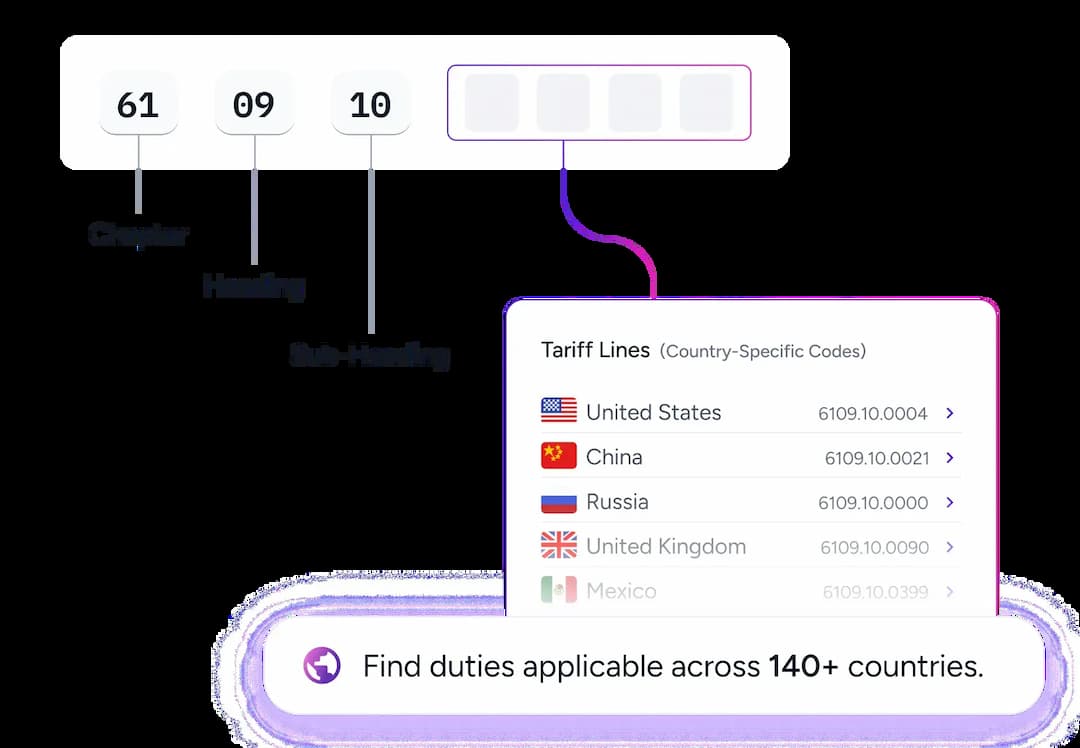
HS Code Lookup helps classify products under appropriate HS code and find duties applicable across 140+ countries. Find and discover HS classification, tariffs, taxes, controls, rulings, ECCNs, and default and preferential duties for HS code 9205.

WCO Notes for Heading 9205
92.05 - Wind musical instruments (for example, keyboard pipe organs, accordions, clarinets, trumpets, bagpipes), other than fairground organs and mechanical street organs.
9205.10 - Brass‑wind instruments
9205.90 - Other
This heading covers wind musical instruments not specified in heading 92.08 (fairground organs, mechanical street organs, sound signalling instruments, etc.) though these could, in certain respects, also be considered wind instruments.
The heading includes :
(A) Brass‑wind instruments.
The term “brass-wind” refers to the tone quality of instruments used in a particular section of an orchestra, rather than to the constituent material of the instruments. This group includes instruments, generally of metal (brass, nickel-silver, silver, etc.) in the form of a tapered tube terminating in a bell; they may be coiled to various degrees. They are fitted with a hollowed-out mouthpiece, sounded with the lips and usually valve operated. They include cornets, trumpets (simple trumpets, orchestral trumpets, etc.), bugles, saxhorns, baritone and bass bugles, bombardons (bass-tuba), bass sousaphones, trombones (valve or sliding type), orchestral horns (e.g., French horns) and non-valved horns used in orchestras (e.g., hunting horns).
(B) Other wind musical instruments.
This group covers :
(1) Keyboard pipe organs (church‑organ type). These are wind instruments in which the movement of the keys is transmitted to the pipes electrically, electro-pneumatically or mechanically.
The heading also covers the console and the organ case (i.e., the woodwork in which the organ is contained and which is usually of decorative design) when presented with the organ. If presented separately, they are excluded (heading 92.09).
This heading does not include orchestrions, street organs and similar pipe instruments, not fitted with a keyboard but operated either automatically or by a handle (heading 92.08). Electronic organs are classified in heading 92.07.
(2) Harmoniums and similar keyboard instruments with free metal reeds, but without pipes.
(3) Accordions and similar instruments, concertinas, bandoneons and foot‑blown accordions.
The heading excludes electronic accordions (see the Explanatory Note to heading 92.07, and the General Explanatory Note to this Chapter).
(4) Mouth organs (harmonicas).
(5) So-called “wood-wind” instruments. These instruments consist essentially of a tube (of wood or reed, metal, plastics, ebonite, glass) with holes generally fitted with keys and rings. They are usually sounded with reeds. This group includes flutes, recorders, fifes, flageolets, oboes, clarinets, cors anglais, bassoons, saxophones and sarrusophones.
The group also covers ocarinas (small egg‑shaped instruments made of metal or clay, giving a flute-like sound), and sliding whistles (of metal or ebonite).
(6) Other wind instruments (e.g., bagpipes, Breton pipes or the musette, consisting of a wind‑chest or bag made of skin or from a bladder, and three to five pipes - one pipe being the chanter and the others the drones).

What is HS code 9205?

How many sub-headings are there in HS code 9205?
International Trade Compliance Simplified