














HS Code Lookup for Chapter 92
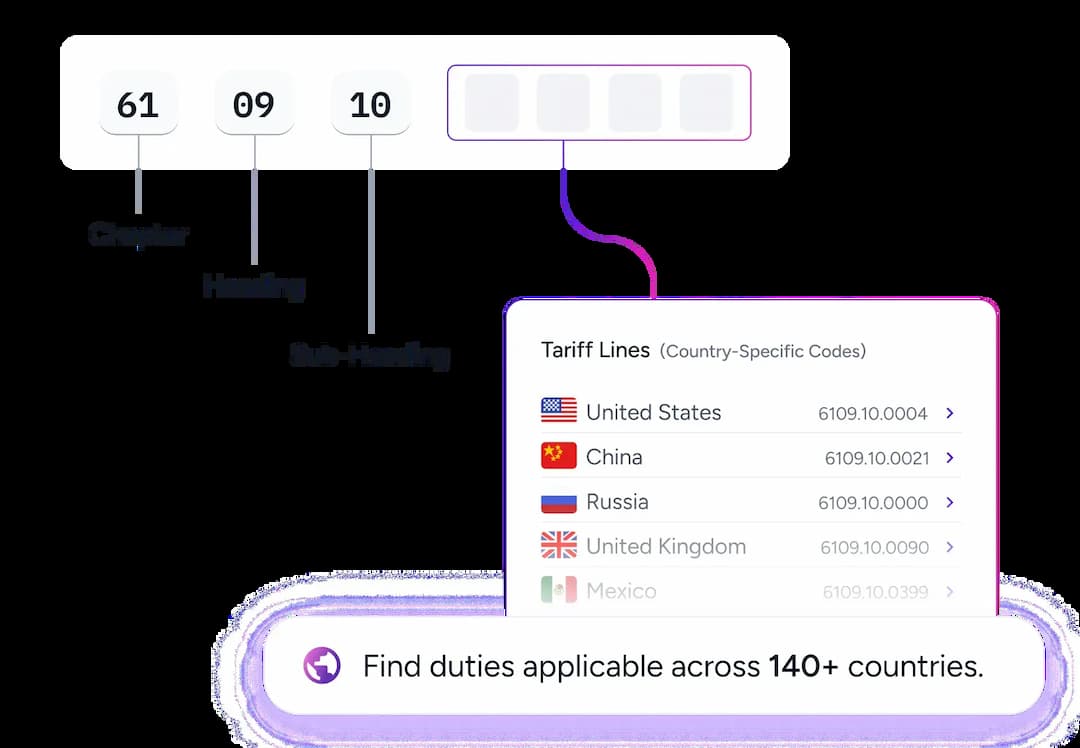
HS Code Lookup helps classify products under appropriate HS code and find duties applicable across 140+ countries. Find and discover HS classification, tariffs, taxes, controls, rulings, ECCNs, and default and preferential duties for HS code 92.

WCO Notes for Chapter 92
Chapter 92
Musical instruments; parts and accessories of such articles
Notes.
1.‑ This Chapter does not cover :
(a) Parts of general use, as defined in Note 2 to Section XV, of base metal (Section XV), or similar goods of plastics (Chapter 39);
(b) Microphones, amplifiers, loud‑speakers, head‑phones, switches, stroboscopes or other accessory instruments, apparatus or equipment of Chapter 85 or 90, for use with but not incorporated in or housed in the same cabinet as instruments of this Chapter;
(c) Toy instruments or apparatus (heading 95.03);
(d) Brushes for cleaning musical instruments (heading 96.03), or monopods, bipods, tripods and similar articles (heading 96.20); or
(e) Collectors’ pieces or antiques (heading 97.05 or 97.06).
2.‑ Bows and sticks and similar devices used in playing the musical instruments of heading 92.02 or 92.06 presented with such instruments in numbers normal thereto and clearly intended for use therewith, are to be classified in the same heading as the relative instruments.
Cards, discs and rolls of heading 92.09 presented with an instrument are to be treated as separate articles and not as forming a part of such instrument.
GENERAL
This Chapter covers :
(A) Musical instruments (headings 92.01 to 92.08).
(B) Parts and accessories of these instruments (heading 92.09).
Some musical instruments (pianos, guitars, etc.) may have an electrical sound pick‑up and amplifying device; they nevertheless remain classified in their respective headings in this Chapter, provided that, without the electrical equipment, they can still be used like the similar conventional‑type instruments. The electrical equipment itself, unless forming an integral part of the instrument or housed in the same cabinet as the instrument, is however in all cases excluded (heading 85.18).
Electrical or electronic instruments (other than the automatic pianos of heading 92.01) which are not suitable for playing without the electrical or electronic equipment fall in heading 92.07 (see the corresponding Explanatory Note). The latter heading therefore covers, for example, electrostatic, electronic or similar guitars, organs, pianos, accordions, carillons.
The instruments and apparatus of this Chapter may be of any material, including precious metal or metal clad with precious metal, and may incorporate precious or semi‑precious stones (natural, synthetic or reconstructed).
In accordance with Note 2 to this Chapter, bows and plectra used in playing the string musical instruments of heading 92.02, and sticks (including soft‑headed sticks) and mallets for percussion musical instruments of heading 92.06, when presented with those instruments in numbers normal thereto and clearly intended for use therewith, are to be classified with the relative instruments and not in heading 92.09. However, cards, discs and rolls of heading 92.09 presented with an instrument are to be treated as separate articles and not as forming a part of such instrument.
In addition to the exclusions specifically mentioned in the Explanatory Notes below, this Chapter also excludes :
(a) Electronic musical modules (heading 85.43).
(b) Musical instruments which can be clearly recognised as toys because of the character of the material used, their rougher finish, the lack of musical qualities or by any other characteristics (Chapter 95). Examples include certain mouth organs, violins, accordions, trumpets, drums, musical boxes.
(c) Collectors’ pieces (heading 97.05) (e.g., instruments having an historical or ethnographical interest), or antiques of an age exceeding 100 years (heading 97.06).

What is HS code 92?

How many headings are there in HS code 92?
International Trade Compliance Simplified