















HS Code Lookup for Heading 9207
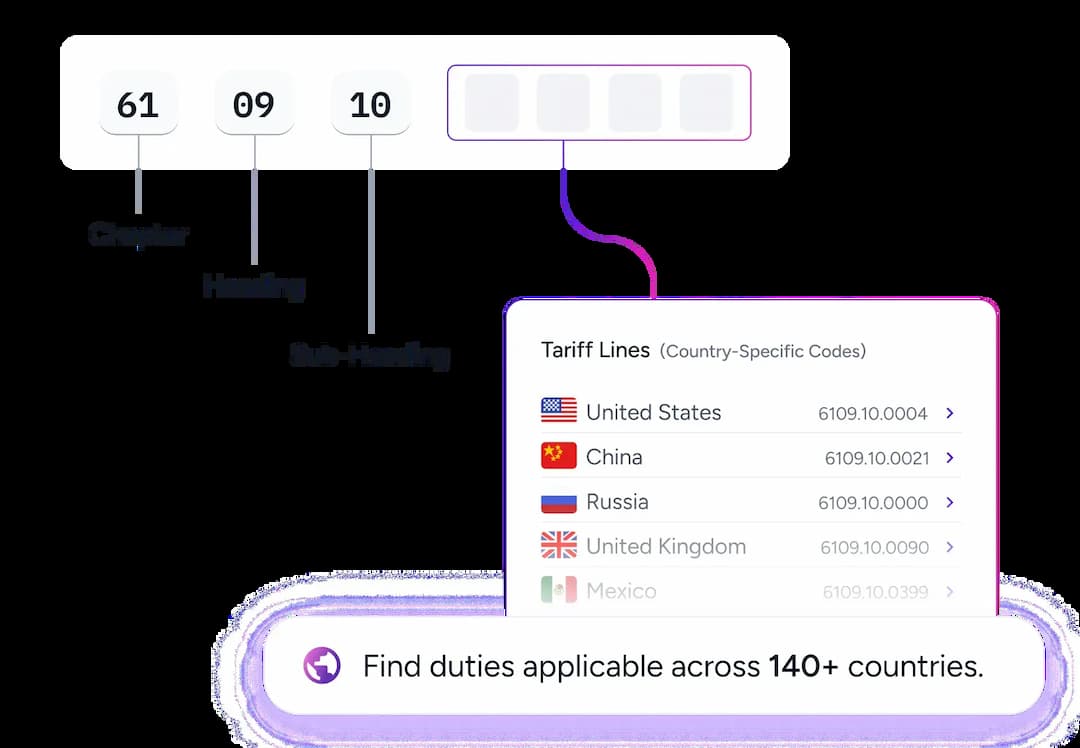
HS Code Lookup helps classify products under appropriate HS code and find duties applicable across 140+ countries. Find and discover HS classification, tariffs, taxes, controls, rulings, ECCNs, and default and preferential duties for HS code 9207.

WCO Notes for Heading 9207
92.07 ‑ Musical instruments, the sound of which is produced, or must be amplified, electrically (for example, organs, guitars, accordions).
9207.10 ‑ Keyboard instruments, other than accordions
9207.90 ‑ Other
This heading covers musical instruments in which the sound is generated or amplified electrically (including electronically) (i.e., those which cannot be played for normal hearing without their electrical or electronic components, even though the vibrating devices with which they are fitted may produce faint sounds). In this respect, they differ from certain other instruments (e.g., pianos, accordions, guitars) which, while they may be equipped with an electrical sound pick‑up and amplifying device, are nevertheless independent instruments suitable for playing without such devices, in the same way as similar conventional‑type instruments. Electrically operated automatic pianos are excluded (heading 92.01).
The instruments of this heading are usually based on the use of :
(A) Electro‑magnetic generators.
In one of the systems based on this principle, the generator has a drive shaft connected by a flexible coupling to a synchronous motor which drives it at constant speed. Different sized gear wheels are placed in pairs along the shaft, each wheel driving toothed wheels known as “tone” wheels. When the instrument is connected to the mains, the synchronous motor turns the tone wheels at speeds which vary according to the diameter of the gear wheels. A permanent magnet carrying a coil at one end is fitted near each tone wheel and parallel to it. When the wheels rotate, the teeth placed at regular intervals around their edges under the pole of the associated magnets; this causes variations in the fields which in turn set up weak current changes in the coils. These currents, which are of predetermined frequencies, are electrically amplified and transmitted to loudspeakers.
This principle is used in particular for the “organ” type of instrument.
In another system, a harmonium‑type “free‑reed” moves across a pole of a permanent magnet, its vibrations producing variations in the magnetic field set up in a coil wound around the magnet. The resulting current is electrically amplified and transmitted to a loudspeaker.
(B) Electrostatic generators, of which there are several types :
(1) Stretched wire generators. In these the vibrations produced when a wire carrying an electric current is struck by a hammer, give rise to variations in capacitance between the wire and metal parts (studs) adjacent to it. The variations in capacitance correspond exactly to the vibrations of the string, so that they provide faithful reproduction when amplified.
(2) Vibrating reed generators, in which the current is carried by reeds instead of strings.
(3) Variable‑condenser generators, in which the condensers (capacitors) are rotated at constant speed by a motor.
(C) Oscillating electronic valve (or tube) generators, including gas discharge tube oscillators.
(D) Photoelectric generators, in which a light ray passing through a perforated disc is thrown on a cell. By carefully calculating the number of apertures in the discscreen, a corresponding number of current variations is obtained and these, amplified, produce the desired sound.
Some of these instruments are called electro‑magnetic, electrostatic, electronic, radio‑electric, photoelectric pianos, organs, accordions, carillons, etc., but are nearly always known by their registered trade names. They enable faithful sound reproduction of most musical instruments to be obtained by simply changing registers. Such instruments may be described as “monophone” when they only give a succession of separate notes, or “polyphone” when they produce several notes at once (e.g., “organs”).
Some may be played separately; others may be adapted to an ordinary piano, the instrument being played with the right hand while the piano accompaniment is played with the left hand. Such instruments are classified here, whether or not presented with the piano.
Although they may generally be essential for the normal operation of the instruments of this heading, electrical or electronic apparatus (in particular the amplifier and loudspeaker) are excluded and fall in their respective headings (Chapter 85) whenever they are not built into the unit itself. When, however, they are incorporated in or housed in the same cabinet as the instrument they are classified with the instrument, even though they may be packed separately for convenience of transport.
This heading does not cover conventional type clocks (with dials showing the hours) which are used with certain electronic chimes to strike automatically the hours, half‑hours, etc. (Chapter 91).

What is HS code 9207?

How many sub-headings are there in HS code 9207?
International Trade Compliance Simplified