















HS Code Lookup for Heading 9209
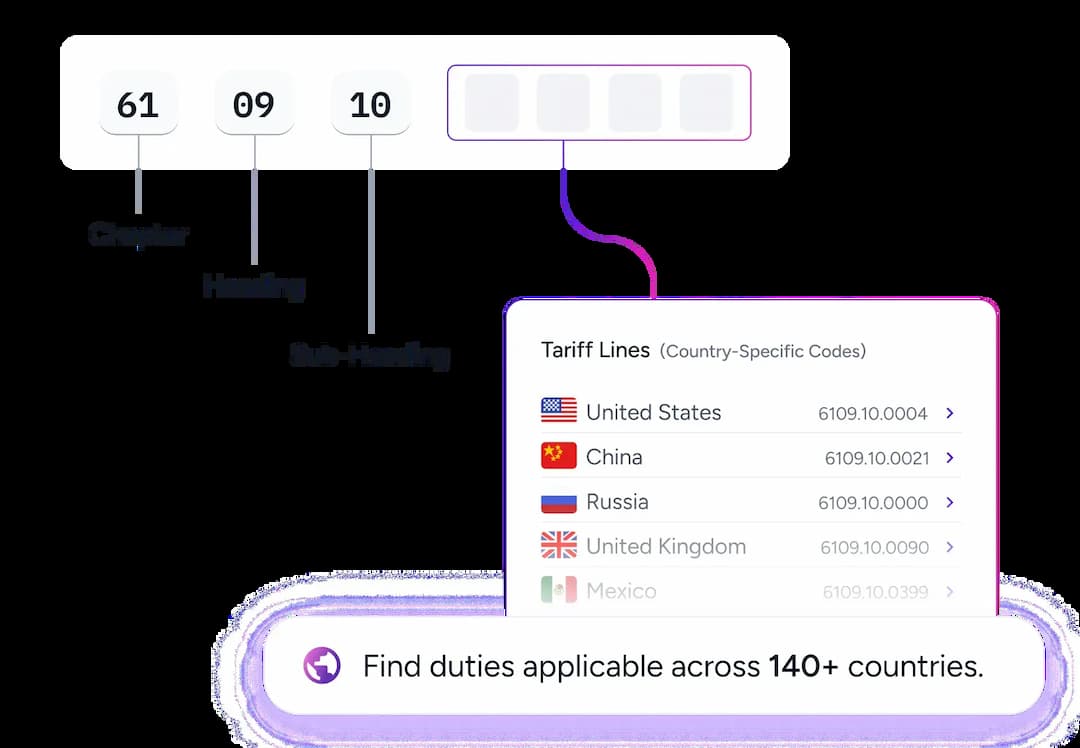
HS Code Lookup helps classify products under appropriate HS code and find duties applicable across 140+ countries. Find and discover HS classification, tariffs, taxes, controls, rulings, ECCNs, and default and preferential duties for HS code 9209.

WCO Notes for Heading 9209
92.09 ‑ Parts (for example, mechanisms for musical boxes) and accessories (for example, cards, discs and rolls for mechanical instruments) of musical instruments; metronomes, tuning forks and pitch pipes of all kinds.
9209.30 ‑ Musical instrument strings
‑ Other :
9209.91 ‑ ‑ Parts and accessories for pianos
9209.92 ‑ ‑ Parts and accessories for the musical instruments of heading 92.02
9209.94 ‑ ‑ Parts and accessories for the musical instruments of heading 92.07
9209.99 ‑ ‑ Other
This heading covers :
(A) Metronomes, tuning forks and pitch pipes.
This group covers metronomes, tuning forks and pitch pipes whether intended for musical or other uses.
Metronomes are small mechanical devices used to indicate the exact tempo in which a piece of music is to be played; they are generally contained in a pyramid shaped box and may be fitted with a bell. The main part is a beating rod pivoted at its lower end; the movement of the rod may be accelerated or retarded according to a scale located behind the bar.
The group also includes metronomes used for industrial purposes; these are fitted with electrical contacts.
Tuning forks are usually small U‑shaped metal bars which, when vibrated, emit one given note; the group also covers large concert‑hall tuning forks consisting of a metal tongue mounted on a sounding box and struck with a hammer.
Pitch pipes (tuning pipes) are mouth‑blown and consist of one or more reeds or pipes; these generally emit several notes (4 or 6).
The group also includes tuning forks used in medicine (in particular for hearing tests, in which case they are preset to emit a wide range of vibrations and are often put up in cases containing several instruments), for stroboscopic observations. Some are fitted with electrical devices for maintaining the vibrations.
(B) Mechanisms for musical boxes.
See the Explanatory Note to heading 92.08.
(C) Musical instrument strings.
This group covers strings for true string instruments (pianos, harps, violins, violoncellos, mandolines, etc.). These are usually made of :
(1) Catgut (generally from the intestines of sheep). Catgut strings are made up of a certain number of strands according to the thickness required; each strand consists either of a ribbon of gut cut lengthwise or a complete gut.
(2) Silk. Silk strings, usually made up of 140 strands of silk, have the external appearance of catgut strings. They are coated with a thin layer of gum arabic and polished with white wax.
(3) Monofilament of man‑made fibre materials (usually nylon).
(4) Wire of steel (usually stainless), aluminium, silver, copper, etc. Metal strings are either single‑strand, or made up of a metal core covered with metal wire (wound round the core). Strings of this kind are known as “metal‑wound”.
(5) Gut, silk or nylon covered with metal wire (aluminium or other base metal, whether or not silver‑plated, silver, etc.). The metal wire is wound round the core and strings of this kind are known as gut, silk‑ or nylon‑wound.
Musical instrument strings are recognisable by their finish. (Steel strings are made of polished metal and their diameter is carefully calibrated. Gut strings are completely uniform and the diameter is constant; some gut strings are white and translucent, others, however, such as strings for harps, are occasionally dyed red or blue, etc.) Strings may also be recognisable by the way in which they are put up (small paper bags, envelopes and the like, often printed with instructions for use). In addition, some strings (particularly metal strings) have loops or small metal balls enabling them to be fitted to the instrument concerned.
The heading does not cover wire, gut and monofilament of synthetic textile materials (whether or not cut to length), not identifiable as musical instrument strings (classified in their own appropriate headings).
(D) Other parts and accessories.
This group covers parts and accessories of musical instruments (other than those referred to in (B) and (C) above, but not loudspeakers and audio‑frequency amplifiers (heading 85.18) nor, generally speaking, electrical apparatus (motors, photoelectric cells, etc.), not fitted with parts or accessories of musical instruments.
This group includes :
(1) Parts of pianos, organs, harmoniums or similar instruments, such as :
Complete keyboards (i.e., a complete set of keys mounted on a frame); piano mechanisms (i.e., key‑actions with associated hammers including sound‑dampers); cases for pianos or harmoniums; sound‑boards; wooden or cast‑iron frames; pedal mechanisms and pedals; wrest pins; metal tongues (or reeds) for harmoniums; separate keys for keyboards; hammers, dampers, shafts and forks for hammers, etc.; organ pipes, wind‑chests, bellows and other component parts (including cases) of organs.
Keys, stops, bellows and keyboards for accordions are also classified here.
However, the heading excludes the small strips of ivory, bone or plastics, simply cut to rectangular shape but requiring polishing, rounding of corners or further working before use as coverings for keys of musical instruments; these strips are classified in their own appropriate headings (heading 96.01 or Chapter 39).
(2) Parts and accessories of instruments falling in heading 92.02 (string musical instruments), such as :
Bodies of mandolines, guitars or similar instruments; guitar or mandoline “mechanisms” (i.e., the pegs and worm and tooth wheels located at the scroll‑end of the neck so that the strings can be properly tensioned); parts of violins, violoncellos or the like, e.g., backs, bellies, necks (whether or not in the rough), fingerboards, nuts, bridges, tailpieces (on which the strings are mounted) and buttons therefor, ribs (between belly and back), pegs (kind of keys fitted to the scroll for varying the tension of the strings), string adjusters, etc., standards for violoncellos and double basses (for resting the instruments on the ground); bows and parts of bows (sticks, heels, tension screws, etc.) including horsehair in bundles for bows; plectra, mutes, chin‑rests.
(3) Parts and accessories for the instruments of heading 92.07, such as :
Chests (for electronic pianos, organs and carillons), pedal mechanisms and pedals, keyboards, tone wheels (for organs, in particular).
See the Explanatory Note to heading 92.07 regarding electronic parts and accessories.
(4) Parts and accessories for so‑called “wood‑wind” instruments of heading 92.05, such as :
Turned component parts of wood for so‑called “wood‑wind” instruments (clarinets, flutes and the like); metal bodies of instruments; slides; extensions; mouthpieces of various types and mouthpiece covers; reeds; valves, valve control buttons; keys, rings, ferrules, bells, mutes; key pads (for flutes, clarinets, etc.).
(5) Parts and accessories for percussion instruments, such as :
Sticks, whether or not soft‑headed; mallets of various types; drum brushes; pedals used in dance‑bands; cymbal brackets; drum‑barrels and braces, etc.; slats or plates, tables and supporting frames for xylophones or similar instruments; skins for drums or the like, cut to circular or approximately circular shape and clearly identifiable; strings (usually of true hemp, jute or sisal) intended for stretching the skins of certain instruments such as drums; and the catgut or metal strings (snares) which cross the snare‑heads of side‑drums, when identifiable as such.
*
* *
The heading also covers :
(1) Music holders for fixing to instruments. Stands (other than monopods, bipods, tripods and similar articles, of heading 96.20)for holding an instrument (e.g. side-drums or saxophones).
(2) Mechanical devices for playing a musical instrument. These are auxiliary devices enabling keyboard instruments to be played mechanically with cards, discs or rolls; they may be operated by handles, pedals or by bellows, or may be mechanically or electrically driven. They may be fitted inside or outside the instrument (pianos or harmoniums usually).
(3) Cards, discs and rolls, for automatic musical instruments; these articles are classified here whether or not presented together with the instruments for which they are intended (see Note 2 to this Chapter).
*
* *
The heading also excludes :
(a) Articles of general use as defined in Note 2 to Section XV, such as hinges, handles, fittings (e.g., for pianos), of base metal (Section XV), and similar goods of plastics (Chapter 39).
(b) Tuning tools (heading 82.05).
(c) Spring‑operated (clockwork) motors, not fitted with other parts, for musical boxes or mechanical singing birds (heading 84.12).
(d) Watch or clock movements not fitted with parts or accessories of musical instruments (headings 91.08 to 91.10).
(e) Piano stools (heading 94.01), music‑stands or desks constructed for placing on the floor or ground (heading 94.03) and candle brackets for pianos (heading 94.05).
(f) Rosin for bow‑strings, in moulded shapes (heading 96.02).
(g) Cleaning brushes for flutes, oboes, etc. (heading 96.03).
______________________

What is HS code 9209?

How many sub-headings are there in HS code 9209?
International Trade Compliance Simplified